

Astrocytes form previously unknown network
Cells long thought to play a secondary role in brain function build their own far-reaching connections, a new study in mice showed. These pathways appear to connect distant regions in ways that had not been mapped before.
Experts usually describe the brain as a network of nerve cells (neurons) that send each other signals to pass along information. These neurons are maintained by another kind of brain cell, the star-shaped astrocyte, which ferries in nutrients and carries away waste.
The study revealed that, like neurons, astrocytes form organized webs, which enables them to communicate with other specific astrocytes across the brain rather than only sending local, generalized signals. In some cases, the pathways link areas that were not already joined together by neurons.
“For more than a century, neuroscientists have thought of neurons as the main actors in the brain,” said the study lead author. “Yet our findings suggest that astrocytes, which are usually viewed as merely support cells, are also running their own widespread signaling pathway, adding another layer to how brain regions stay connected.”
In earlier work, the researchers reported that in a mouse model of the visual neurodegenerative disease glaucoma, astrocytes can redistribute resources from astrocytes around healthy neurons to damaged neurons. Yet the team had no way to see whether this kind of support-cell network extended across the entire brain.
This latest investigation is the first to map active, brain-wide communication networks built by astrocytes and to show that these pathways are highly specific, said the lead.
The findings, which was published in the journal Nature, relied on a custom-built tracing tool that let the team follow the cells’ connections in far greater detail than past methods allowed.
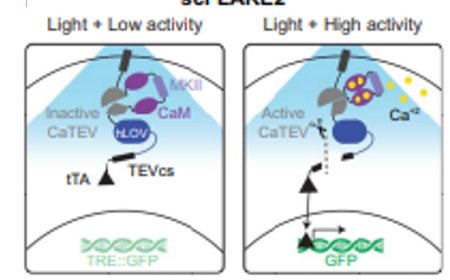
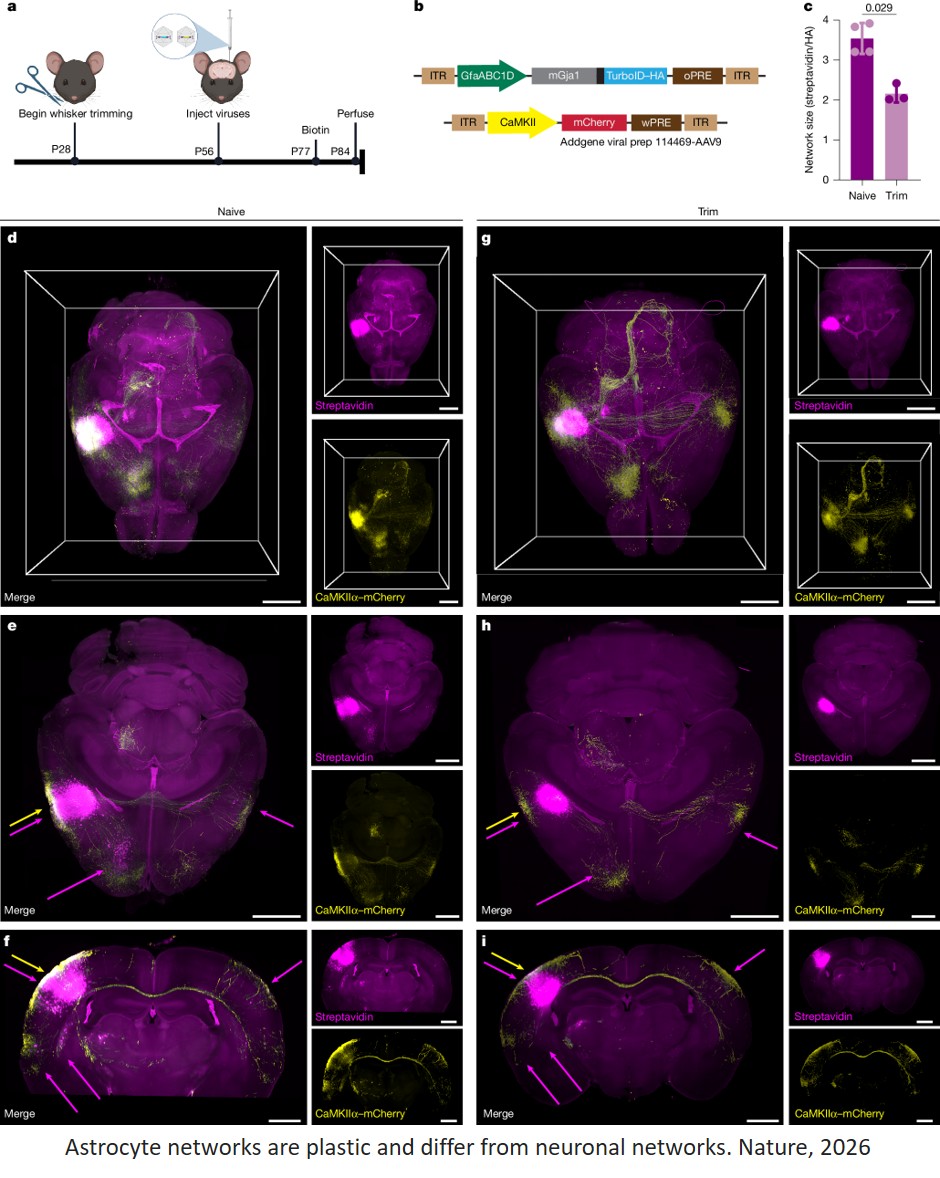
For the study, the researchers used a harmless virus to deliver “network tracers” into astrocytes in selected brain regions of lab mice. These tracers tagged small molecules as the molecules passed through tiny channels called gap junctions, which link one astrocyte to another, allowing the team to see which cells were part of the same signaling pathway.
The scientists then made the mice’s brains transparent and used a specialized microscope to capture three-dimensional images of every tagged astrocyte. By doing this across hundreds of mice, they could map astrocyte webs across brain areas. The tracing tool and brain-clearing method were designed to be relatively low-cost and easy to reproduce so other labs could use them to study the networks in many brain diseases.
In another part of the study, the team assessed mice that were genetically engineered to have astrocytes that lacked gap junctions. The communication networks largely disappeared, suggesting that the pathways are active and depend on these physical bridges.
“By challenging our understanding of how the brain communicates over long distances, our results may offer fresh insight into how it develops, ages, and behaves in conditions such as Alzheimer’s and Parkinson’s disease,” said a study co-senior author.
Another key finding was that astrocyte networks are dynamic. When the team trimmed whiskers on one side of the mice’s faces, a pathway from the region that processes whisker touch got smaller and reconnected to different astrocyte partners.
“The fact that astrocyte networks shrink and reroute after a loss of sensory signals suggests they may be shaped by experience,” said the other study co-senior author. “It also raises the possibility that each of us has a somewhat unique pattern of connections molded by what our brains have learned and lived through,” added the author.
The authors plan to investigate which molecules move through the networks and to apply their tracing tool to models of brain disorders. They also hope to examine how these webs change during development and aging, said the author.
The author emphasized that while gap junctions and astrocytes exist in humans, it remains unknown whether the networks link the same regions in the same way as in mice.
https://www.nature.com/articles/s41586-026-10426-6
https://sciencemission.com/Astrocytes-connect-specific-brain-regions-t