

Axonopathy in spinocerebellar ataxia type 1 from oligodendrocyte dysfunction
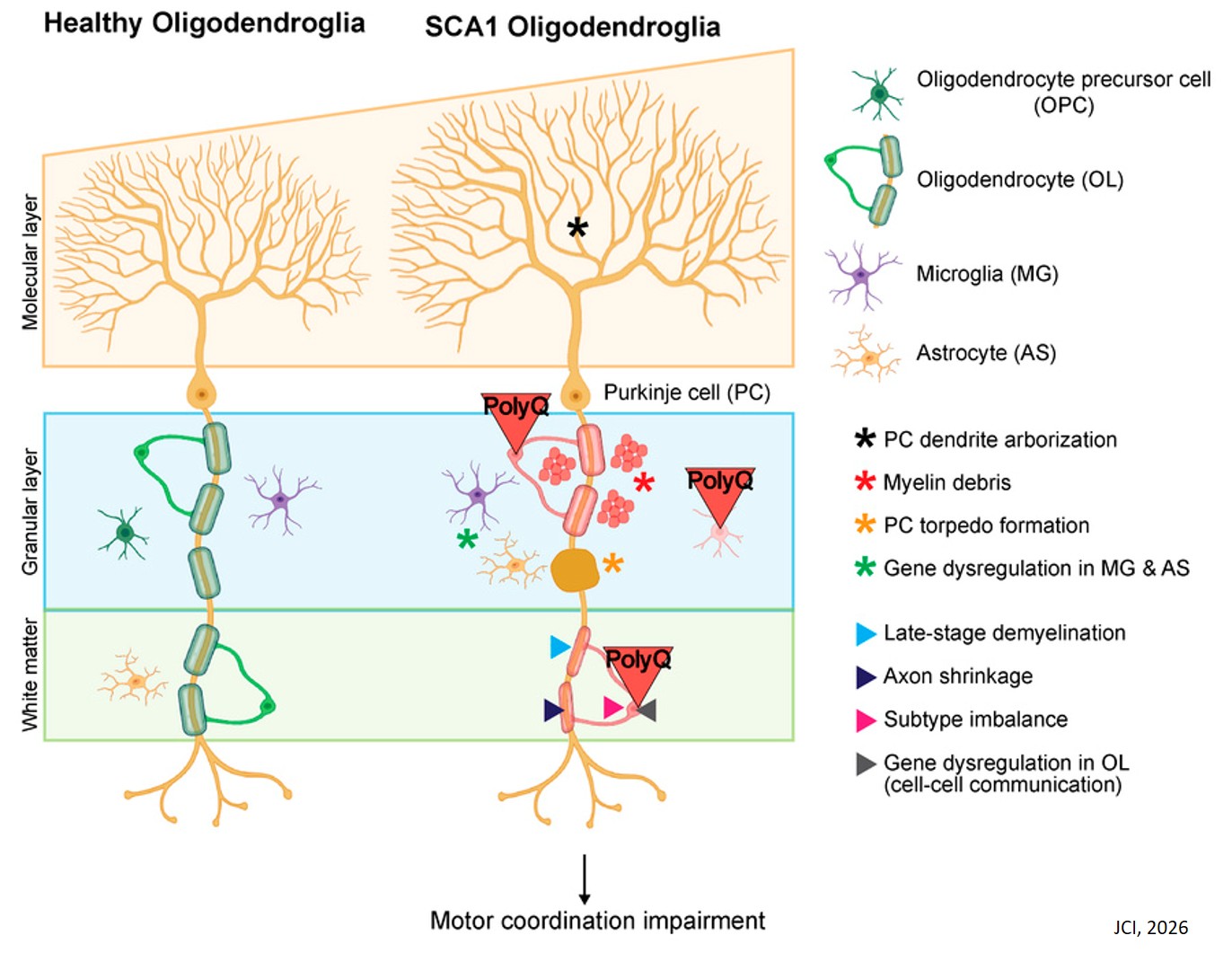
Ataxin-1 polyglutamine expansion results in motor deficits and Purkinje cell (PC) degeneration in spinocerebellar ataxia type 1 (SCA1).
It is well known that oligodendroglial dysfunction precedes PC loss in SCA1, but its role in disease pathogenesis is not well understood.
In this study, researchers show that mutant ataxin-1 in oligodendrocytes is sufficient to drive aspects of SCA1-related pathology.
They also show that cerebellar oligodendrocyte subtypes with distinct gene expression signatures that contribute to demyelination and concomitant decline in the neuroprotective functions of a cerebellum-specific oligodendrocyte subtype, thereby establishing a critical link between demyelination, axo-myelinic dysfunction, and axonal pathology in SCA1.
In addition, the authors demonstrate that transcription factor 7-like 2 (TCF7L2) and huntingtin (HTT) act as mediators of oligodendroglial dysfunction in SCA1, suggesting shared pathogenic mechanisms with other polyglutamine diseases.