

Cancer mutations in microglia of Alzheimer’s disease brain
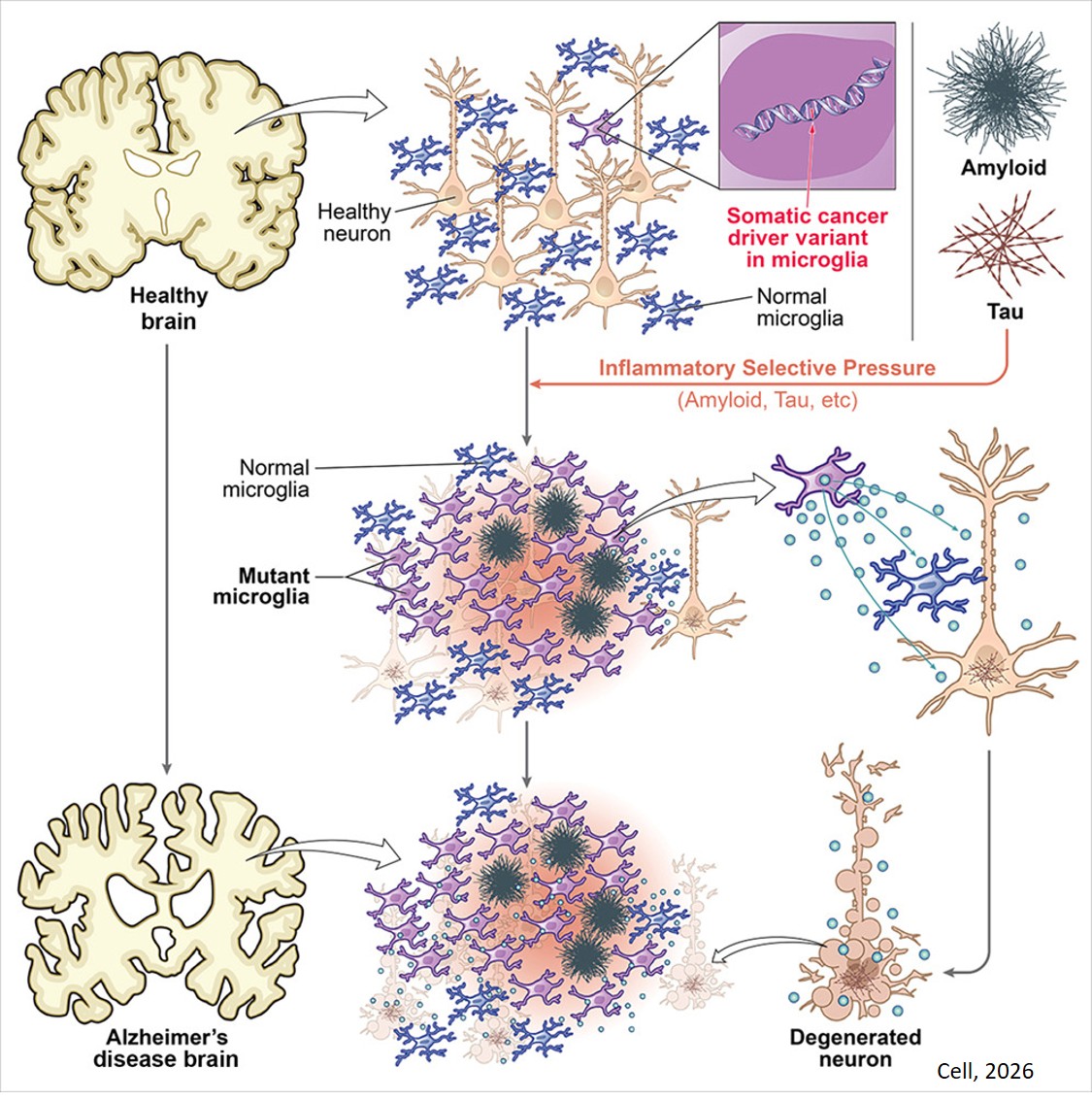
As the body ages, cells naturally accumulate dozens of genetic mutations each year. New research published in Cell, finds that the brain’s resident immune cells, microglia, amass mutations in specific cancer-driving genes yet they don’t manifest as cancer. Instead, these mutations may help drive Alzheimer’s disease.
The research team say their study findings may provide insights into new Alzheimer’s disease diagnostics and treatments.
“We find that to some extent, Alzheimer’s disease is a little like cancer — driven by the same mutations that drive blood cancers like lymphoma and leukemia,” said the author. “This is helpful because we have a lot of drugs to fight cancer and some of them might be useful therapeutically for Alzheimer’s disease.”
For the new study, the research team sequenced 149 cancer-driving genes from tissue samples in 190 brains donated from people with Alzheimer’s disease compared to 121 healthy brains. The Alzheimer’s samples had more single DNA letter changes than the healthy tissue with the most changes found repeatedly in the same five cancer driver genes, meaning the microglia were amassing mutations in specific genes.
Microglia function as the brain’s resident immune cells, acting as garbage collectors, eating debris and infected or dying cells. Unlike the rest of the immune system cells that circulate in the blood throughout the body, microglia don’t cross the blood brain barrier — or so experts thought.
The cancer gene mutations the researchers discovered in the microglia are commonly found in blood cancers. Because of this, the team tested blood samples from people with Alzheimer’s disease for these same mutations. The team didn’t expect the blood to have these mutations. However, Walsh’s team found the blood cells of the same Alzheimer’s patients carried the same cancer mutations too.
“It was actually a really unexpected finding that suggests a totally new mechanism for Alzheimer’s disease pathogenesis,” said the author. “The findings mean that the blood’s immune cells with cancer mutations are likely getting into the brain and contributing to disease.”
The researchers theorize that the blood-brain barrier weakens, either by age or injury, allowing the blood’s immune cells to cross into the brain. These new arrivals then convert into microglia-like cells. Separately, clumps of proteins accumulate in the brain, triggering microglia to proliferate and respond. The cells most likely to dominate are those with a selective advantage, such as the microglia-like cells with the cancer mutations. However, these mutant microglia also make the environment more inflammatory and hostile than that of the healthy microglia, causing innocent bystander neurons to die off, which leads to Alzheimer’s disease.
“Because it’s hard to access brain tissue in a living patient, genetic screens using blood samples could be developed to test whether a person carries these mutations, and has an increased risk of developing Alzheimer’s disease,” said the author.
https://www.cell.com/cell/fulltext/S0092-8674(26)00341-7
https://sciencemission.com/Somatic-cancer-variants-enriched-in-AD