

Epigenetic-mitochondrial axis drives Alzheimer’s disease pathogenesis
In neurological diseases such as Alzheimer’s disease (AD), chronic neuroinflammation is sustained by mitochondrial DNA (mtDNA)-driven innate immune signaling but its regulation in microglia is not yet clear.
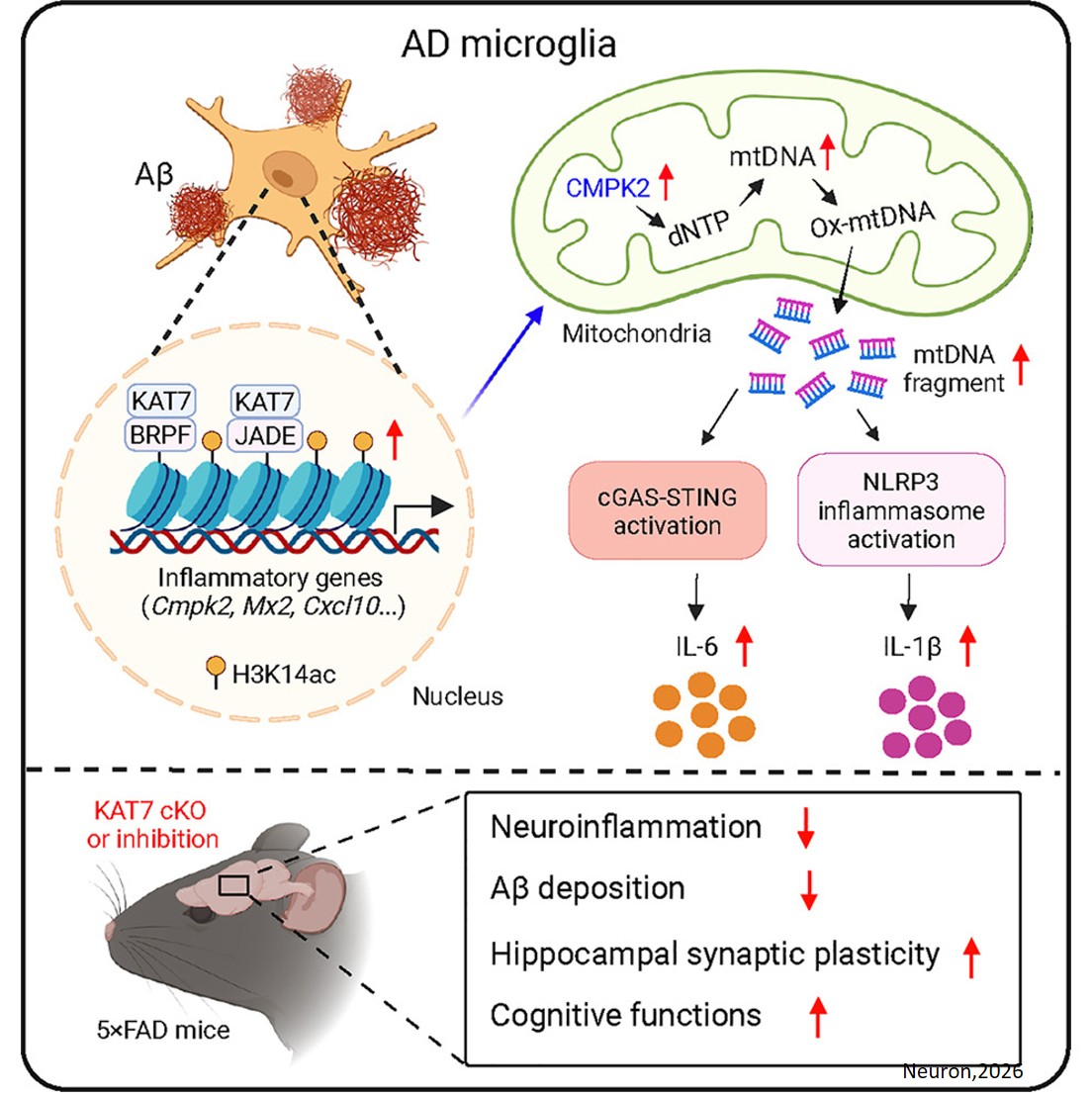
The researchers in this study identify the histone acetyltransferase KAT7 (HBO1) as a central epigenetic regulator that links chromatin remodeling to mitochondrial immune activation. They show that KAT7 and its histone mark H3K14ac are elevated in microglia from mouse model and human AD brains.
Mechanistically, KAT7 activates transcription of cytidine/uridine monophosphate kinase 2 (Cmpk2), a mitochondrial kinase essential for mtDNA synthesis. Loss of KAT7 reduces Cmpk2 expression, impairs mtDNA replication and release, and consequently suppresses cyclic guanosine monophosphateAMP synthase (cGAS)-stimulator of interferon genes (STING) and NLRP3 signaling.
They also demonstrate that microglia-specific deletion and pharmacological inhibition of KAT7 mitigate cytosolic mtDNA-induced neuroinflammation, decrease β-amyloid burden, restore synaptic plasticity, and improve cognitive function.