

Liver cancer development and treatment paths
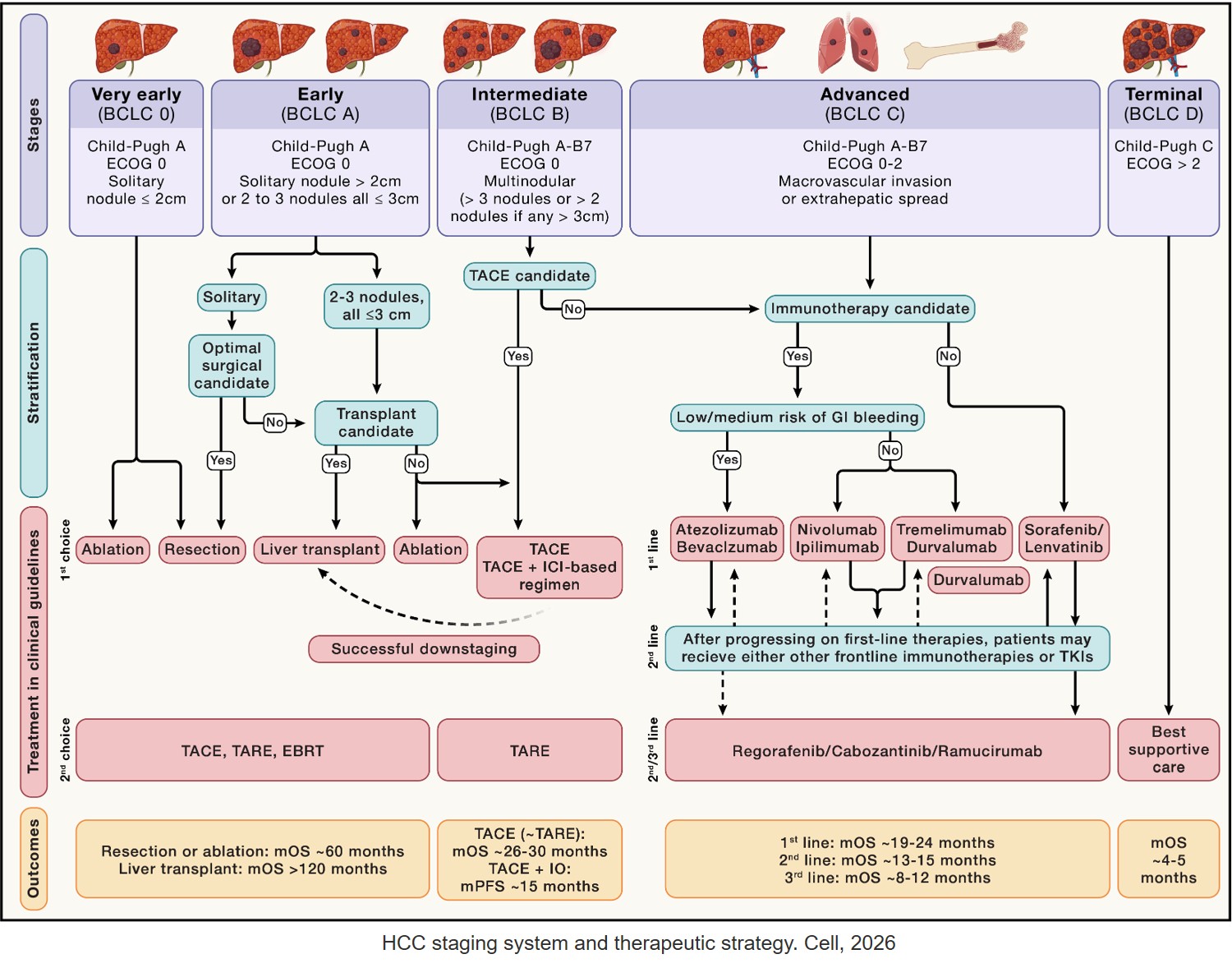
A new review provides one of the clearest roadmaps to date for understanding and treating liver cancer, one of the deadliest cancers worldwide.
Published in Cell, the study applies the widely used “Hallmarks of Cancer” framework to liver tumors, linking the biology of the disease to treatment strategies, including immunotherapy and precision medicine approaches, particularly in the approximately 45 percent of bile duct cancers that harbor targetable mutations.
Primary liver cancer, which includes hepatocellular carcinoma (HCC) and intrahepatic cholangiocarcinoma (iCCA), is the third-leading cause of cancer-related death globally, with approximately 830,000 deaths each year and nearly 1 million new cases annually. Despite recent advances, many patients are diagnosed at advanced stages and face limited treatment options.
The review highlights key biological processes (known as “hallmarks”) that enable liver tumors to grow and spread. In HCC, the most common form of liver cancer, tumors are driven by processes such as sustained growth signaling, new blood vessel formation, and immune evasion. In contrast, iCCA, a biologically distinct cancer, often shows altered metabolism and is far more likely to harbor targetable genetic alterations.
Over the past two decades, treatment for advanced liver cancer has improved significantly, from limited options and median survival under a year to modern immunotherapy combinations that can extend survival beyond two to three years for some patients.
“This framework helps clinicians better match patients with the therapies most likely to benefit them,” said the author. “It also provides a roadmap for developing new treatments by identifying the key vulnerabilities of each tumor.”
Importantly, the researchers note that approximately 45 percent of iCCA tumors contain genetic alterations (such as FGFR2 fusions, IDH1 mutations, ERBB2 alterations, and BRAF mutations) that can be targeted with existing or emerging therapies, highlighting the growing role of precision oncology in liver cancer care.
For clinicians, the study offers a practical framework to guide treatment decisions, including the use of targeted therapies and immunotherapies. For patients, it represents progress toward more personalized approaches that may improve outcomes and quality of life.
“This review is designed to bridge the gap between laboratory discoveries and patient care,” another author added. “Our goal is to accelerate the development of more effective therapies and ultimately improve survival for patients with liver cancer.”
https://www.cell.com/cell/fulltext/S0092-8674(26)00268-0
https://sciencemission.com/Hallmarks-of-liver-cancer