


Macrophage produced itaconate drives the development of ependymomas
Ependymomas are tumors that grow in the brain or spinal cord and are the third-most common type of brain tumor in children.
This type of cancer affects about 250 children in the United States each year and is most often diagnosed in children aged eight and younger.
Despite decades of research, the existing treatments only prolong survival and do not cure these tumors.
In a study published in Nature, researchers have found that a specific molecule called itaconate drives the development of ependymomas.
Their findings can help future drug development for children with this type of malignant brain tumor.
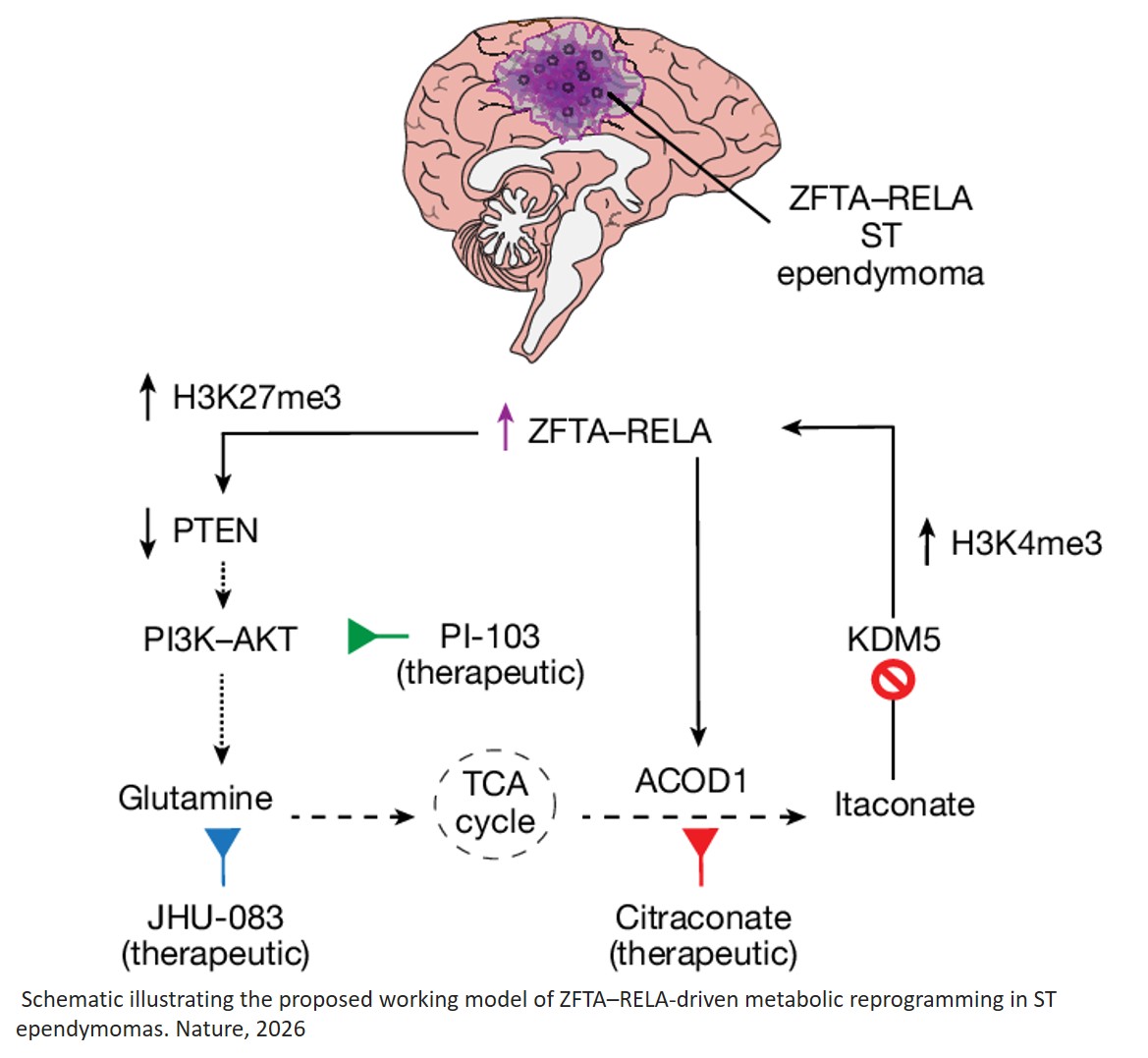
More than 80% of ependymomas that arise in the upper part of the brain have a cancer-causing protein fusion named ZFTA-RELA.
Previous studies have shown that neither ZFTA nor RELA can cause cancer on its own, but when the two fuse together, they drive tumor growth.
Cancer cells require large amounts of nutrients to grow, and the researchers worked to identify what metabolic changes occur during this process.
Using animal models and cell lines from mice and patients, they found that ependymomas make the metabolite itaconate.
The finding was unexpected because itaconate is mainly made by immune cells called macrophages in response to invading pathogens.
When the researchers prevented the enzyme aconitate decarboxylase 1, or ACOD1, from producing itaconate in mouse models, they were able to reduce ependymoma tumor growth.
“We were surprised that a brain tumor produces a metabolite that is usually made by immune cells,” said, a postdoctoral research fellow in the lab.
“We wanted to find out what itaconate was doing in these tumors.”
Using ependymoma cells, the researchers looked at which genes behaved differently when ACOD1 is absent.
They found that itaconate forms a feedback loop with ZFTA-RELA, where they boost each other to promote tumor growth.
This loop relies on the amino acid glutamine that is used as a building block for itaconate synthesis.
When the researchers inhibited this loop, the levels of ZFTA-RELA were reduced and the tumor shrank in mouse models.
“This is the first study to show that the ZFTA-RELA fusion can be targeted in this type of tumor,” said the senior author
“We are hoping to expand this study to protein fusions that function similarly in other types of cancer.”