

Unconventional activation of the proto-oncogene FGFR1
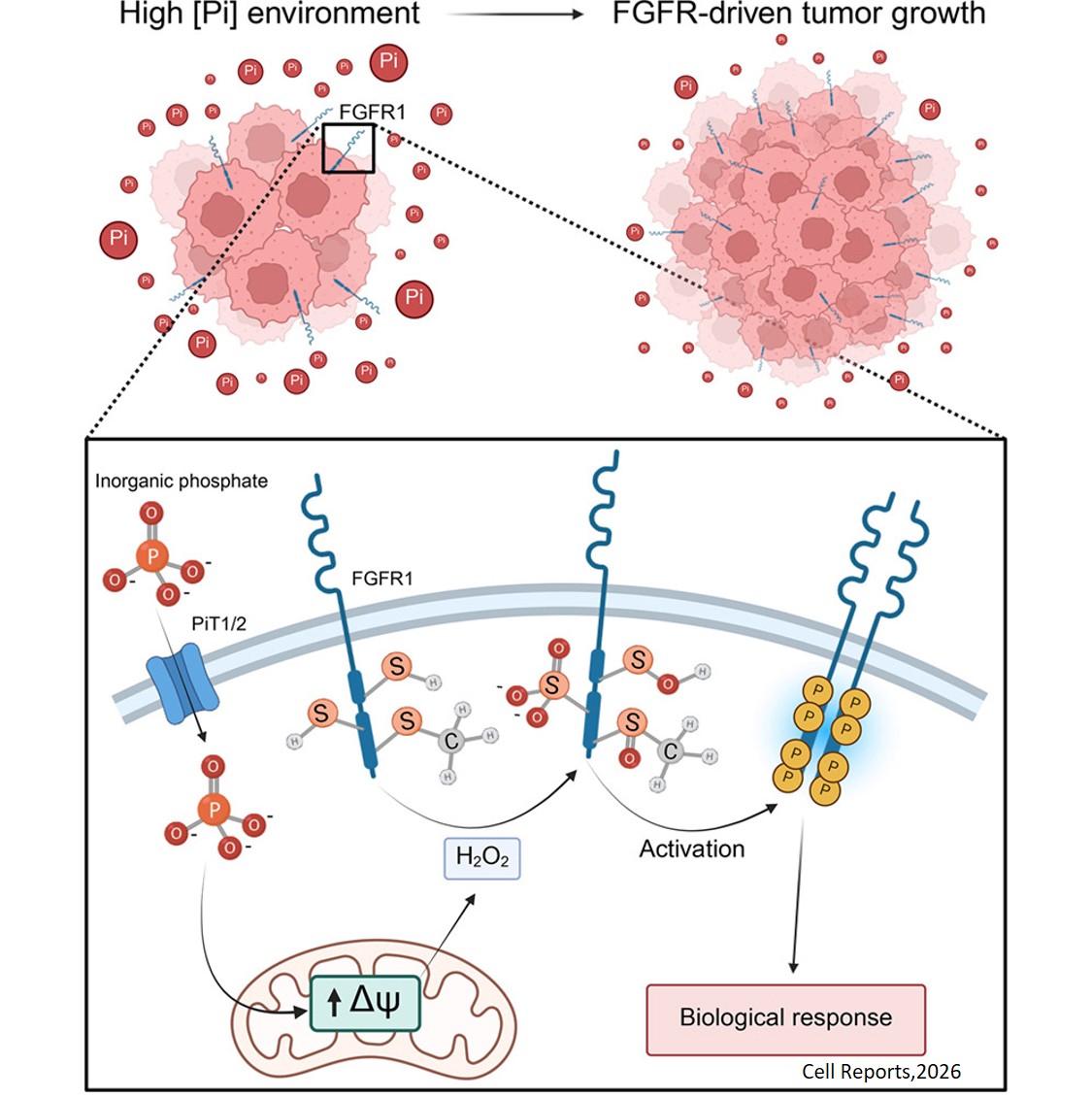
Fibroblast growth factor receptors (FGFRs) are transmembrane cell-surface proteins bind to extracellular ligands known as fibroblast growth factors (FGFs) that induces receptor dimerization, leading to auto-trans-phosphorylation of the intracellular kinase domains and relieves the receptors from their autoinhibited state, subsequently activating downstream signaling pathways.
FGFRs have been implicated in various cancers, including osteosarcoma (OS) and recent studies have shown that FGFR1 participates in inorganic phosphate (Pi) sensing in osteoblasts, but how Pi activates FGFR1 remains unresolved.
The researchers in this study show that elevated Pi triggers FGFR1 activation via Pi transport across the plasma membrane into mitochondria, increasing H2O2 production. The H2O2 burst oxidizes critical cysteine and methionine residues in FGFR1, promoting receptor activation and downstream signaling.
This unconventional receptor activation serves as an oncogenic mechanism in osteosarcoma and explains the mechanism of physiological phosphate sensing.
https://www.cell.com/cell-reports/fulltext/S2211-1247(26)00582-6