
Mechanism of bacterial membrane protein insertion
Mechanism of the bacterial membrane protein insertion
The cell membrane contains a large number of proteins, which perform a wide variety of functions. Some serve as transport channels, specifically guiding substances into the cell or carrying cellular products out of it. Others are receptors, which detect control signals and then trigger processes in the cell. These proteins are folded in complex three-dimensional structures, with the specific form essential for the protein function.
One question remains unanswered in many cases for researchers: How do the proteins manufactured by the ribosomes – the “factories” of the cells – in the cell interior reach their position within the membrane in the correct form and when did the processes become established over the course of evolution?
The senior author said “The environment inside the cell is very different to that of the membrane. In the aqueous environment in the cell interior, the hydrophobic proteins would aggregate with other molecules before they could reach their target site. Special insertion mechanisms are therefore necessary.”
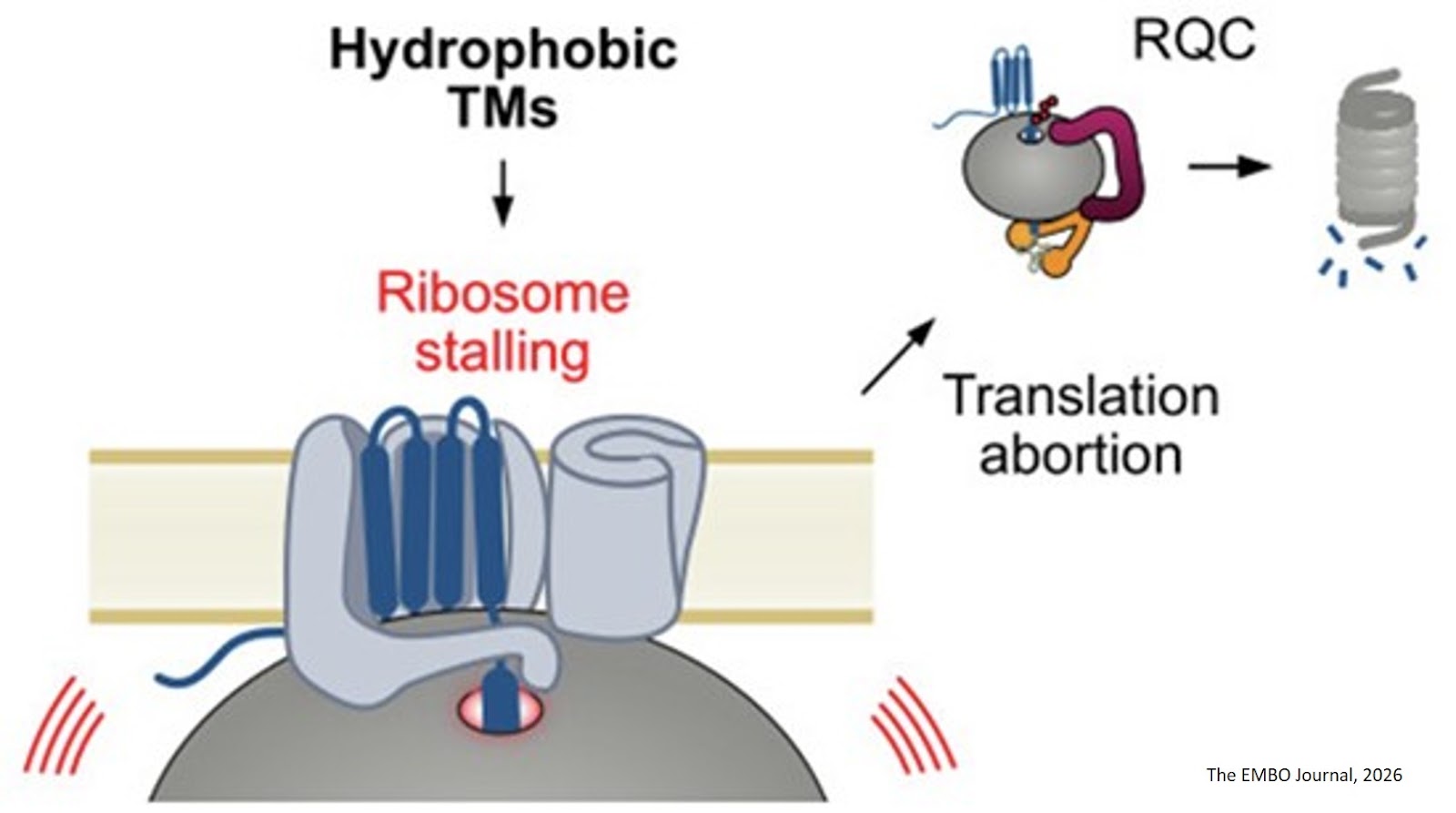
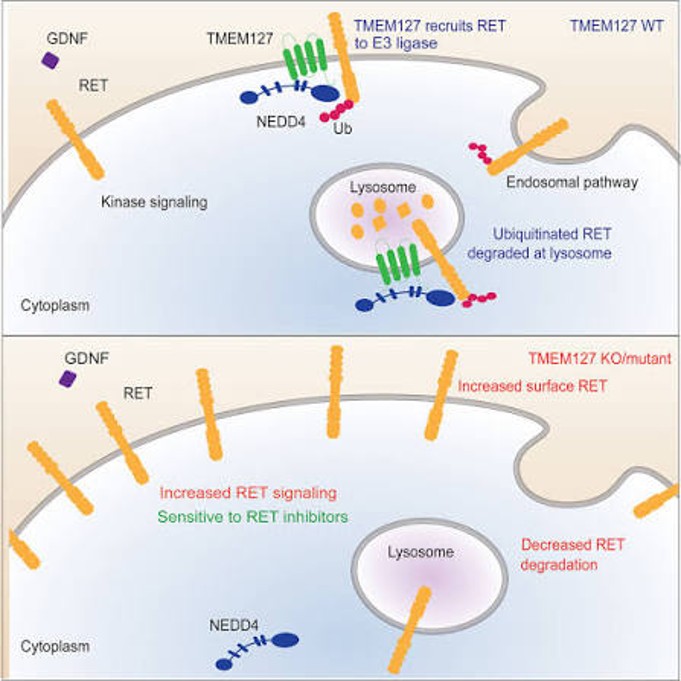
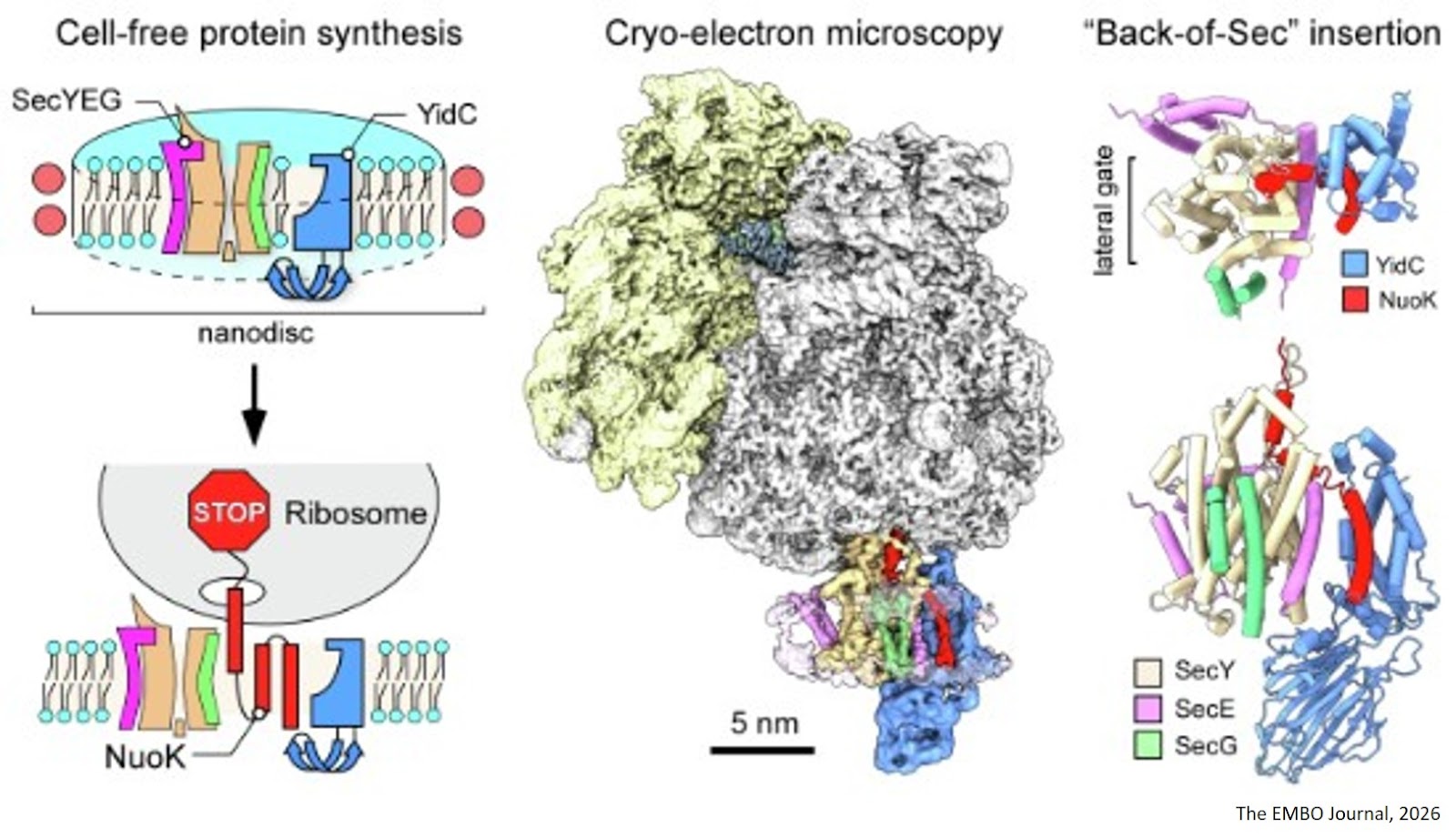
The nascent proteins are transported from the ribosomes to the membrane. In the next step, they are embedded in the membrane by special enzymes called “insertases”, which include the so-called Sec translocon and helper proteins such as YidC. It is only there that they achieve their final folded state.
To date, it has been assumed that the insertion occurred exclusively via an opening in the translocon – the “lateral gate”. However, it has not been possible to confirm this using imaging methods. In the latest studies on eukaryotes (higher cells with a nucleus), an alternative path into the membrane has now been observed where membrane proteins are inserted via the back of the translocon (“back-of-Sec”).
In the study now published in The EMBO Journal, the research team examined the structure and insertion process of proteins in bacterial cells, so-called prokaryotes. “The recently published findings from eukaryotic systems have fundamentally changed our understanding of membrane protein insertion and challenged long-standing paradigms. This led us to ask the following key question: Is this newly described mechanism found exclusively in higher organisms or does it also exist in bacteria?
To answer this question, ribosome-membrane protein complexes were produced and their structure then determined using cryogenic electron microscopy. The researchers subsequently decoded the functionality on the basis of these data.
The researchers combined cryogenic electron microscopy with cell-free protein synthesis to visualize biogenesis of the SecYEG/YidC-dependent multipass membrane protein NuoK.
They show that the nascent chain of NuoK does not enter the lateral gate of SecYEG but instead crosses the translocon towards its back side, where YidC is recruited in the nascent substrate-dependent manner.
They also show that the SecY-YidC interface promotes folding of the transmembrane helices before insertion, consistent with thermodynamic principles of membrane protein folding. YidC forms extensive contacts with the nascent chain, suggesting its key role in the insertion event.
The lead author of the study: “For the first time, we have succeeded in showing the complete path from nascent membrane proteins in a ribosome through to their insertion in the membrane. We have also seen when the three-dimensional folded structures of the proteins are formed.”
The findings enable a better understanding of the folding processes of membrane proteins to be gained. “And we can learn something about the evolutionary development of these processes, which are important for the cells,” emphasises the lead, adding: “A similar process is also known to exist for other organisms such as yeasts. We can thus deduce when this process became established during the development of living organisms and was preserved over the course of history.”
A further objective of the group is to examine membrane protein insertion further and in greater detail, building on the findings obtained to date. One particular focus will be to clarify the role of other proteins involved.
https://link.springer.com/article/10.1038/s44318-026-00837-6
https://sciencemission.com/Substrate-induced-assembly