




How respiratory bacterium obtains essential lipids from the host
The author explains that “the bacterium uses the P116 protein as a highly effective tool to capture cholesterol and other essential lipids from the host, a mechanism that allows it to survive and colonize tissues beyond the lung,” and adds that “understanding this process opens new avenues to block its growth and to explore biotechnological applications based on its affinity for lipid-rich tissues.”
This discovery is particularly relevant because Mycoplasma pneumoniae is primarily known as a respiratory bacterium, yet several studies—including this one—show that it can reach other tissues in the body, especially those with a lipid-rich environment. Understanding how it achieves this extra respiratory colonization helps explain clinical manifestations outside the lung and provides clues about its potential contribution to systemic inflammatory processes.
Unlike other bacteria, Mycoplasma pneumoniae cannot synthesize many lipids that are essential for the integrity of its membrane, including cholesterol, and therefore depends entirely on the host to survive. In this context, the new study demonstrates that the P116 protein acts as a highly efficient lipid uptake system, capable of extracting cholesterol and other lipid species from both human lipoproteins—including LDL and HDL—and different cell types.
Experiments conducted by the team show that P116 rapidly incorporates cholesterol from LDL and HDL but can also capture phosphatidylcholines, sphingomyelins, and triacylglycerols. This ability to recognize and absorb multiple types of lipids makes P116 an essential mechanism for the survival of the microorganism. By supplying its membrane with components obtained directly from the host, Mycoplasma pneumoniae can adapt to different environments in the body and colonize tissues with a high lipid content beyond the respiratory system.
The author highlights the biological significance of this finding: “P116 acts as a lipid entry gate for the bacterium, an extraordinarily versatile system that allows it to incorporate cholesterol, phospholipids, and sphingolipids from the host.” The author adds that “this broad lipid uptake capacity largely explains why Mycoplasma pneumoniae can survive in such diverse environments and localize to tissues where other bacteria would not be able to thrive.”
The study also reveals that a monoclonal antibody specifically directed against the C-terminal domain of P116 markedly blocks cholesterol uptake by the bacterium, a process essential for its survival. “By preventing P116 from functioning as a lipid entry system, the antibody significantly reduces the growth of Mycoplasma pneumoniae in cell cultures and limits its ability to adhere to human atherosclerotic lesions in ex vivo samples. This dual action—slowing bacterial proliferation and preventing its presence in vulnerable areas of the cardiovascular system—represents a major advance in understanding the pathogenic and extra respiratory role of this microorganism,” notes the researcher.
The researchers emphasize that preventing this adhesion is particularly relevant because the presence of Mycoplasma pneumoniae in vulnerable plaques could promote local inflammation and compromise lesion stability. Unstable plaques are more prone to rupture, a process that can trigger serious cardiovascular events.
The author underscores its potential: “The antibody targets the bacterium’s key point, which is its ability to capture cholesterol. By blocking P116, we slow its growth and prevent it from adhering to atherosclerotic lesions.” The author adds that “this is relevant because the presence of Mycoplasma pneumoniae in vulnerable plaques could contribute to inflammation and compromise their stability. Preventing this adhesion offers an opportunity to further protect tissues affected by atherosclerosis.”
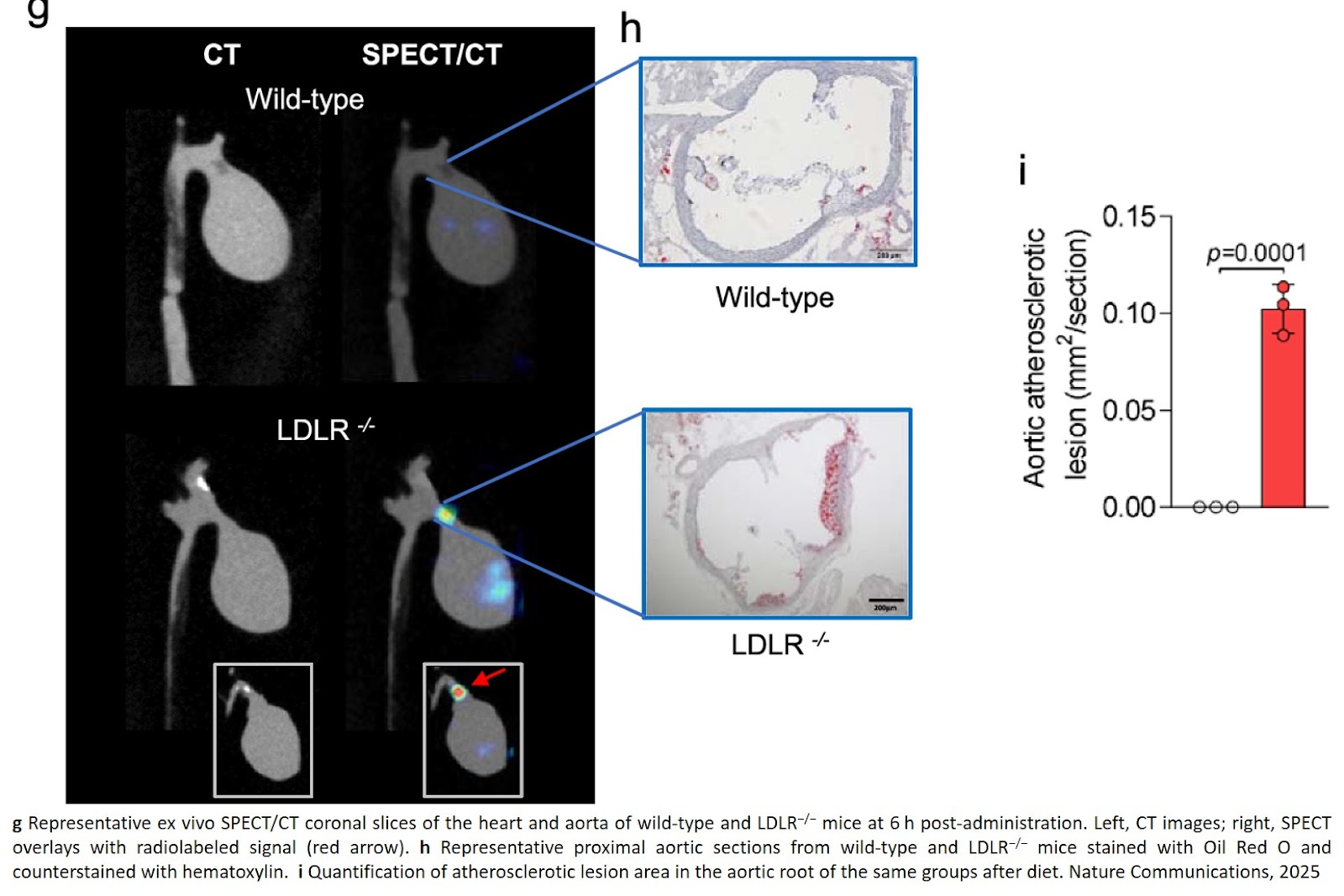
The researchers have also used a modified and harmless form of the bacterium, designed to serve as a biotechnological tool to study how it distributes within the body. This version of the microorganism retains its natural ability to localize to lipid-rich tissues but has been adapted so that it does not cause disease. In experiments with hypercholesterolemic mice, the modified bacterium selectively accumulates in the liver and in atherosclerotic plaques, making it a potential vehicle for delivering therapeutic molecules or diagnostic agents precisely to the tissues where they are most needed.
This capacity for specific targeting opens a promising avenue in an emerging area of biotechnology: the use of modified living microorganisms as systems for targeted delivery of therapeutic molecules. In the case of Mycoplasma pneumoniae, its minimalist metabolism and dependence on host lipids make it particularly attractive as a manipulable and safe platform.
The author summarizes it as follows: “The modified version of Mycoplasma pneumoniae shows a natural tropism toward the liver and atherosclerotic lesions, making it a promising biotechnological platform for the study and treatment of metabolic and cardiovascular diseases.” The author adds that “leveraging the biology of this microorganism in a controlled way allows us to envision targeted therapeutic strategies that are more precise and potentially more effective for acting on tissues affected by atherosclerosis or fatty liver disease.”
https://www.nature.com/articles/s41467-025-66129-5
https://sciencemission.com/essential-lipids-for-Mycoplasma-pneumoniae