



Mitochondrial calcium regulate lipid metabolism
An international study has identified a fundamental mechanism that regulates how the body uses stored fat to produce energy.
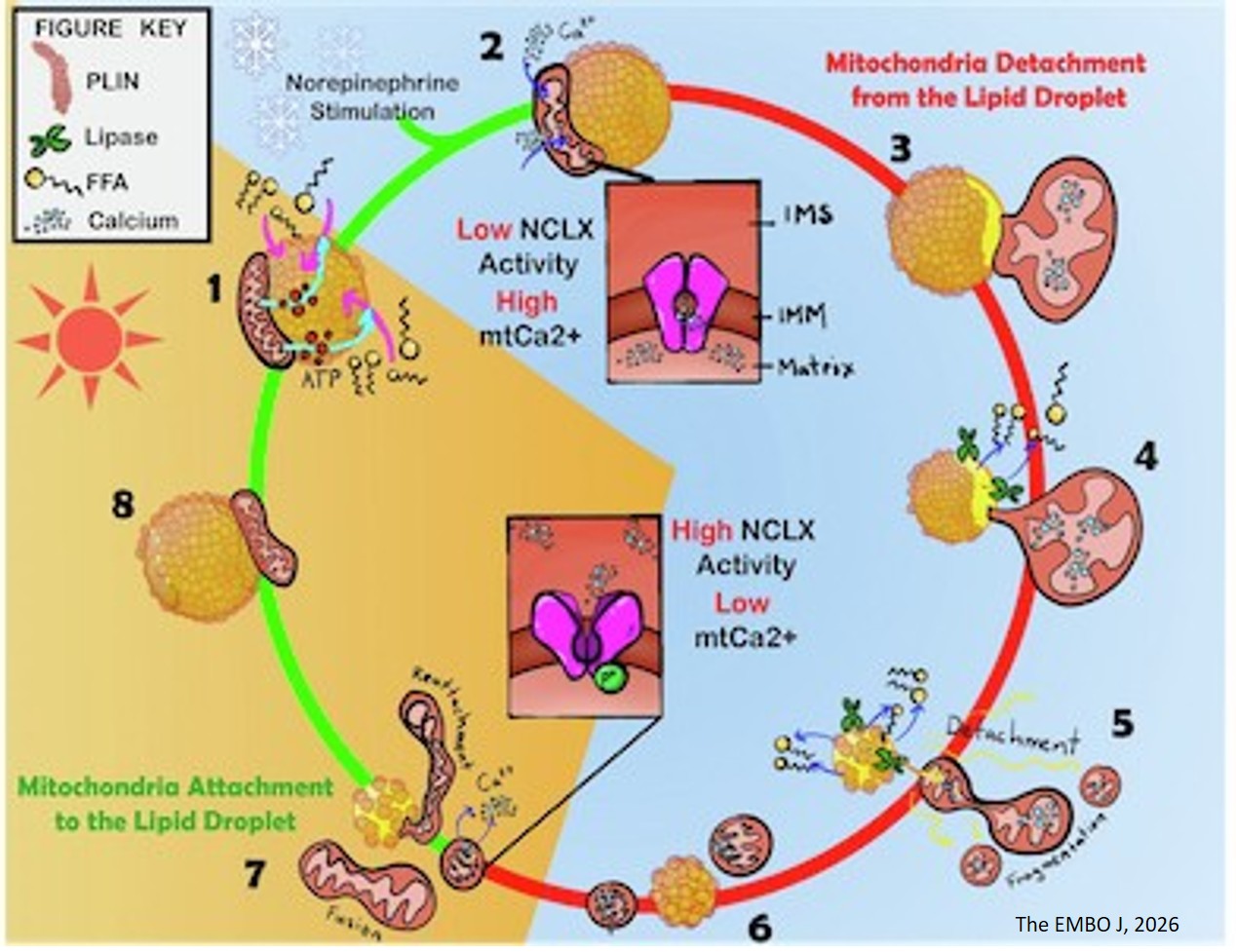
The findings, published in The EMBO Journal, show that calcium levels within mitochondria determine whether these organelles remain attached to or detach from lipid droplets, the cellular structures where fat is stored.
Mitochondria are the cellular structures responsible for generating most of the energy required for tissue function. In brown adipose tissue—a specialized type of fat involved in heat production and energy expenditure—some mitochondria remain physically associated with lipid droplets, and these peridroplet mitochondria play a key role in managing cellular energy reserves.
The study shows that increased calcium levels inside mitochondria induce changes in mitochondrial morphology and promote their separation from lipid droplets. Study first author explains: “This process is essential for enzymes responsible for fat breakdown, known as lipases, to access stored lipids and convert them into energy.”
The authors also observed that mitochondrial detachment occurs before the onset of lipolysis, acting as a kind of molecular switch that triggers the mobilization of fat reserves.
The study also identifies the proteins that regulate this mechanism. Calcium efflux from mitochondria is controlled by the mitochondrial calcium exchanger NCLX. When NCLX activity is reduced, mitochondrial calcium accumulates, detachment from lipid droplets is promoted, and fat utilization as an energy source is increased. In contrast, when NCLX is active, mitochondria tend to remain associated with lipid stores.
Beyond describing this biological mechanism, the study shows that its pharmacological manipulation can have significant metabolic consequences. In animal models of obesity, inhibition of PDE2A increased the association between mitochondria and lipid droplets, reduced fat breakdown, and promoted the use of glucose for energy production. This metabolic shift was associated with improved energy balance and increased metabolic expenditure.
Overall, the findings reveal that the interaction between mitochondria and lipid droplets is a dynamic process, finely regulated by intracellular signals such as calcium. “Understanding how this relationship is controlled provides a new perspective on the mechanisms governing energy metabolism and opens potential avenues for the development of treatments for obesity and other metabolic diseases,” the authors conclude.
https://link.springer.com/article/10.1038/s44318-026-00827-8
https://sciencemission.com/Mitochondrial-calcium-regulates-lipid-metabolism