

Targeting chaperone-mediated autophagy
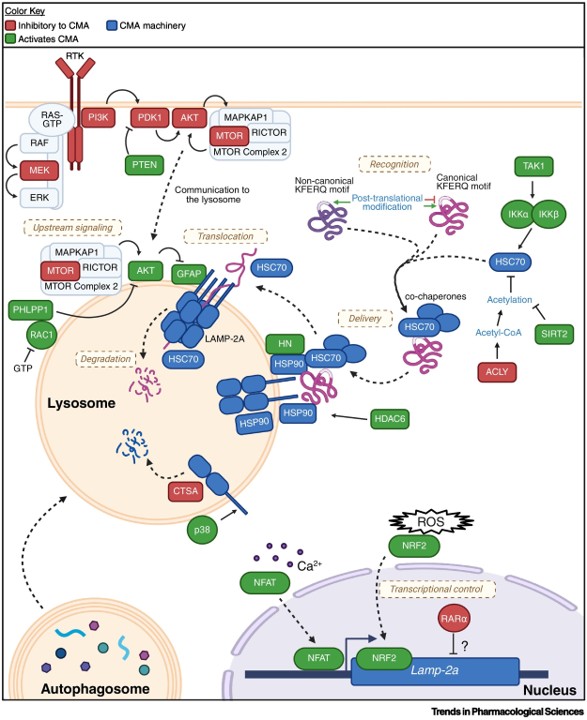
Chaperone-mediated autophagy is a selective lysosomal degradation pathway with emerging relevance to human diseases.
Chaperone-mediated autophagy is frequently upregulated during cellular stress, but stress-associated induction differs fundamentally from pharmacological modulation.
Reported chaperone-mediated autophagy-enhancing compounds act through distinct mechanistic classes, including stress-linked inducers, signaling-level potentiators, and proximal chaperone-mediated autophagy activators.
Most chaperone-mediated autophagyenhancing compounds engage chaperone-mediated autophagy indirectly and display pleiotropic effects, with limited pathway selectivity, complicating therapeutic translation.
Retinoic acid receptor-α antagonists, as proximal chaperone-mediated autophagy activators, represent the most substantiated pharmacological entry point for enhancing chaperonemediated autophagy identified to date.
Defining mechanistic proximity and pathway selectivity is essential for translating chaperone-mediated autophagy modulation into clinically viable therapies.
https://www.cell.com/trends/pharmacological-sciences/fulltext/S0165-6147(26)00084-2