

Immune cells play a key role in longer chronic pain in women
Chronic pain lasts longer for women than men, and new research suggests differences in hormone-regulated immune cells, called monocytes, may help explain why.
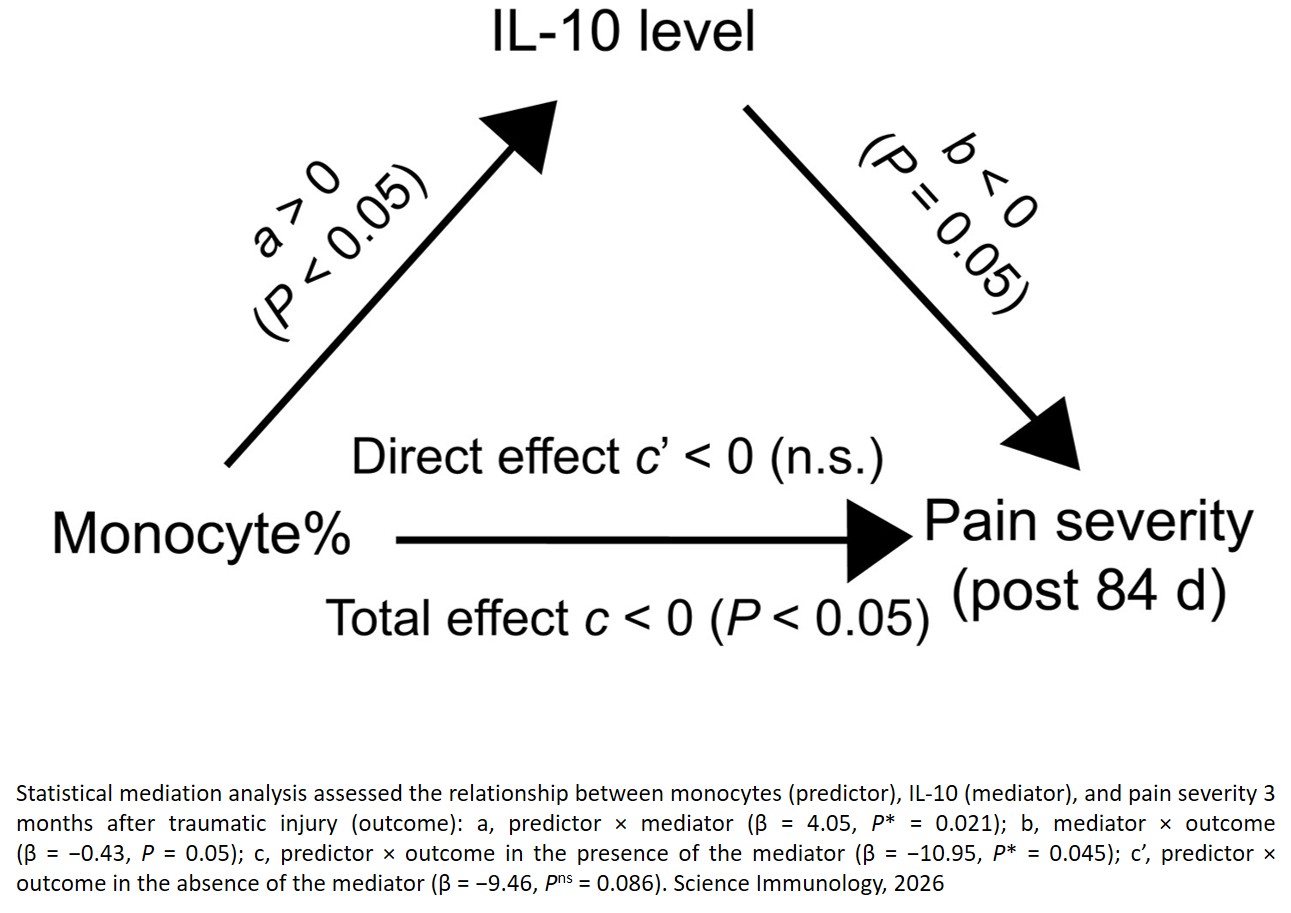
In a new paper in Science Immunology, researchers found a subset of monocytes release a molecule to switch off pain. These cells are more active in males due to higher levels of sex hormones such as testosterone, the team found.
Females, however, experienced longer-lasting pain and delayed recovery, because their monocytes were less active. The researchers discovered the same pattern in both mouse models and human patients.
These findings could mean those immune cells can be manipulated into producing more signals to calm pain. While a new treatment is likely decades away, the authors hope this research could one day help millions of people experience relief with non-opioid treatments — and ensure women’s pain is taken seriously.
“The difference in pain between men and women has a biological basis,” the author said. “It’s not in your head, and you’re not soft. It’s in your immune system.”
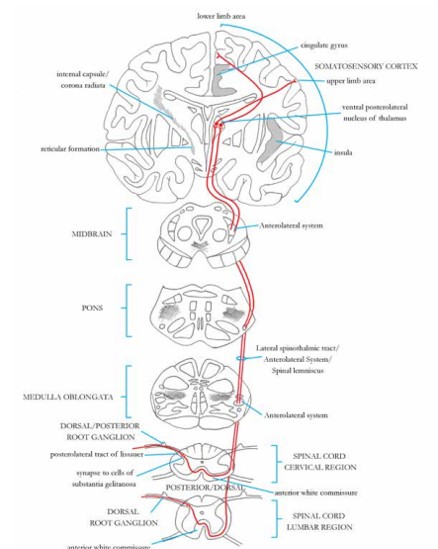
Pain results when neurons found throughout your body are activated by stimulation. Most of the time they’re silent, but they become activated when you stub your toe or fall off a bike. But for those with chronic pain, the sensors may be activated with mild stimulation, or even no stimulation at all.
Doctors still rely on patients rating their pain on a scale of one to 10. The problem is everyone experiences pain differently. So, when more women than men complain of long-lasting or chronic pain, the difference is often chocked up to perception or reporting.
The team was researching a small pilot project when they noticed higher levels of interleukin-10, or IL-10, in males. When the second test again showed higher levels of the substance that signals to neurons to shut down pain, they realized they were onto something.
The lab dove into the research using a sophisticated technique called high-dimensional spectral flow cytometry. They learned that monocytes, long thought to be precursor cells without much of a function, play an essential and direct role in communicating with pain-sensing neurons by producing IL-10. The team found that IL-10-producing-monocytes were much more active in males than females. When they blocked male sex hormones, they received the opposite result.
“This study shows that pain resolution is not a passive process,” the author said. “It is an active, immune-driven one.”
The team performed at least five types of tests on mouse models to make sure what they saw wasn’t an anomaly. Each time, the results were the same.
This new evidence illuminates the immune–neural pain resolution pathway, shifting the thinking from how pain starts to why pain persists. The next step is to investigate how treatments could target this pathway and boost IL-10 production. These treatments could help pain resolve faster instead of just blocking pain signals.
“Future researchers can build on this work,” the author said. “This opens new avenues for non-opioid therapies aimed at preventing chronic pain before it’s established.”
https://www.science.org/doi/10.1126/sciimmunol.adx0292
https://sciencemission.com/IL-10-drives-sex-differences-in-pain