

How cucumbers got longer?
Cucumbers, a summer staple of salads and sandwiches, are a valuable commercial crop. They also have a less well-known role as valuable model plants which are helping researchers to extend the boundaries of genomic discovery.
The researchers used an array of experiments and genomic analysis to probe the differences between wild cucumbers and their domestic relatives at a molecular level.
They targeted the genetics that underpin fruit elongation in domesticated cucumbers which are longer than their stubby, bitter tasting wild relatives.
Their findings shed light on an increasingly important area of genetics and may allow us to breed bigger, higher yielding crops with much greater precision and variety.
Much of modern plant breeding targets mutations in DNA sequences which encode proteins, the cellular machines that deliver traits in the field, such as long or short fruits, bitter or sweet flavors, and round or wrinkled seeds.
But these protein encoding genes only account for a small proportion of the genome. Increasingly, researchers are using modern tools to explore DNA sequences that do not code for proteins.
Synonymous mutations, previously known as silent mutations, are an example of non-coding regions in the genome that are increasingly attracting the interest of biologists.
Previous studies have shown that they play a role in cellular functions, but there is little evidence of them shaping biological traits in a multi-cellular organism.
In this study, which appears in the journal Cell, the researchers investigated how silent mutations might drive traits by altering the structure and function of RNA.
With the help of a genomic variation map based on cucumber populations, fruit length was identified as a key domestication trait of cucumber.
The research team then used molecular and genetic analysis to reveal the precise mechanism that leads to cucumber elongation.
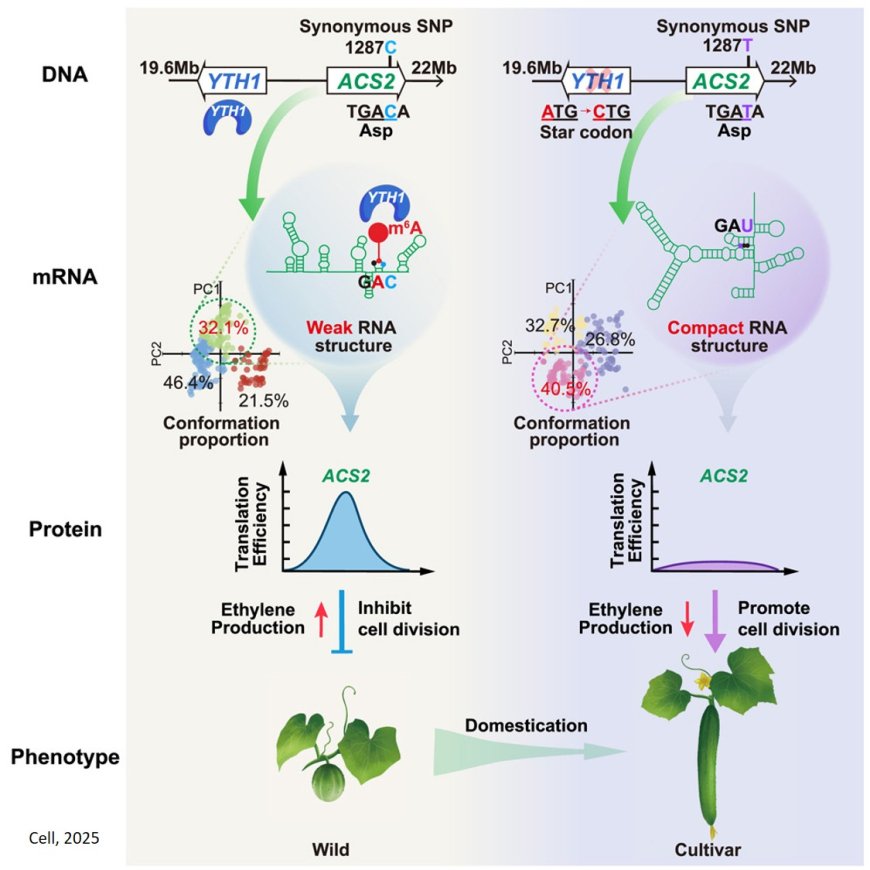
They show that a single synonymous mutation in a gene was a key driver of fruit elongation during cucumber domestication, leading to fruits growing up to 70% longer.
The researchers identified two closely linked, epistatically interacting genes: YTH1, an RNA N6-methyladenosine (m6A) reader, and ACS2, an aminocyclopropane-1-carboxylic acid (ACC) synthase, which contribute to cucumber fruit length domestication.
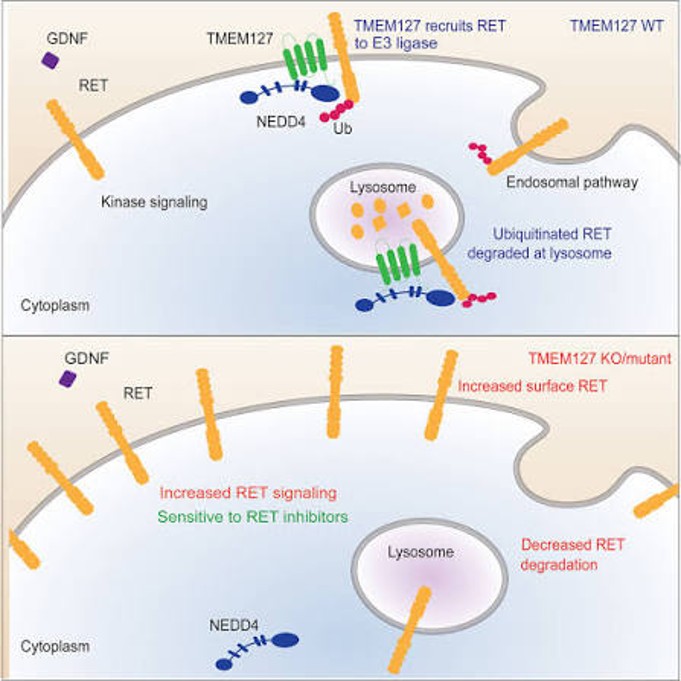
In wild cucumber, ACS21287C results in m6A modification on nearby adenosine residues and the formation of loose RNA structural conformations. YTH1 recognizes the m6A modification, alters the folding equilibrium toward the weakest RNA structural conformation, and increases the ACS2 protein level, resulting in shorter fruit. In cultivated cucumber, ACS21287T disrupts m6A methylation and forms compact RNA structural conformations, leading to attenuated protein production and fruit elongation.
“A tiny ‘silent’ change in a cucumber gene - once thought to be innocuous - is the key player in making modern cucumbers longer,” said the first author of the study.
“Remarkably this silent mutation, long thought to be biologically neutral, rewired RNA regulation and contributed directly to the development of a domesticated trait,” added the author.
The findings provide valuable insights into crop breeding programmes, offering potential ways for engineering traits in the future. This study is especially relevant to traits like fruit size, which are crucial for improving crop yield and reaping commercial benefits for growers.
The study also paves the way for more research targeting synonymous sites, using precision crop improvement techniques such as gene editing to improve traits in the field across a range of crops.