

Targeting hard-to-drug prostate cancer protein
About half of prostate cancer cases in patients of European ancestry have a gene rearrangement where the genes TMPRSS2 and ERG are fused together.
This causes the ERG protein to be turned on, increasing the growth and migration of tumor cells.
However, ERG has been considered undruggable because it lacks the usual pockets that a drug can bind to.
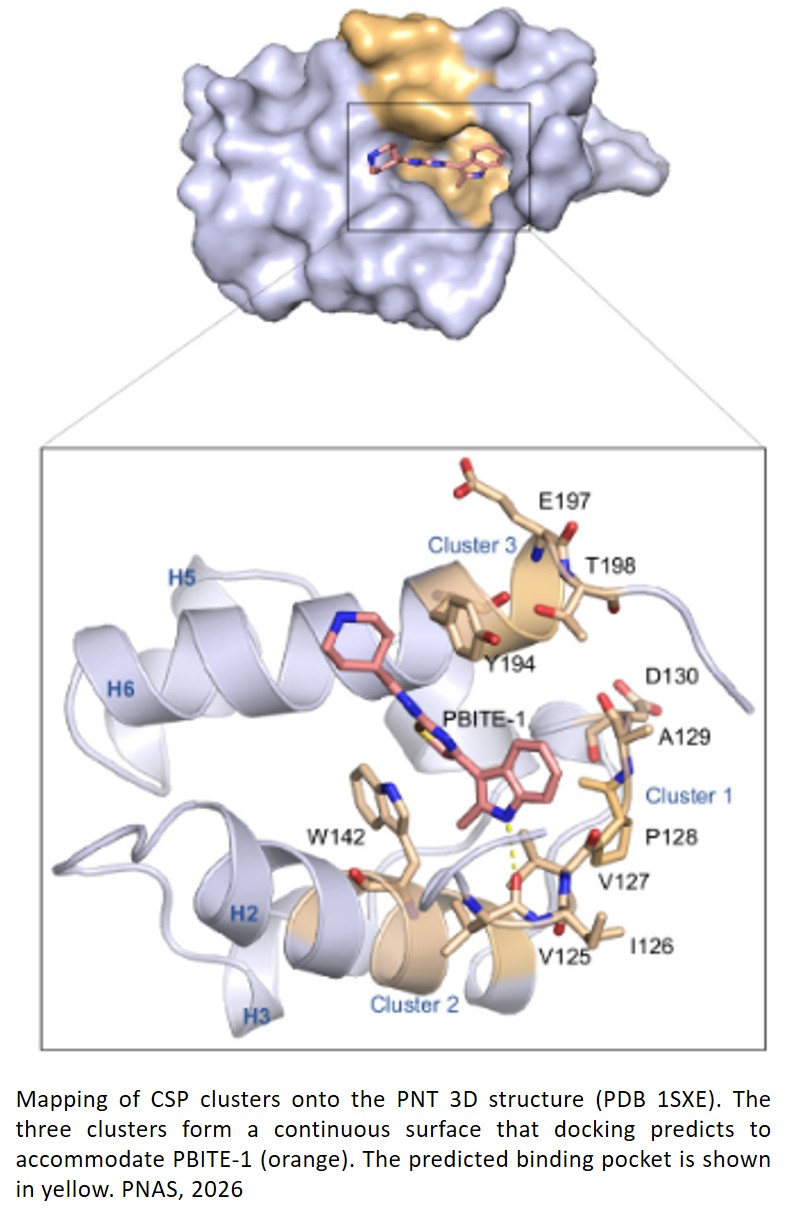
In a new study published in the Proceedings of the National Academy of Sciences, researchers have identified a specific pocket within ERG and have developed a small molecule probe, called PBITE-1, that can bind to it.
Using preclinical models, the team showed that PBITE-1 can disrupt the ability of ERG to drive the development of prostate cancer.
“Although we were the first to identify the gene fusion as a driver of prostate cancer, it was challenging to find a drug target for ERG,” said the senior author.
“This work shows that instead of treating all prostate cancer as one disease, we have the potential to personalize therapy for subtypes of prostate cancer."
Current therapies for prostate cancer target androgen receptors, which normally bind to testosterone.
In prostate cancer, androgen receptors turn on ERG gene fusions, accelerating the growth of tumors.
Although treatments that block androgen receptors can help slow prostate cancer growth, they often find a way to grow.
These drugs can also cause side effects that affect quality of life.
The researchers screened over 1,600 compounds to identify small molecules that can bind to the PNT domain.
They initially found a molecule, which they improved upon and named PBITE-1.
PBITE-1 can bind and inhibit ERG in prostate cancer cells through a region known as the PNT domain. This region influences how ERG interacts with other proteins.
Using preclinical models, including prostate cancer cell lines and models of human and mouse prostate organs, the researchers showed that PBITE-1 causes cell death and prevents them from invading nearby tissues.
“Although it is unlikely that PBITE-1 is ready to become a drug any time soon, this study shows that ERG is a druggable target,” the senior author said.
“It is exciting that we now have a path forward to target ERG in prostate cancer.”
https://www.pnas.org/doi/10.1073/pnas.2537437123
https://sciencemission.com/ERG-as-a-directly-targetable-oncogenic-driver