

How immune cell networks drive liver disease
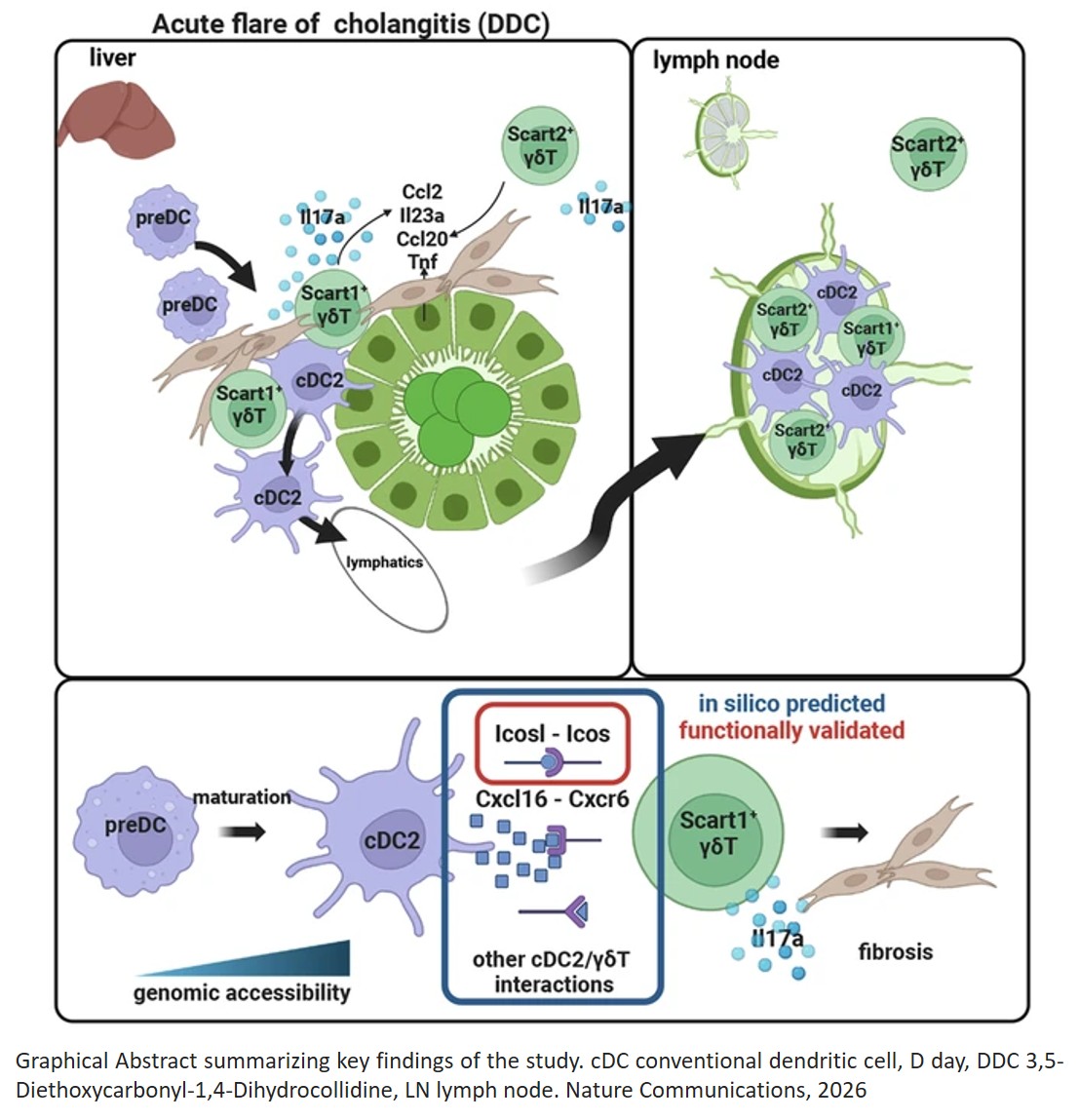
When the liver is injured - for example, due to bile accumulation - immune cells become activated. In mouse experiments, the research team observed that certain immune cells undergo functional changes in response to liver damage, adopting a highly pro-inflammatory state. Using advanced single-cell sequencing and high-resolution spatial analysis, the researchers identified a direct interaction between two types of immune cells: dendritic cells and a specific subset of rare T cells known as γδ T cells.
These cells communicate with other immune cells, triggering a cascade of signals that amplify inflammation and can ultimately lead to liver fibrosis. Over time, this process contributes to a sustained decline in liver function.
The identified cell types communicate through direct contact, triggering the release of the pro-inflammatory signaling molecule interleukin-17. This process plays a key role in driving both liver inflammation and fibrosis. The first author of the study explains: “We found that removing specific immune cell populations significantly reduces both inflammation and scarring. This suggests that their interaction is a critical driver of disease progression.”
Importantly, these mechanisms were confirmed in human tissue samples. “We hope that, in the long term, our findings will help pave the way for more targeted therapies to slow the early development of liver disease,” says the senior author.
Before these insights can be translated into clinical therapies, the underlying mechanisms need to be investigated in greater detail and validated in further human studies. In parallel, the research team is now exploring whether similar processes occur across different liver diseases, including common conditions such as metabolic dysfunction-associated fatty liver disease.
https://www.nature.com/articles/s41467-026-71537-2
https://sciencemission.com/immunobiliary-single-cell-atlas