

Genetic link between T2D and high blood pressure uncovered
Type 2 diabetes and high blood pressure share a genetic link, new research shows. People with one condition are more likely to develop the other.
Within this large-scale study, scientists examined genetic data linked to type 2 diabetes and blood pressure regulation. Both conditions frequently occur in the same individual, which significantly increases the risk and severity of major health complications, including cardiovascular and metabolic disease.
The senior lead author said: “Type 2 diabetes and high blood pressure often occur together and are usually thought of as part of the same overall health risk. What we found is that they can develop together for several different biological reasons, and that some people carry genetic factors that increase their likelihood of having both conditions.
“Understanding this shared genetic risk helps us get closer to identifying who is more vulnerable and why. In the long term, this could support earlier identification of people at higher risk and lead to more personalised approaches to prevention and care.”
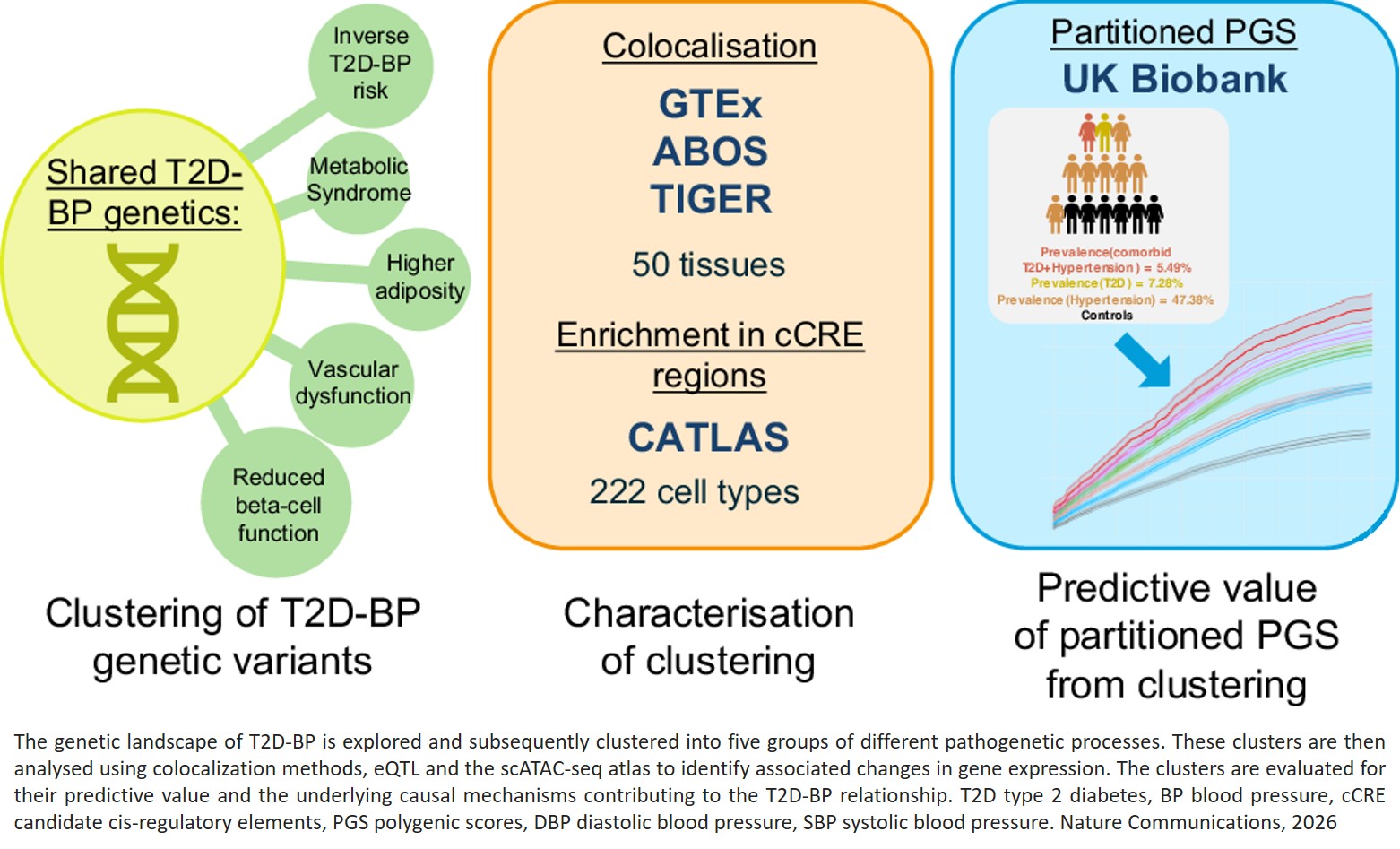
Scientists analysed over 1,300 genetic variants associated with type 2 diabetes and blood pressure. The team identified five clusters of DNA variants related to metabolic syndrome, impaired pancreatic beta-cell function, higher overall adiposity and vascular dysfunction, alongside a cluster showing an inverse pattern of diabetes and blood-pressure risk, which helped develop partitioned genetic scores.
These scores were then applied to data from over 450,000 participants from the UK Biobank. Scientists found that people who ranked highly on scores linked to genes in the metabolic syndrome and reduced beta cell-function cluster had a substantially higher risk of developing both type 2 diabetes and high blood pressure. The research team believes that the comorbidity risk could be identified early, from the first diagnosis of a patient with either diabetes or high blood pressure, enabling a patient to get more personalised care.
The first author added: “Unlike many clinical risk factors that evolve with age or lifestyle, genetic risk is inherited and remains stable throughout the life course. Genetic information could be integrated into precision medicine approaches, helping clinicians at the first diagnosis of diabetes or hypertension to anticipate future comorbidity and tailor monitoring accordingly.”
A co-author said: “We brought together evidence from large genetic studies and multiomic resources to separate shared risk into interpretable mechanisms. This helps explain why people can arrive at the same clinical outcome, diabetes with high blood pressure, through different biological routes.”
The senior author commented: “These results reinforce the need to treat cardiometabolic comorbidity as mechanistically heterogeneous. Genetics can help us disentangle that complexity and supports a precision-health framework in which prevention and management are informed by the dominant underlying biology.”
A co- senior author added: “High blood pressure and type 2 diabetes share genetic architecture, but this work shows that the shared component is not uniform. A partitioned approach improves interpretability and has the potential to complement existing clinical tools by identifying subgroups with meaningfully different risk profiles.”
This study was published in Nature Communications.
https://www.nature.com/articles/s41467-025-67449-2
https://sciencemission.com/T2D-and-hypertension-comorbidity