


Molecular mechanism underlying peripartum cardiomyopathy
Scientists have identified a previously unknown molecular safeguard that protects the heart during pregnancy, shedding new light on the causes of peripartum cardiomyopathy (PPCM), a rare and life-threatening form of pregnancy-related heart failure.
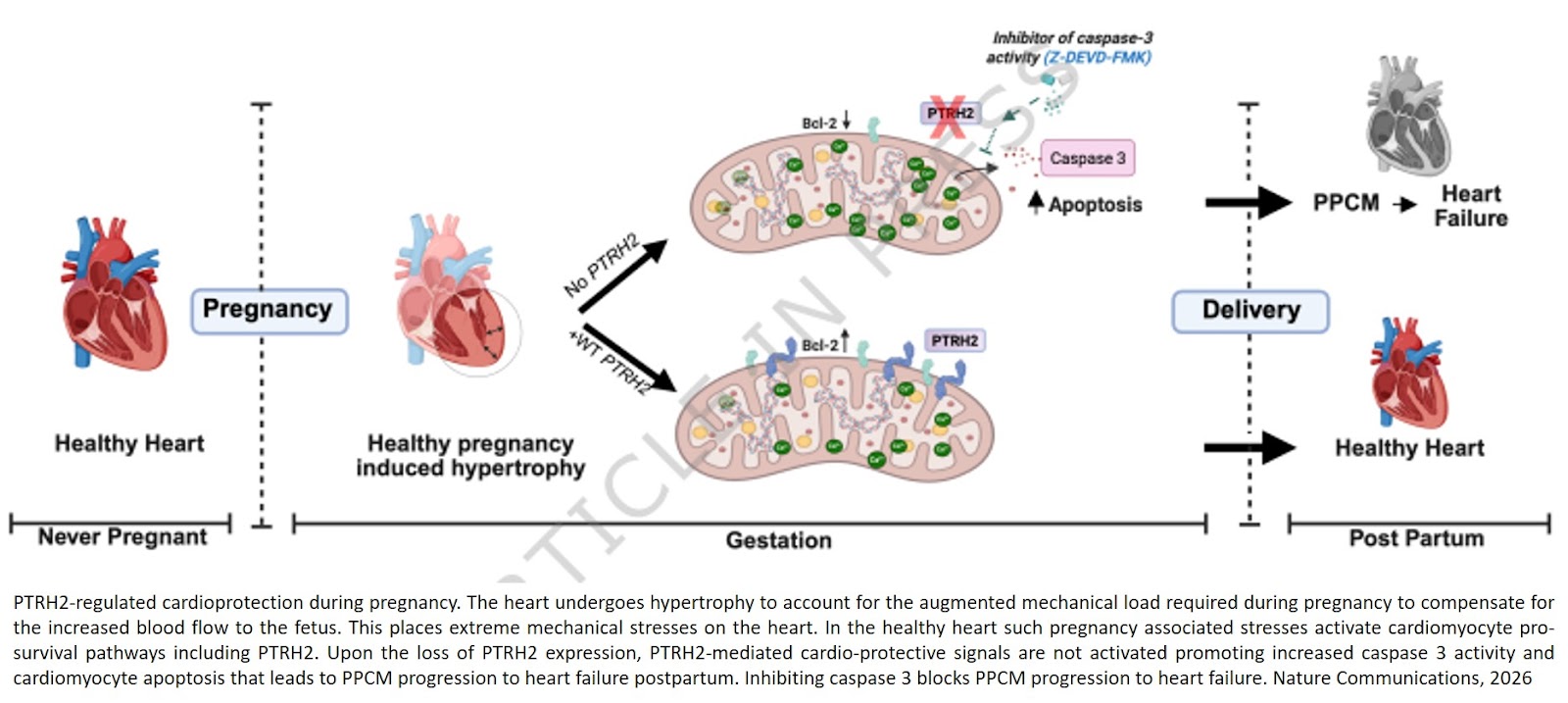
In a study published in Nature Communications, the team reveal that the gene the peptidyl-tRNA hydrolase 2 (PTRH2) plays a critical role in helping the maternal heart adapt to pregnancy-induced stress.
In wild-type female mice hearts, Ptrh2 protein levels significantly increase during pregnancy and decrease postpartum, demonstrating a protective role in response to pregnancy-initiated cardiac stresses.
“This work identifies a previously unrecognized molecular safeguard in the heart,” said the author. “Understanding how the heart normally responds to pregnancy-induced stresses brings us closer to developing targeted treatments for women who develop PPCM.”
Using advanced mouse models, the researchers showed that loss of PTRH2 leads to severe postpartum heart failure. “During pregnancy, the heart increases in size to account for increased blood flow—but without PTRH2, the heart doesn’t return to normal,” explained a co-first author. “That kind of enlargement can be extremely dangerous and, in many cases, fatal.”
The authors also demonstrate that infusion of a caspase 3-specific inhibitor attenuated the PPCM phenotype. Thus, Ptrh2 act as a negative regulator of pregnancy-induced cardiac stresses by activating pro-survival signals and blocking apoptotic signals.
The findings point to new therapeutic possibilities and underscore the urgent need for better treatments. “We’re opening the door for innovation,” the author added. “This isn’t just about the disease—it’s about the mothers who are affected.”
https://www.nature.com/articles/s41467-025-67852-9
https://sciencemission.com/Peptidyl-tRNA-hydrolase-2-is-a-negative-regulator