

AI identified statins and phenothiazines for neuroblastoma treatment
Using machine learning and a large volume of data on genes and existing drugs, researchers at have identified a combination of statins and phenothiazines that is particularly promising in the treatment of the aggressive form of neuroblastoma. The results from experimental trials showed slowing of tumor growth and higher survival rates.
The childhood cancer, neuroblastoma, affects around 5,500 children globally every year. Most of them fall ill before the age of five. Neuroblastoma is characterised by, among other things, tumors that are often resistant to drug treatment including chemotherapy. The disease exists in both mild and severe forms, and the researchers are mainly studying the aggressive form, high-risk neuroblastoma. This variant is the form of childhood cancer with the lowest survival rate.
The research team has for several years studied which medicines, individually and in combination, could cure or slow down the disease. In a new study, which has been published in EMBO Molecular Medicine, they have specifically examined drugs that have already been approved for other conditions, an approach known as drug repurposing.
“This disease has a high relapse risk. Chemotherapy drugs often work well initially, but when the cancer comes back, it’s resistant,” says the senior author.
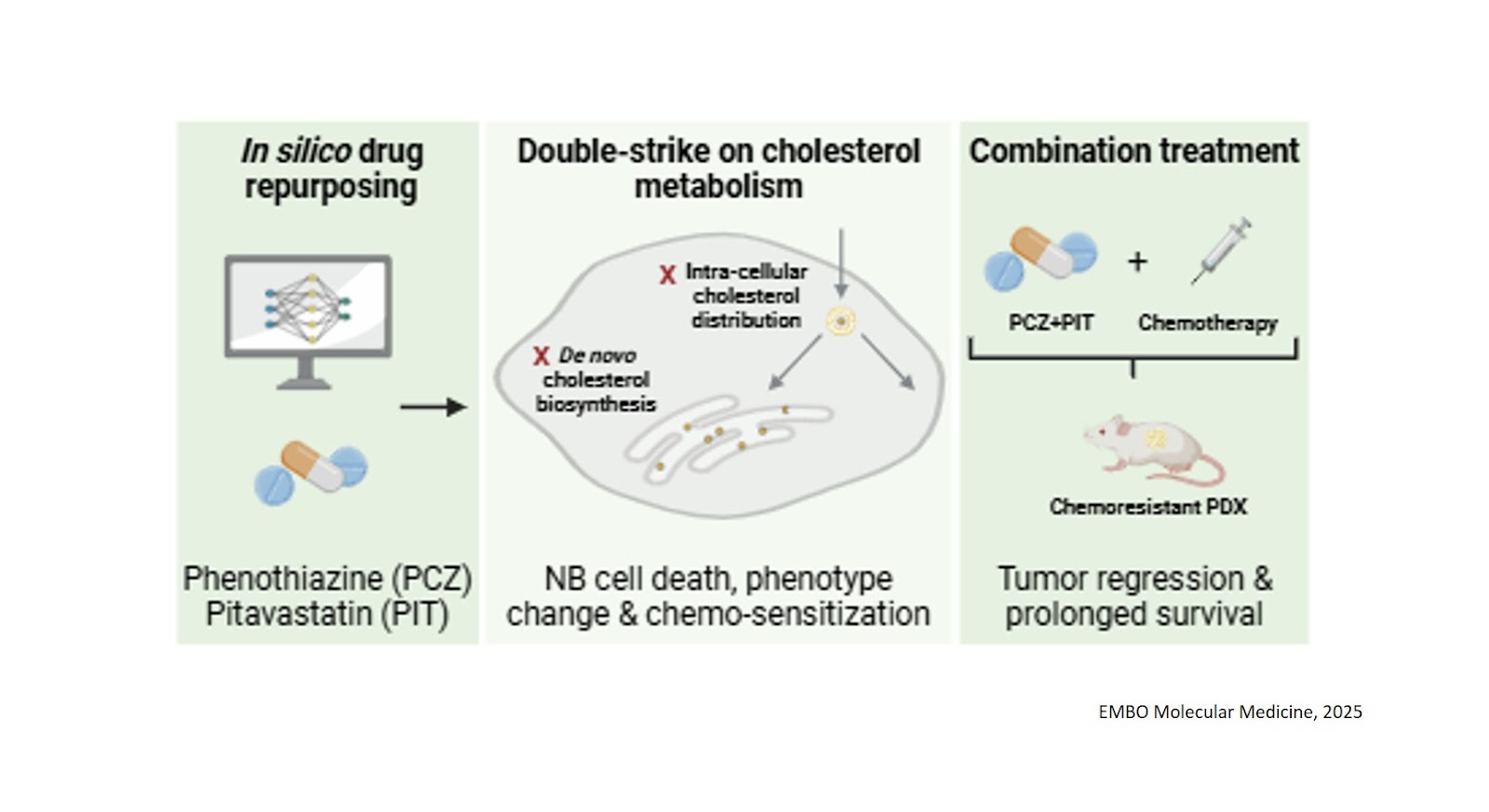
By using machine learning, drugs have been identified that have the potential to be effective against neuroblastoma. A large volume of data on how drugs function has been used along with knowledge on genes that are specifically relevant to neuroblastoma.
Using this information, the researchers test the drugs on aggressive neuroblastoma tumors that come from patients. The drugs were first tested individually and then in combination.
“We quickly noted that two types of drugs could have an effect individually. But together the effect was very powerful – a strong synergy,” says the first author of the study.
The drugs were a lipid-lowering statin and a phenothiazine, a drug used in the treatment of migraine and nausea, among others.
It was previously known that statins impede the new formation of cholesterol. The researchers now saw that phenothiazine also lowered cholesterol levels, but in another complementary way.
“Together, this led to low cholesterol levels in the tumor cell. Many tumor cells died, and those that survived were sensitive to chemotherapy drugs. We knew that cholesterol was important for the tumor, but were surprised that it had such strong effects,” says the senior author.
In laboratory trials, this drug combination could impede tumor growth and improve survival rates among mice. Now further studies are needed to enhance the chemical properties of the two drugs in order to optimise the effect.
“However, in our trials the treatment looks very promising, even for resistant tumors, says the senior author.
https://link.springer.com/article/10.1038/s44321-025-00349-6
https://sciencemission.com/Repurposing-statins-and-phenothiazines