


AI model for protein-protein interaction modeling
Researchers have developed a new artificial intelligence (AI) model that can more accurately predict how proteins interact with one another—an advance that could accelerate drug discovery and deepen insights into diseases such as cancer.
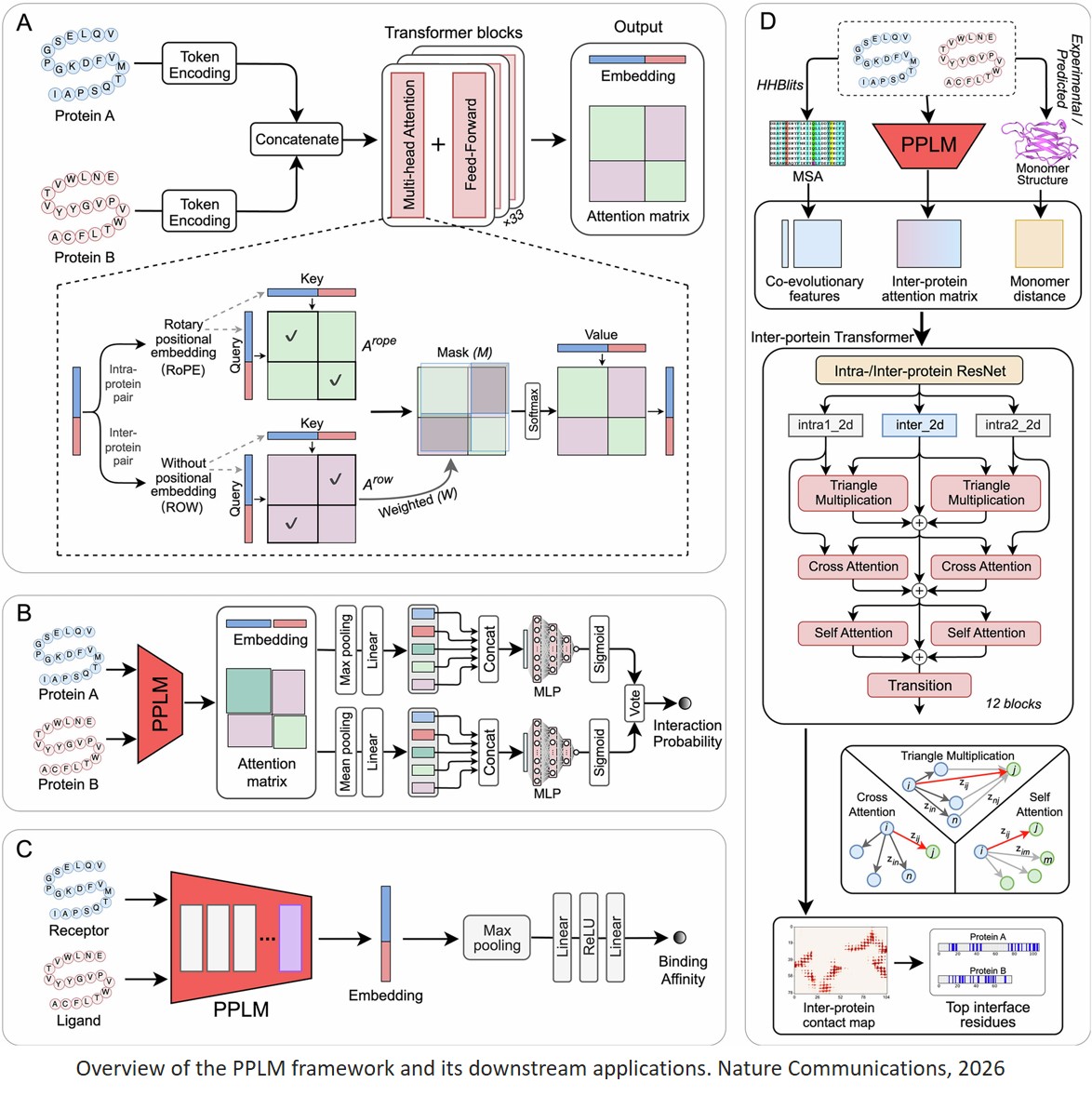
Published in Nature Communications, the study introduces a paired protein language model (PPLM) that learns from two interacting proteins simultaneously, rather than analysing them in isolation. This marks a significant shift in how AI is applied to biology, enabling more accurate prediction of protein–protein interactions that underpin nearly all cellular processes.
Protein–protein interactions are inherently relational, yet most current AI models are trained on single protein sequences. This limits their ability to fully capture how proteins recognise and bind to one another.
To address this, the research team developed PPLM, a model specifically designed to learn inter-protein relationships during training. By jointly encoding paired protein sequences, PPLM captures both individual protein features and partner-dependent interaction patterns within a unified framework. The model was trained on more than three million protein pairs, enabling it to learn interaction patterns at scale.
Building on this foundation, the team developed three specialised tools: PPLM-PPI for predicting whether proteins interact, PPLM-Affinity for estimating binding strength, and PPLM-Contact for identifying interaction interfaces. Across benchmark datasets, the model improved interaction prediction accuracy by up to about 17 per cent over leading methods, with consistent gains across multiple species.
Notably, the model outperformed both sequence-based and structure-based methods in challenging scenarios such as antibody–antigen interactions. In addition, the model identified patterns that match how proteins interact in real life, indicating that it can capture biologically meaningful relationships between proteins.
“This work highlights the growing role of AI in transforming the life sciences. By moving from single-protein analysis to interaction-aware modelling, the study lays the groundwork for future advances in multi-protein complex prediction, systems-level biology, and AI-guided therapeutic design,” explained the senior author.
By improving the accuracy and scalability of protein interaction modelling, PPLM could support a wide range of applications, including proteome-scale interaction discovery, drug target identification, and therapeutic development.
The team is now working to further enhance the model by integrating structural and experimental data and extending its application to more complex biological systems such as host–pathogen interactions.
https://www.nature.com/articles/s41467-026-70457-5
https://sciencemission.com/protein-protein-interaction-modeling