



Alcohol and the brain interact through immune cells
A research team studying alcohol and the brain discovered a new way that alcohol abuse can cause brain dysfunction and damage: through immune cells called microglia. The research also identified a potential new treatment target.
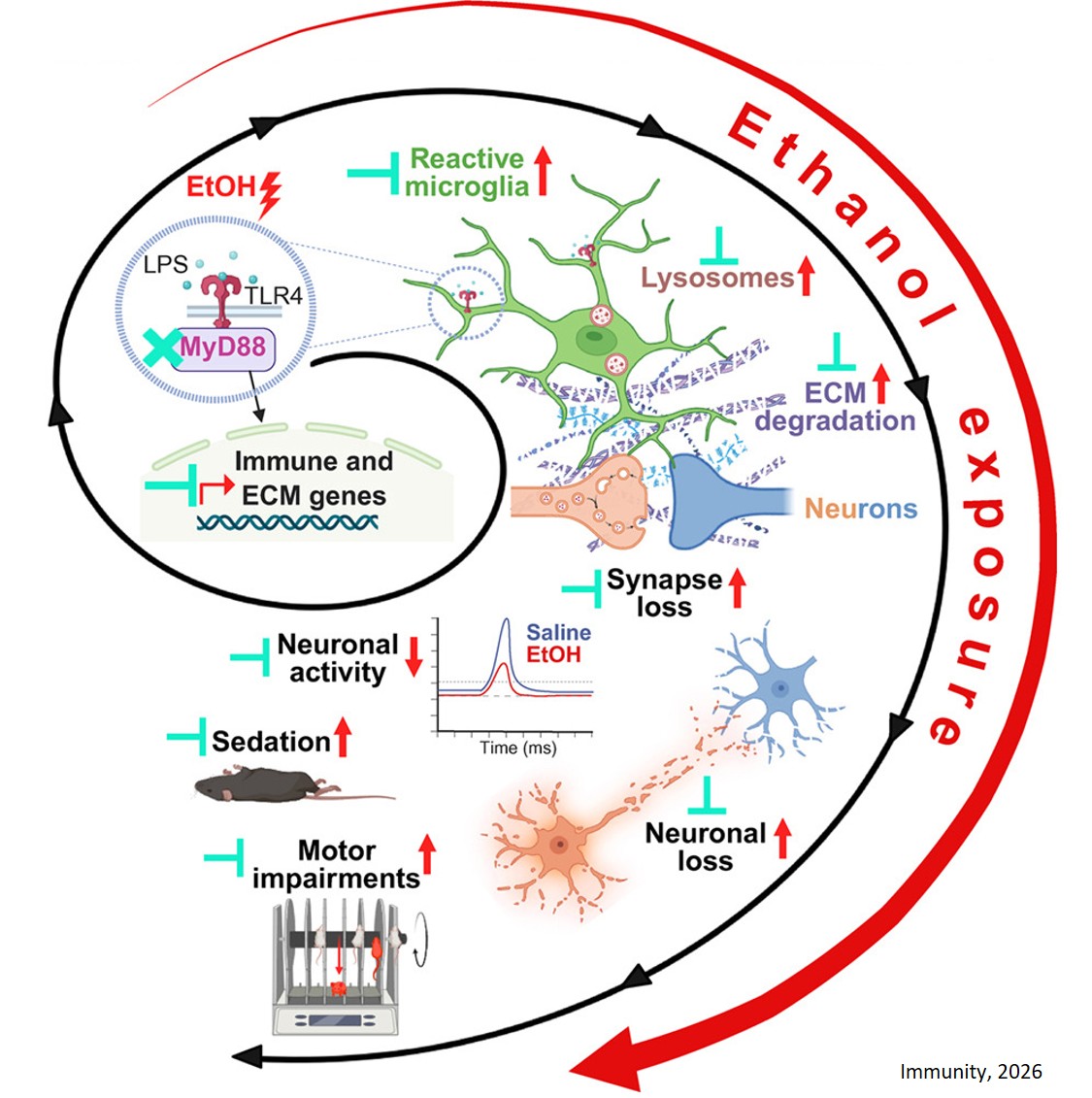
The team showed that in a brain affected by alcohol, microglia tear down the extracellular matrix (ECM), the scaffold that surrounds our neurons. The ECM physically holds our brain cells together and allows them to work properly. When it's disrupted, our neurons can't communicate as effectively. Severe ECM disruption can affect our ability to move, think and even remain alert.
The research, published in Immunity , is new, fundamental knowledge that already guides the research team to explore new ways to prevent alcohol-related brain damage, says senior author.
Microglia are the brain’s resident immune cells that monitor and respond to damage and abnormalities in our brains, often acting as vacuum cleaners sucking up and cleaning out debris. Microglia also prune neuronal connections as part of healthy brain development.
Each microglial cell is constantly surveying our brain with its many branch-like processes. The research team used advanced imaging techniques to follow the same microglia over time, before and after repeated exposure to alcohol. They made several discoveries:
1. Within an hour of heavy alcohol exposure microglial branches retracted, shrinking the area each one patrols, even before sedation was established. Instead, they began removing the ECM holding brain cells together.
2. As the ECM was removed, neurons became less active, producing sedation: the drowsiness, impaired coordination and loss of consciousness that heavy drinking causes.
3. A single binge-drinking episode led to ECM damage and loss of neuronal connections, and repeated alcohol abuse led to loss of neurons in the frontal cortex, the brain region responsible for impulse control and judgement.
“For years, alcohol’s effects on the brain were largely viewed through the lens of neurons, and for good reason: alcohol acts directly on neuronal receptors,” the author explains. “By following microglia in real time, we were able to see that they aren’t simply responding to damage. They drive the detrimental changes alcohol causes in the brain. And if they drive the damage, they can be targeted with treatment.”
The team found a potential target in MyD88, a protein that switches microglia on when their sensors detect tissue injury or other danger signals, such as those triggered by alcohol. Deleting the MyD88 gene from microglia before alcohol exposure blocked their response to alcohol and protected the brain from ECM and neuronal damage, while also reducing sedation and associated impairments – even with equally high blood alcohol levels.
The implications of these discoveries could extend beyond alcohol, the author says.
"We discovered a specific neuroimmune route that alcohol activates, but it’s possible that other drugs can turn that pathway on as well," the says. "My lab is looking into how we can target microglia or protect the brain’s ECM to prevent or limit brain damage, from substance use and possibly even other neurological diseases."
https://www.cell.com/immunity/fulltext/S1074-7613(26)00386-9
https://sciencemission.com/Microglia-mediated-extracellular-matrix-disruption