






Alternate pathway of antibiotic resistance
Antibiotic resistance is supercharging dangerous gut bacteria to withstand even hospital-grade disinfectants intended to kill them.
New research published in Nature Communications, reveals the bacteria Clostridioides difficile has picked up a key gene that gives its dormant spores a free pass against antibiotics and cleaning products.
Its spores act like plant seeds, waiting patiently to activate and spread in the right environment, like the human gut.
This is particularly dangerous given this bacterium is commonly found in hospitals and causes diarrhea that can be deadly for already unwell patients.
Antimicrobial resistance occurs when bacteria stop responding to antibiotics leading to infections that can be hard or impossible to treat.
The World Health Organization lists this phenomenon as a major global health threat and estimates that it contributes to millions of deaths every year.
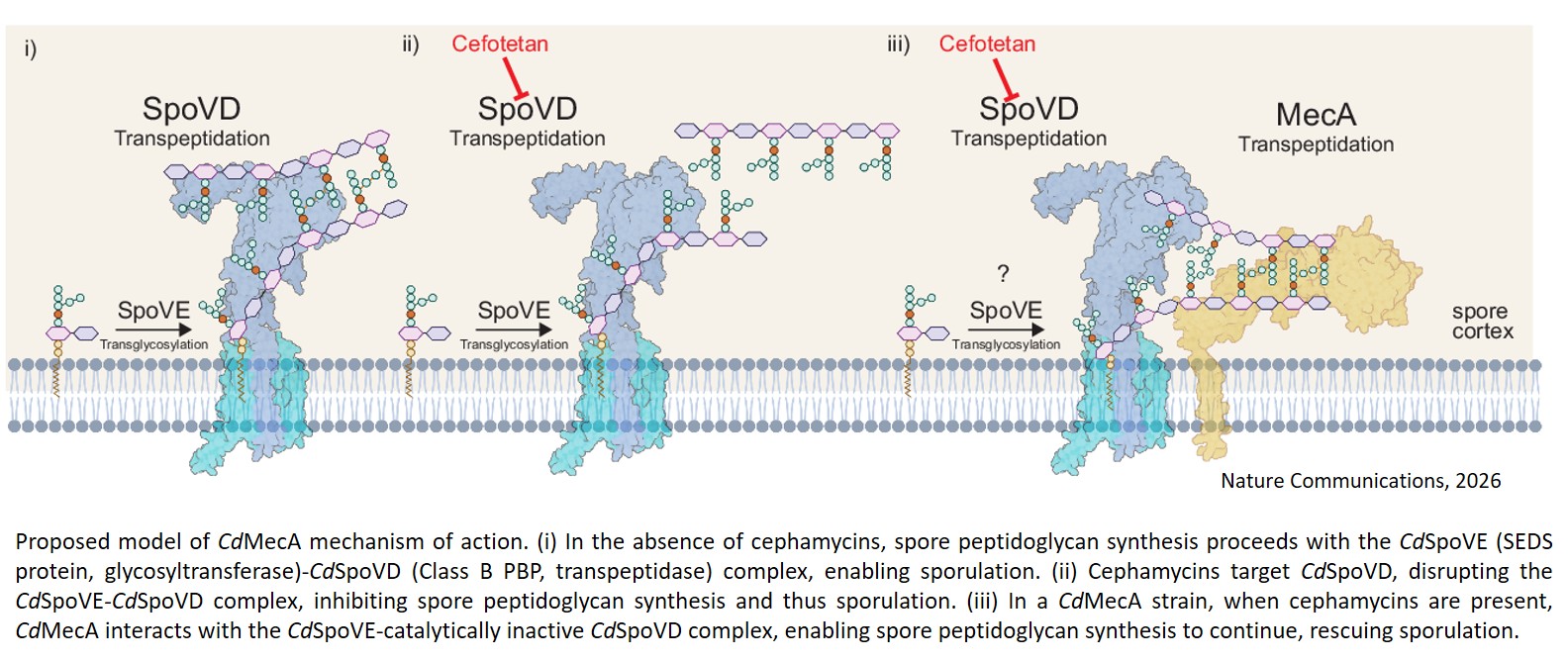
The authors previously demonstrated that cephamycin antibiotics target the conserved spore-specific protein SpoVD, significantly reducing spore formation in pathogens including Clostridioides difficile.
This new research, the first to uncover a link between antibiotic resistance and bacterial spores, shows that when Clostridioides difficile picks up this antibiotic resistance gene, the antibiotic block no longer works.
The authors show that when C. difficile acquires CdmecA, a homologue of Staphylococcus aureus mecA, one of the most globally burdensome resistance genes, the anti-sporulation effect of cephamycins is bypassed. CdMecA functionally replaces CdSpoVD, restoring sporulation and producing phenotypically distinct spores.
They further show that mecA is prevalent across C. difficile strains and other pathogenic, gut, and environmental spore-formers.
The antibiotic resistance gene produces a protein that replaces a key spore-building protein, allowing the bacteria to keep making spores.
First author said targeting the spores could be the key to unlocking a solution.
“Spore survival matters because spores are the main way these pathogens spread between people and through hospitals, homes, and the environment,” the author said.
“A resistance gene that changes how spores are built could make infections harder to control and help resistant strains spread more easily.
“We are now investigating ways to deal with this new type of antibiotic resistance.”
https://www.nature.com/articles/s41467-026-75594-5
https://sciencemission.com/antibiotic-resistance-28995