

Amoeba’s mitochondrial metabolism!
In water, soil, and air all around us lurks a free-living, single-celled organism called Acanthamoeba. Most of the time, Acanthamoeba keeps to itself. On rare occasions, though, the amoeba infects humans and can cause severe infections to eyes, skin, and even our brains. What’s more, doctors can struggle to diagnose and treat the eye infection caused by the organism, called Acanthamoeba keratitis.
“It’s a big challenge. The lack of readily available diagnostics is a problem, and then even after you finally get to the diagnosis, we don’t have good drugs,” says the lead author. “Our current drugs are untargeted and toxic, and we just need more options for treating these infections.”
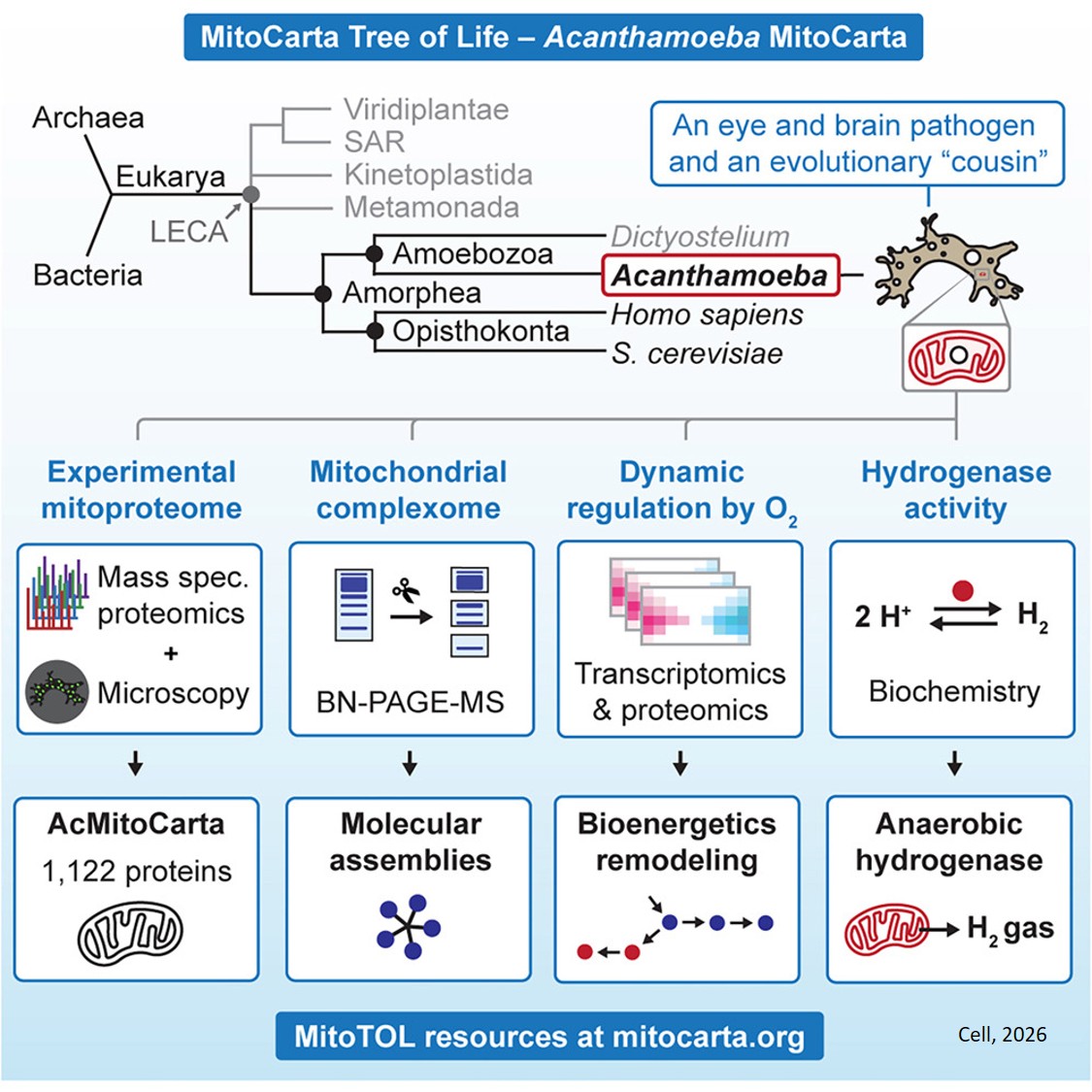
Acanthamoeba keratitis is in particular need of new treatments because in harsh environments, like a human cornea, it builds up a thick, double-layered protective cell wall somewhat like those found in trees and other plants. In this cyst form, Acanthamoeba is hardy and resistant to currently available drugs. The team hoped that by understanding the genes and proteins involved in mitochondrial function, the metabolic core of a cell, they could find targets for highly specialized drugs that aren’t toxic to humans.
“What’s been proven historically,” says the author, “is that if you have a target protein in a biochemical pathway that’s completely unique to the microbe, it’s a better target than something that has a homolog in humans. A drug that targets a unique microbial protein or pathway is less likely to also harm the infected person.”
But before they could even begin to understand the proteome of Acanthamoeba’s mitochondria, the team had to first understand the basic nuclear genetics of the organism. Even though mitochondria have their own tiny DNA compared to the cell’s nucleus, most mitochondrial proteins are derived from the nuclear genome. The genome in the cell’s nucleus had been previously sequenced, but an accurate annotation of where the genes lay in the genome was still lacking — the prior annotation was only about 52% accurate. Once annotation of the overall genome was improved, they could move on to targeting mitochondrial proteins. But even that first step — the overall annotation of an organism’s genome — is a challenging endeavor.
With long-read RNA sequencing and other empirical techniques, the researchers increased the accuracy of Acanthamoeba genome annotation to 98%, detailing the precise locations of almost 16,000 genes. Of those, about a third were unique to the amoeba compared to the human genome and to baker’s or brewer’s yeast, an organism commonly used by biologists. They also found 20 families of proteins involved in building cyst walls that were absent in humans. Both these genes and proteins could be targets for future drug development.
Annotated genome in hand, the team turned their attention to Acanthamoeba’s mitochondria. In progressively purified samples of Acanthamoeba mitochondria, they used mass spectrometry to track proteins that became more abundant. If a protein’s abundance increased as the samples consisted of a higher proportion of mitochondria, they determined it was a mitochondria-localized protein.
“There are roughly 300 proteins in Acanthamoeba mitochondria that are unique when compared to human and yeast mitochondria,” says the author.
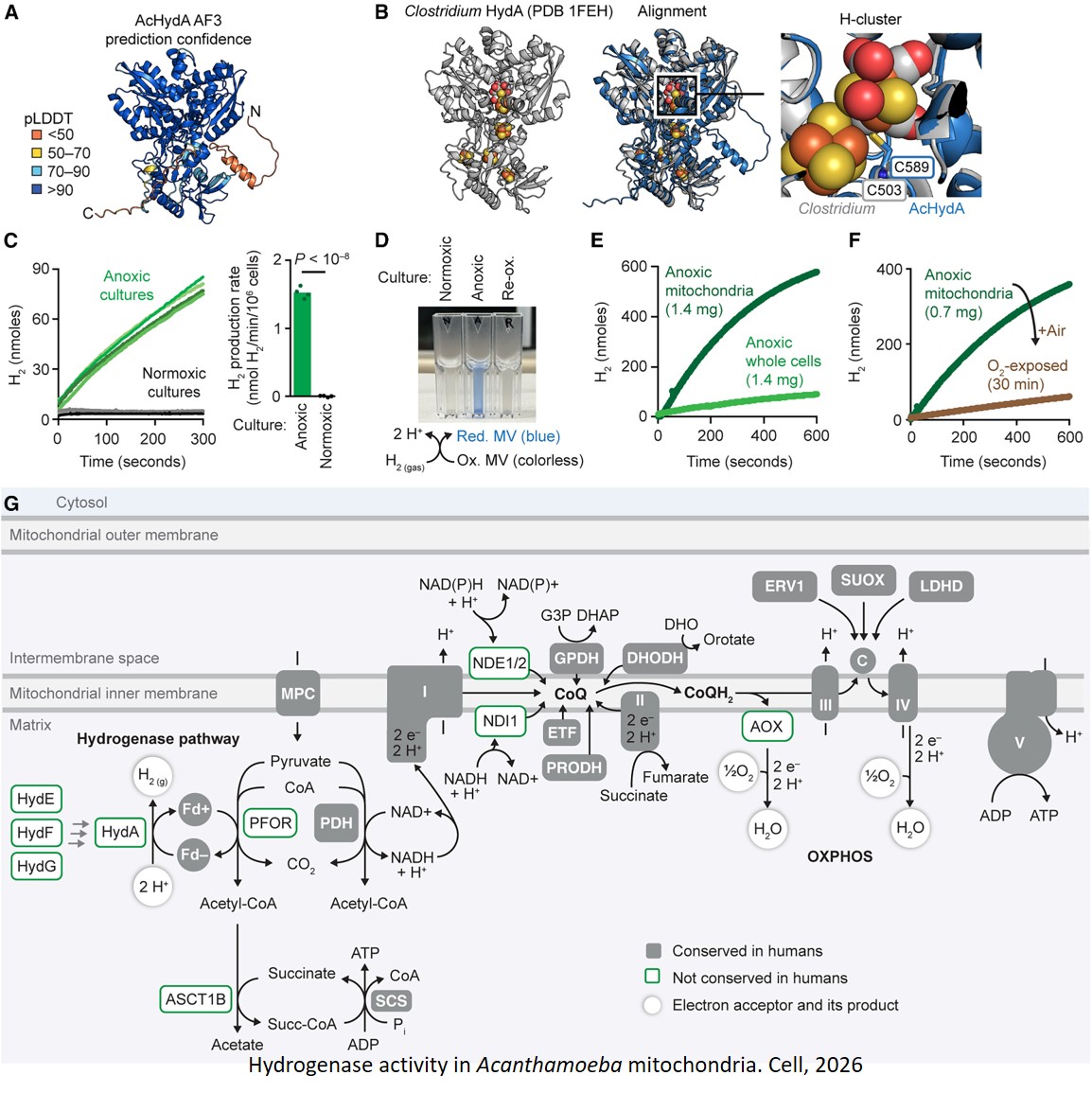
They also found that Acanthamoeba mitochondria have the unusual ability to switch functionalities between oxygen-rich and oxygen-deprived conditions. This trait might help them survive and thrive in places like a human cornea or deep in a lake. The authors saw extensive rewiring of the organelle’s bioenergetic machinery by oxygen, including induction of an anaerobic pyruvate:ferredoxin oxidoreductase-to-hydrogenase pathway under anoxia. They also demonstrate that Acanthamoeba can produce H2 gas under anoxic conditions via a mitochondria-localized, oxygen-labile hydrogenase.
With respect to the last common ancestor of all animals, plants, fungi, and protists, Acanthamoeba turned out to be a great model organism, retaining many proteins and pathways predicted to have been present in this ancient ancestor.
Going forward, the team plans to dig into the individual proteins andmolecular pathways they’ve identified as unique to Acanthamoeba, which will later help determine which are most likely to make good drug candidates.
“It’s going to take a lot of focused work on individual proteins and pathways, but we’ll start chipping away at this exciting project,” says Stefely. “A long-term goal is to annotate functions for all of those targets, but we’ll take them one small set at a time and there is a lot of potential for new discoveries.”