



Antiviral molecules in bacteria
Bacteria also produce molecules, which have an antiviral effect. Researchers have examined the antiviral molecule daunorubicin and decoded its mode of operation. They now describe this mechanism, which primarily targets a specific group of viruses – namely bacteriophages, in the scientific journal Proceedings of the National Academy of Sciences (PNAS).
One enjoyable aspect of a stroll through the woods on a summer’s day is the fresh smell of the forest floor. However, this smell does not come from the forest itself; it is in fact a mixture of small volatile molecules which are produced among other things by bacteria in the soil called Streptomycetes. And these molecules are also relevant elsewhere: More than two thirds of antibiotics of natural origin used in medicine are produced by Streptomycetes.
The bacteria use these molecules to protect themselves against other microorganisms. And these substances are often also effective at protecting humans. In addition to the familiar antibiotics used to fight bacterial infections, the soil bacteria also produce molecules which protect against viruses – so-called bacteriophages.
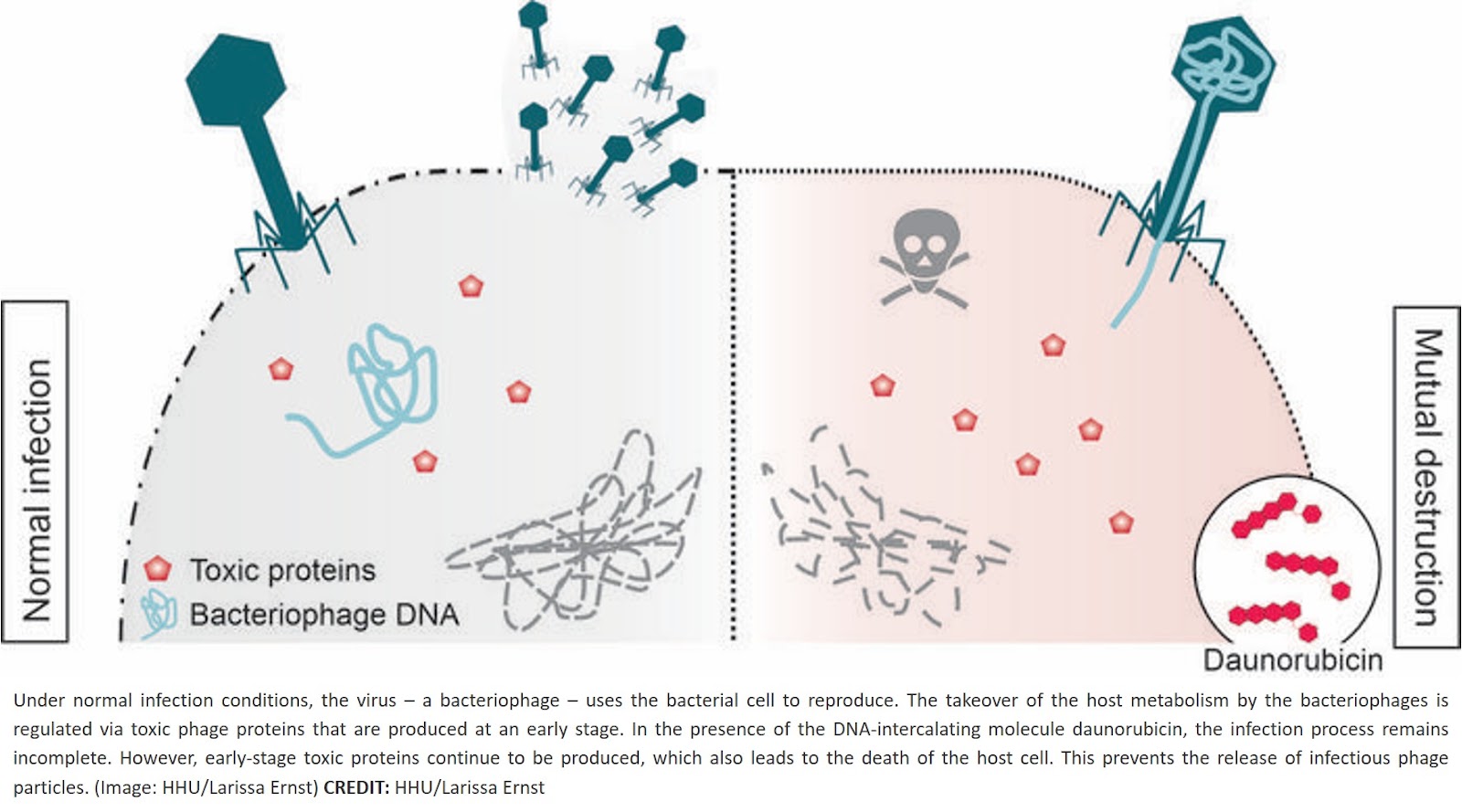
One well-known molecule, which exhibits such antiviral activity is “daunorubicin”. This cell growth inhibitor molecule is used in particular in cancer therapy. In a study, researchers have demonstrated that daunorubicin effectively inhibits the successful reproduction of various bacteriophages: When a bacteriophage infects a bacterium, a mutual destruction process is triggered.
A corresponding author of the study, which has now been published in PNAS: “We were able to show that daunorubicin stops or delays the infection cycle at an early stage. This results in increased production of toxic viral proteins, which are normally needed in strictly regulated quantities for a successful infection. They kill the bacterial cell at this early stage, thus preventing virus replication.”
The lead author said: “On the other hand, where further bacterial ‘defence mechanisms’ exist, the presence of daunorubicin increases their effectiveness and enables the cell to survive while preventing the viruses in the cell from reproducing.”
The author further perspectives presented by the findings: “Our understanding of bacterial immune systems has changed fundamentally in recent years. Our research contributes toward gaining a better understanding of the interplay between these different defence systems. This knowledge is particularly important for the further development of effective phage therapies. In times of increasing resistance to antibiotics, phages offer a promising alternative for treating infections caused by multi-resistant pathogens. As such therapies are often combined with antibiotics, it is critical to understand bacterial defence mechanisms and their potential interactions with antibiotics in detail in order to develop effective therapeutic strategies.”