

Brain-to-liver pathway that protects against liver inflammation
Researchers have discovered that a naturally occurring hormone best known for suppressing appetite and promoting weight loss also helps protect the liver from inflammation through a previously unknown signalling pathway, opening new possibilities for treating advanced fatty liver disease.
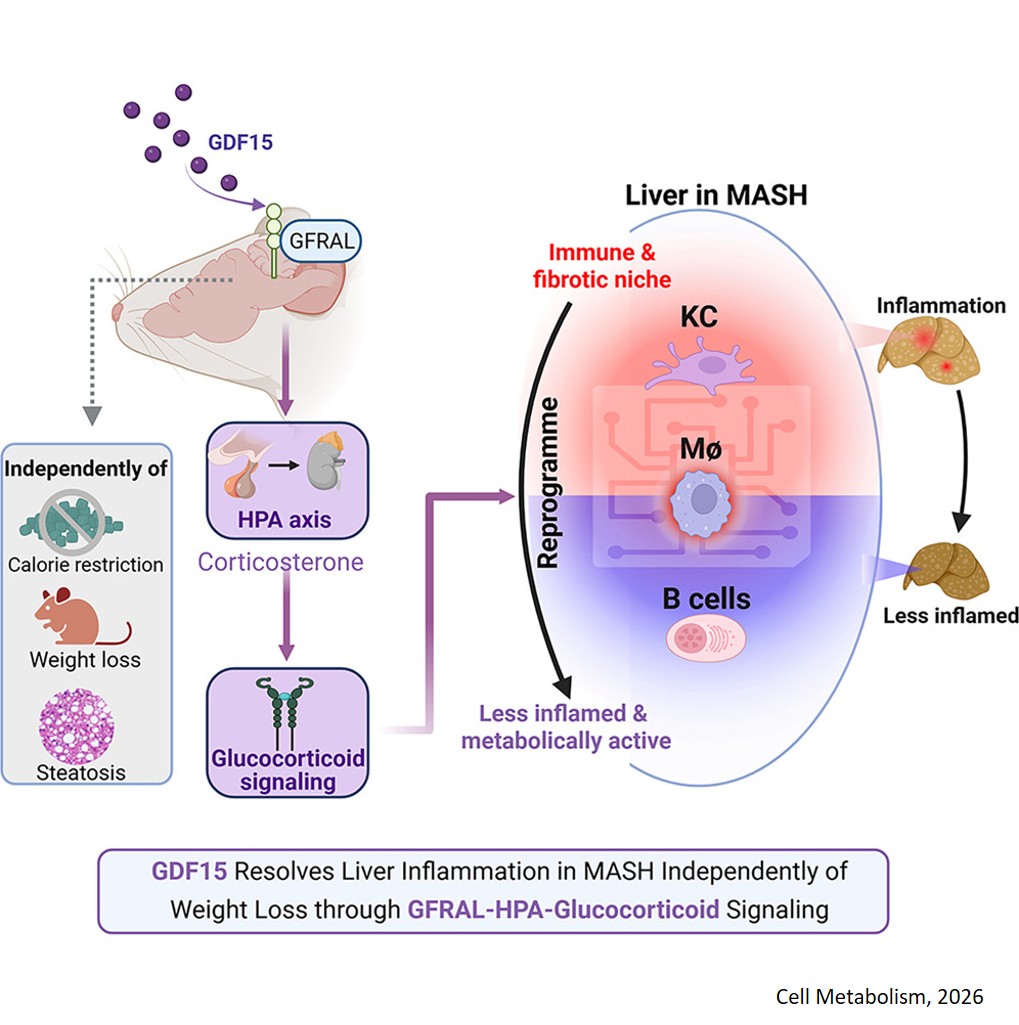
The findings, published in Cell Metabolism, reveal that the hormone GDF15 can suppress liver inflammation and slow the progression of liver scarring independently of weight loss — a surprising discovery that challenges longstanding assumptions about how the hormone works.
Millions of people worldwide live with metabolic dysfunction-associated steatohepatitis (MASH), a severe form of fatty liver disease that can progress to cirrhosis, liver cancer and liver failure. While new weight-loss medications have improved outcomes for many patients, liver inflammation often persists even after significant weight loss. The new research identifies a biological pathway that helps regulate liver inflammation, suggesting future treatments may be able to complement existing weight-loss therapies.
"Our findings show that GDF15 does much more than regulate appetite and body weight," says the senior author of the study. "We discovered that GDF15 activates a natural brain-to-liver signaling pathway that helps suppress liver inflammation and reduce fibrosis. This changes how we think about the hormone and suggests it may be part of the body's own defense system against chronic liver injury."
Using mouse models that closely mimic human MASH, researchers combined genetic, pharmacological, genomic and spatial transcriptomics approaches to investigate the role of GDF15 in advanced liver disease. They found that GDF15 activated the hypothalamic-pituitary-adrenal (HPA) axis, increasing circulating corticosterone and hepatic glucocorticoid receptor signaling. The glucocorticoids help dampen inflammation in the liver and those protective effects occur independently of changes in food intake, body weight or liver fat.
GDF15 remodeled the hepatic immune-fibrotic niche by suppressing inflammatory macrophages, plasma B cells, and activated stellate cells while promoting pro-resolving immune programs.
“GDF15 helps reprogram liver cells to reduce inflammation and scarring by advanced spatial technology," says the first and corresponding author of the study. "Instead of causing liver damage, GDF15 appears to help calm the liver's immune system. It shifts immune cells into a more protective and less active state, helping reduce inflammation and prevent damage to the liver."
Research published in 2023, showed that GDF15 helps maintain calorie burning during weight loss, but the new study reveals an entirely different role for the hormone: protecting the liver through a previously unknown anti-inflammatory pathway.
Together, researchers say the two studies could help guide the development of future therapies aimed specifically at liver inflammation, a major driver of disease progression that remains difficult to treat.
"Current therapies largely focus on reducing body weight and liver fat," says the author . "Our work suggests there may be value in combining those approaches with therapies that directly target inflammation. By understanding how the body naturally protects the liver, we can identify new opportunities to develop more effective treatments for people living with MASH."
https://www.cell.com/cell-metabolism/fulltext/S1550-4131(26)00281-0
https://sciencemission.com/GDF15-suppresses-liver-inflammation