


Linking mitochondrial deficits from CHCHD2 mutation to PD pathophysiology
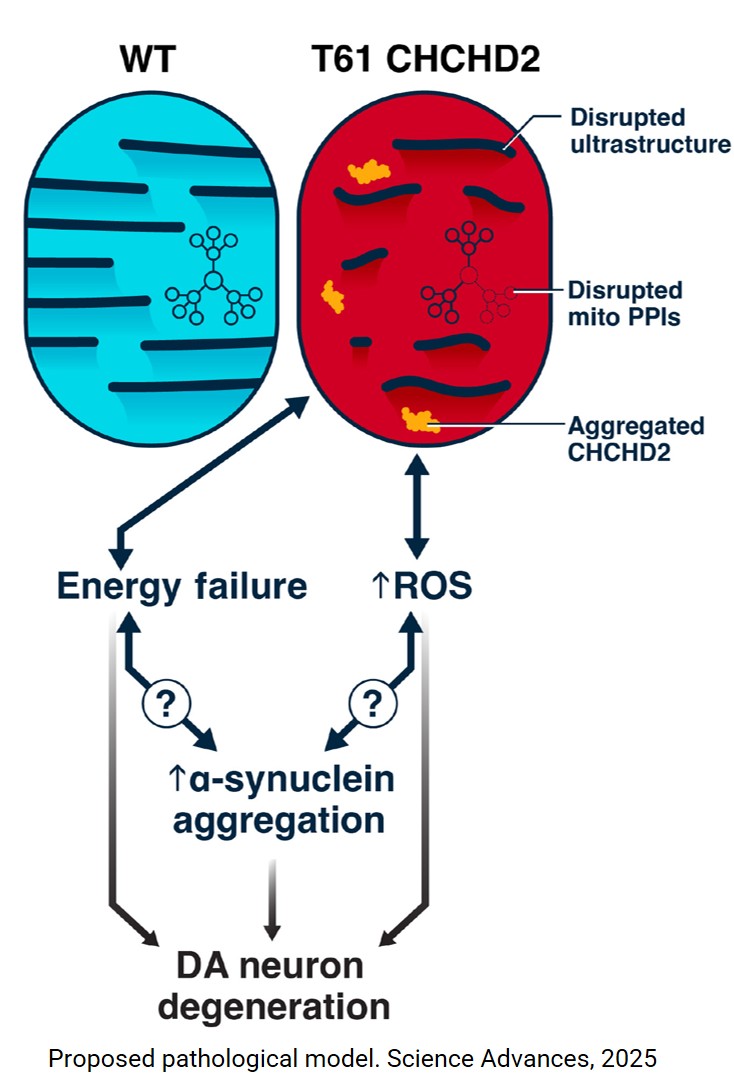
The mechanism of mitochondrial dysfunction leading to Parkinson’s disease is not clearly understood.
In a T61I mutation knock-in mouse model in the mitochondrial protein CHCHD2 (coiled-coil–helix–coiled-coil–helix domain–containing 2), that causes late-onset symptoms indistinguishable from idiopathic PD, the researchers observed CHCHD2 insolubility, likely due to a toxic gain of function, resulting in protein aggregation primarily within mitochondria in SN DA neurons.
This mutation also elevates both the total level and phosphorylation of α-synuclein, potentially as a direct consequence or secondary effect of the T61I mutation.
Energy failure caused by mitochondrial dysfunction and ROS is proposed to be a key contributor to DA neuron dysfunction and degeneration.