


Hydrogen sulfide producing enzyme is a therapeutic target for Alzheimer’s disease
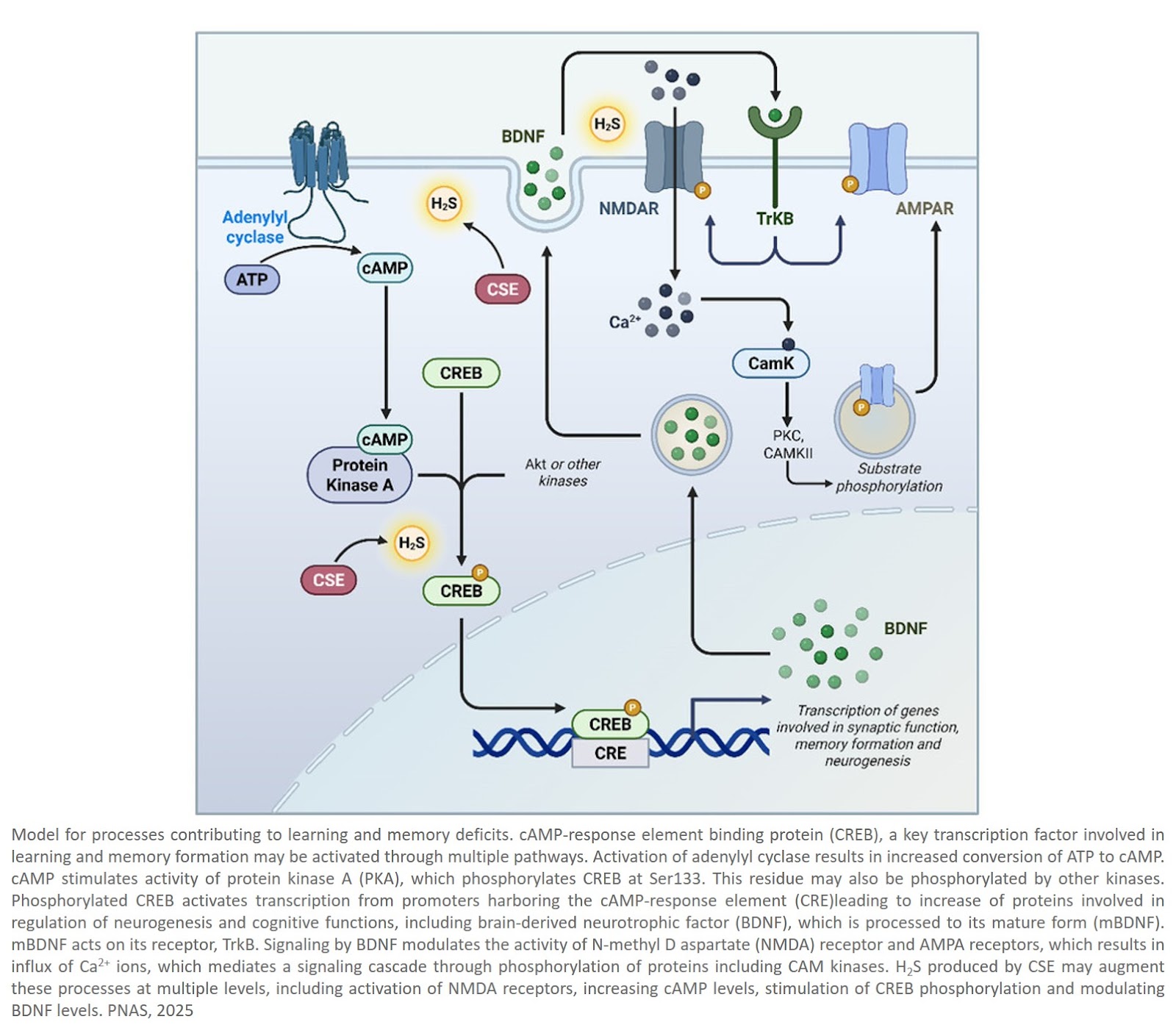
Experiments conducted in genetically engineered mice reinforce that the protein, Cystathionine γ-lyase, or CSE — ordinarily known for producing hydrogen sulfide gas responsible for the foul smell of rotten eggs — is critical for memory formation, says the senior author of the study.
The new research, published in Proceedings of the National Academy of Sciences, were designed to better understand the basic biology of the protein, and its value as a novel target for drugs that boost the expression of CSE in people to help keep brain cells healthy and slow neurodegenerative disease.
Previous studies have pointed to hydrogen sulfide as a protector of neurons in mice, the author says. But because the gas is toxic at high doses and therefore not safe for direct use in the brain, researchers must work to better understand how to safely maintain levels of this gas at the infinitely small levels present in neurons, the scientists say.
The new work shows that mice genetically engineered to lack the CSE enzyme experience memory and learning loss and exhibit increased oxidative stress, DNA damage and compromised blood-brain barrier integrity — hallmarks of Alzheimer's disease, says the paper’s corresponding author.
Scientists previously used genetically engineered mice lacking the CSE protein, originally generated in 2008, when CSE was shown to be important for vascular function and blood pressure regulation. In 2021, the team showed that CSE malfunctioned in mice with Alzheimer’s disease and that miniscule amounts of hydrogen sulfide injections helped protect brain health.
Those previous studies, however, were conducted in mice genetically engineered with other mutations known to cause neurodegenerative disease and did not focus on CSE by itself.
“This most recent work indicates that CSE alone is a major player in cognitive function and could provide a new avenue for treatment pathways in Alzheimer's disease,” says co-corresponding author.
Using the same line of CSE-lacking mice from the 2008 study in this recent study, scientists compared the spatial memory (ability to remember directions and follow cues) in CSE-lacking mice and in normal mice.
In the experiments, scientists placed mice on a platform known as the Barnes maze, in which the mice learned to seek shelter when a bright light appeared. At the age of two months, both the CSE-lacking mice and normal mice avoided the bright light and consistently found the shelter within a three-minute period. At the age of six months, however, these CSE-lacking mice were unable to find the escape route, while normal six-month-old mice continued to do so.
“The decline in spatial memory indicates a progressive onset of neurodegenerative disease that we can attribute to CSE loss,” says the first author.
Disruptions in the formation of new neurons in the hippocampus region of the brain (critical to learning and memory) are thought to be a hallmark of neurodegenerative disease, the scientists say. Using biochemical and analytical techniques, the researchers determined that neurogenesis-related proteins were expressed less often or not at all in mice lacking CSE when compared with normal mice.
Then, using high powered electron microscopes, the scientists observed the brains of CSE-lacking mice and found big breaks in blood vessels, indicating that they had suffered damage to the blood-brain barrier, another symptom seen in people with Alzheimer's disease.
Furthermore, new neurons had a difficult time migrating to the hippocampus region, where they would ordinarily help form new memories.
“The mice lacking CSE were compromised at multiple levels, which correlated with symptoms that we see in Alzheimer’s disease,” says the co-first author.
https://www.pnas.org/doi/10.1073/pnas.2528478122
https://sciencemission.com/Cystathionine-%CE%B3-lyase-is-a-major-regulator-of-cognitive-function