



Cachexia-promoting microenvironment in pancreatic cancer
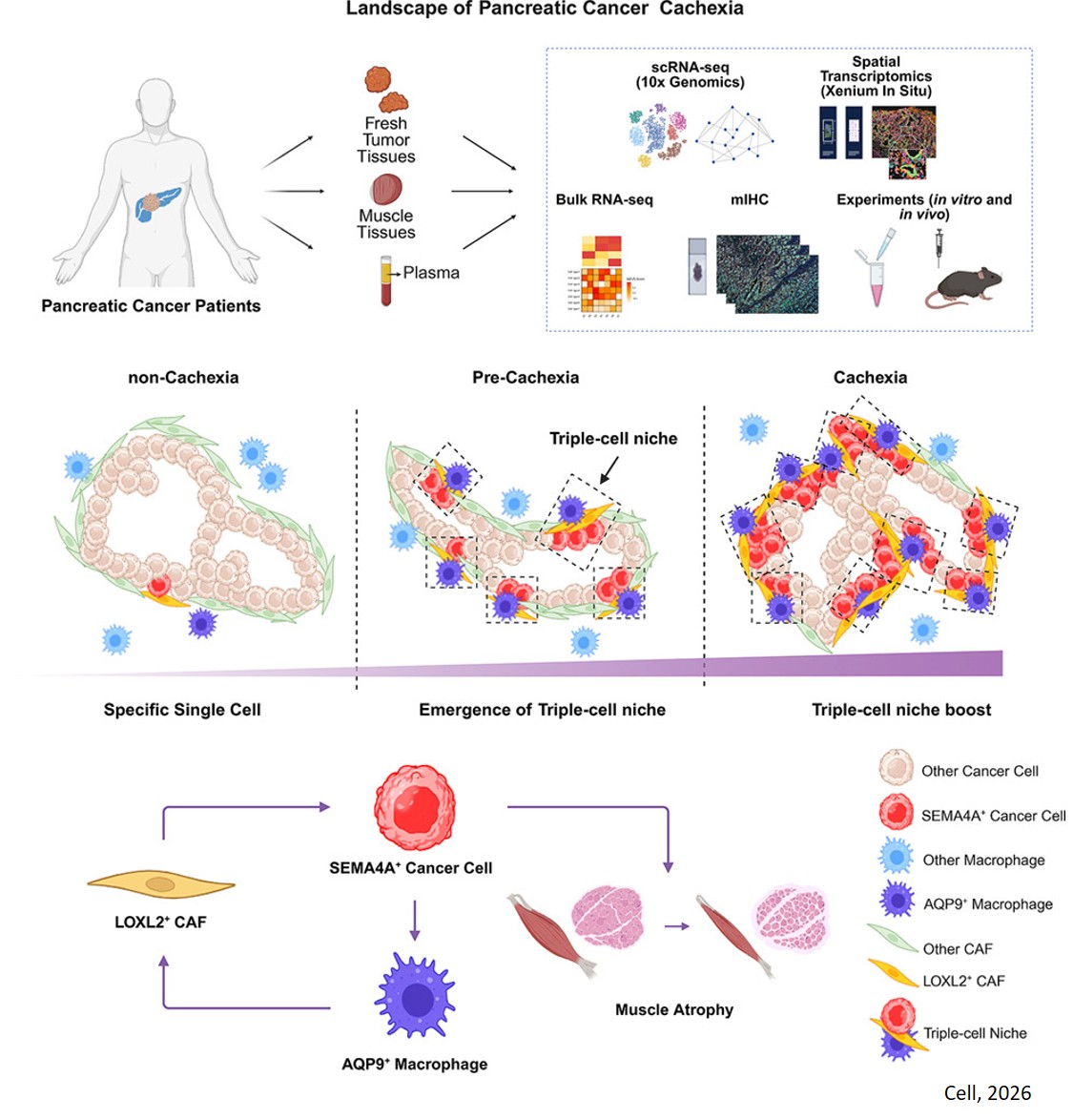
Research published in Cell identifies three small subclusters of cells driving pancreatic cancer-induced cachexia, a muscle-wasting and fat-loss condition that makes patients less tolerant of cancer treatment. The study holds significant promise for the development of therapeutics to target these subclusters.
Together, the three subclusters form a triangular regulatory network, working in a feed-forward loop to drive the initiation and progression of cachexia.
“These are the players that are driving cachexia in pancreatic cancer patients. We successfully identified and isolated these small cell clusters from each cell type in the tumor microenvironment. Our next steps are to develop specific strategies to target these three molecules,” said the lead author.
The team found that the cell subclusters form what is called a molecular niche. Using cutting-edge technologies like single-cell sequencing and spatial transcriptomics, they discovered that the subclusters are physically adjacent to one another, forming a microenvironment that is conducive to cachexia. The subclusters are SEMA4A+ tumor cells, AQP9+ macrophages and LOXL2+ cancer-associated fibroblasts.
“The presence of these three cell subclusters may help identify patients who are likely to progress to pre-cachexia and cachexia,” the author said.
In addition to having therapeutic potential, the findings underscore the importance of diagnosing and treating cachexia early. The author said the subclusters form before muscle and fat loss occur. Addressing cachexia early could ultimately help the patient be more tolerant of pancreatic cancer treatment.
Any eventual treatment for cachexia would also need to be given in combination with pancreatic cancer treatment, whether chemotherapy or a targeted therapy, the author said.
“We need to slow down tumor growth at the same time we’re slowing the progression of cachexia,” the author said. “Otherwise, if we’re only lowering the burden of the tumor, patients quickly become cachexic and lose muscle strength and appetite, making them less able to withstand treatment.”
The findings represent an important advancement for patients with pancreatic cancer.
“Cachexia has a profound impact on patients’ quality of life and their ability to tolerate cancer treatment,” the author said. “This discovery gives us new insight into what drives cachexia and opens the door to detecting and treating it earlier.”
Pancreatic cancer is an especially deadly type of cancer, with a five-year survival rate below 13% across all stages. Over 80% of patients with pancreatic cancer will develop cachexia, and nutritional support does not reverse the symptoms.
“There are no good treatments for cachexia,” the author said. “That’s why this paper is so exciting. We believe the findings show great clinical relevance and promise for early detection and therapeutic intervention of cachexia.”
https://www.cell.com/cell/fulltext/S0092-8674(26)01081-0
https://sciencemission.com/cachexia-promoting-microenvironment