



Cartilage breakdown regulator identified!
Osteoarthritis, a condition that causes pain and reduced mobility in joints such as the knees and fingers, is one of the most common joint disorders worldwide, particularly among aging populations. The disease is characterized by the gradual breakdown of cartilage, which normally cushions the bones within joints.
Despite its prevalence, current treatments for osteoarthritis mainly focus on alleviating pain rather than addressing the underlying cause of cartilage degeneration. Effective therapies that can halt or reverse cartilage damage remain limited.
A joint research team has identified a key protein, SHP (NR0B2), that plays a critical protective role in cartilage and may offer a new therapeutic strategy for osteoarthritis.
The researchers first analyzed cartilage tissues from osteoarthritis patients and animal models of the disease. They found that the levels of SHP protein decreased significantly as the disease progressed, suggesting that loss of this protective factor contributes to accelerated cartilage destruction.
Further experiments showed that mice lacking SHP experienced more severe pain and faster cartilage degradation compared to normal mice. In contrast, restoring SHP levels in the joints led to reduced cartilage damage and improved joint function.
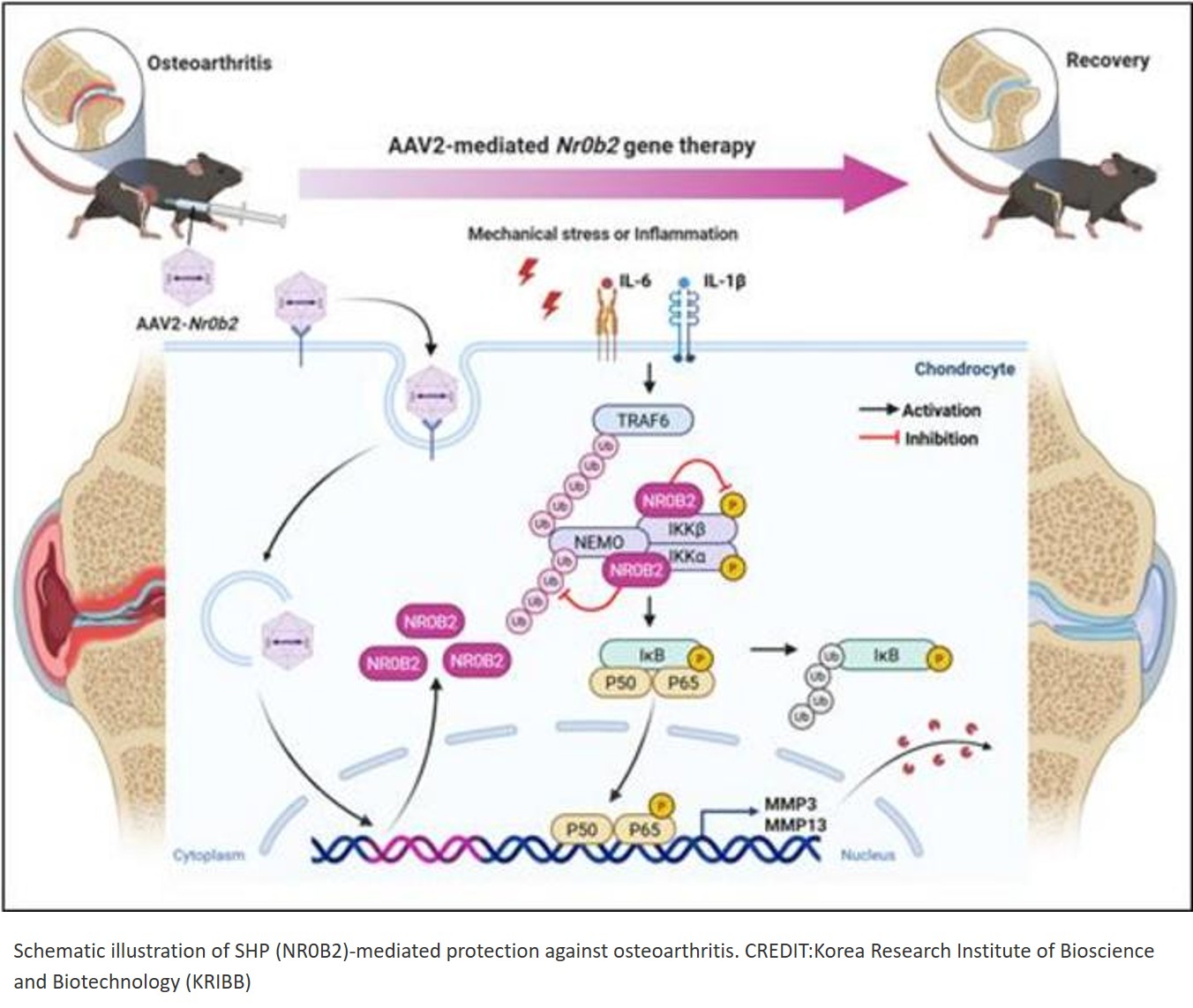
Mechanistic studies revealed that SHP protects cartilage by suppressing the production of matrix-degrading enzymes, specifically MMP-3 and MMP-13, which are known to break down cartilage tissue. The researchers demonstrated for the first time that SHP inhibits these enzymes at the signaling level by regulating the IKKβ/NF-κB pathway, thereby preserving cartilage integrity.
Building on these findings, the team also explored the therapeutic potential of SHP using a gene delivery approach. By injecting a viral vector carrying the SHP gene into affected joints, they observed long-lasting effects from a single treatment. Even in animals with established osteoarthritis, this approach significantly reduced cartilage damage and alleviated pain.
“This study is the first to demonstrate that the SHP protein plays a critical role in protecting cartilage during the development and progression of osteoarthritis,” said the study’s lead investigator. “Therapeutic strategies targeting SHP may offer a new approach to slowing or preventing osteoarthritis progression.”
https://www.nature.com/articles/s41467-026-69864-5
https://sciencemission.com/Small-heterodimer-partner-protects-against-osteoarthritis