



Computer framework identifies disease driving genes in asthma
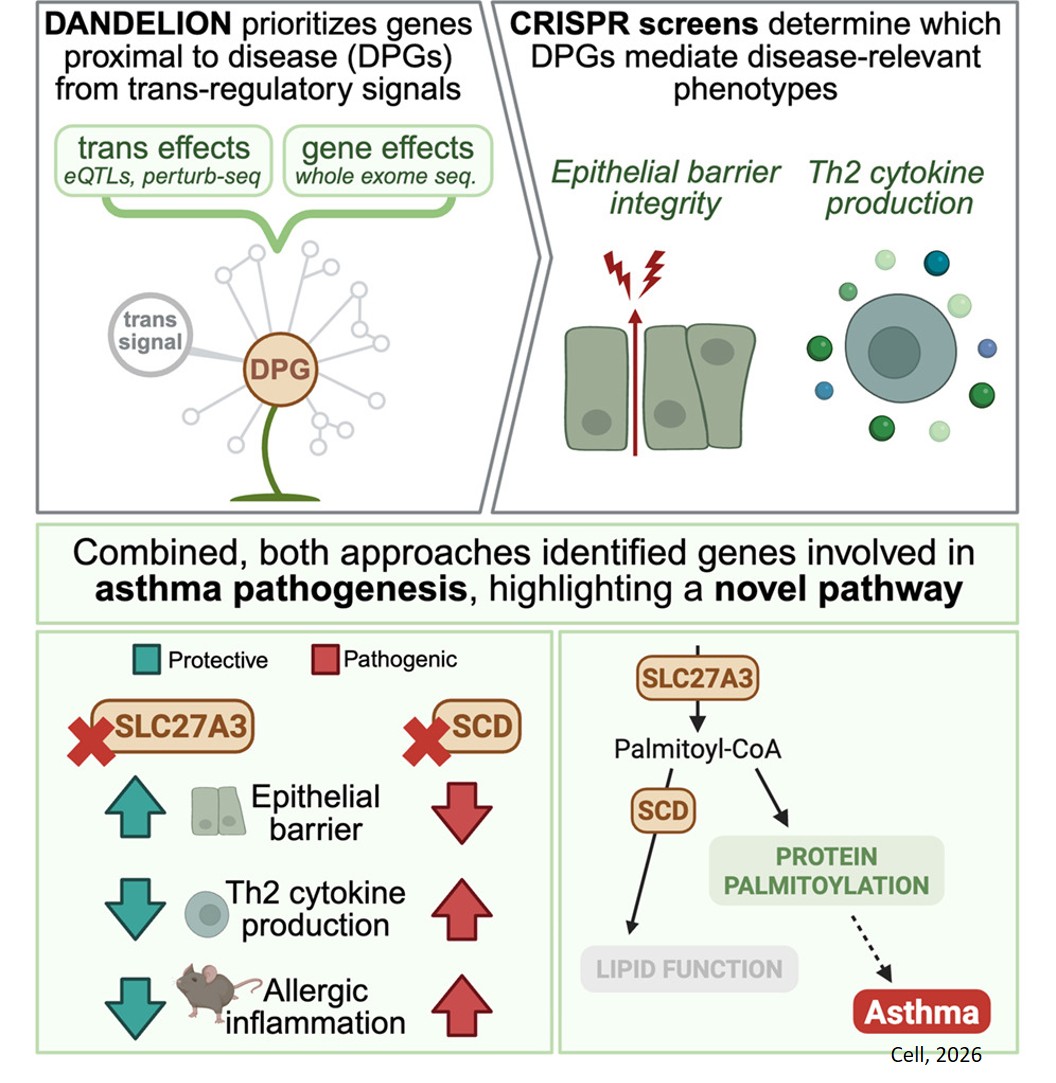
Researchers have developed a new computational framework that helps scientists identify genes that play central roles in diseases such as asthma but are often overlooked by existing genetic analysis methods. The framework, called DANDELION, is a mediation-inspired computational approach that identifies disease-driving genes, providing a new way to uncover therapeutic targets. The study findings are published in the journal Cell.
One of the biggest challenges in genetics is determining which genes actually drive disease rather than simply being associated with it. DANDELION was designed to address that challenge by identifying genes that contribute directly to disease but are often missed by existing methods.
In a study of asthma, the researchers used DANDELION to identify a previously unrecognized biological process that appears to play a key role in driving the disease, revealing a potential new target for future treatments.
"Current genetic approaches and large-scale studies often identify hundreds of DNA changes linked to disease risk but it can be difficult to determine which genes are actually causing the disease rather than simply being associated with it," said one of the co-senior authors of the study. "DANDELION gives researchers a more effective way to pinpoint those genes and the biological pathways they control."
Genetic discoveries have become one of the strongest starting points for developing successful new medicines, according to the researchers. “The challenge is separating the genes that truly drive disease from the many genetic associations that are detected in large studies.”
DANDELION integrates large-scale genetic data with trans-gene regulatory information from disease-relevant tissues to identify disease-driving genes overlooked by conventional approaches.
"This computational framework gives researchers a new way to uncover biological pathways that could become targets for future therapies," said the author.
The researchers then applied DANDELION to asthma and combined the results with single-cell gene expression data from the Human Lung Cell Atlas to identify the lung cell types where the newly identified genes are most active.
The researchers also demonstrate that loss of two disease-proximal genes, SLC27A3 and SCD involved in protein palmitoylation, affects inflammation and airway remodeling in a mouse model of allergic asthma. Laboratory experiments showed that enzymes involved in this process influence asthma-related inflammation, suggesting they may represent promising targets for future therapies.
The researchers say DANDELION is designed to work beyond asthma. "Our findings suggest DANDELION can reveal clinically meaningful disease mechanisms that other approaches miss," the author said. "We anticipate it will help researchers identify new therapeutic targets across many complex diseases."
https://www.cell.com/cell/fulltext/S0092-8674(26)00866-4
https://sciencemission.com/Trans-regulatory-gene-mapping