

What keeps vision cells alive?
Scientists have identified genetic pathways and compounds capable of protecting cone photoreceptors from the degeneration that underlies conditions like age-related macular degeneration.
Cone photoreceptors, concentrated in the macula, are essential for reading, recognizing faces, and perceiving colors. Their death, as it happens in many inherited retinal diseases and macular degeneration, leads to the loss of central vision. Despite decades of research, no approved therapies can halt this process. This new study, conducted by researchers addresses this unmet need using a human-based experimental system.
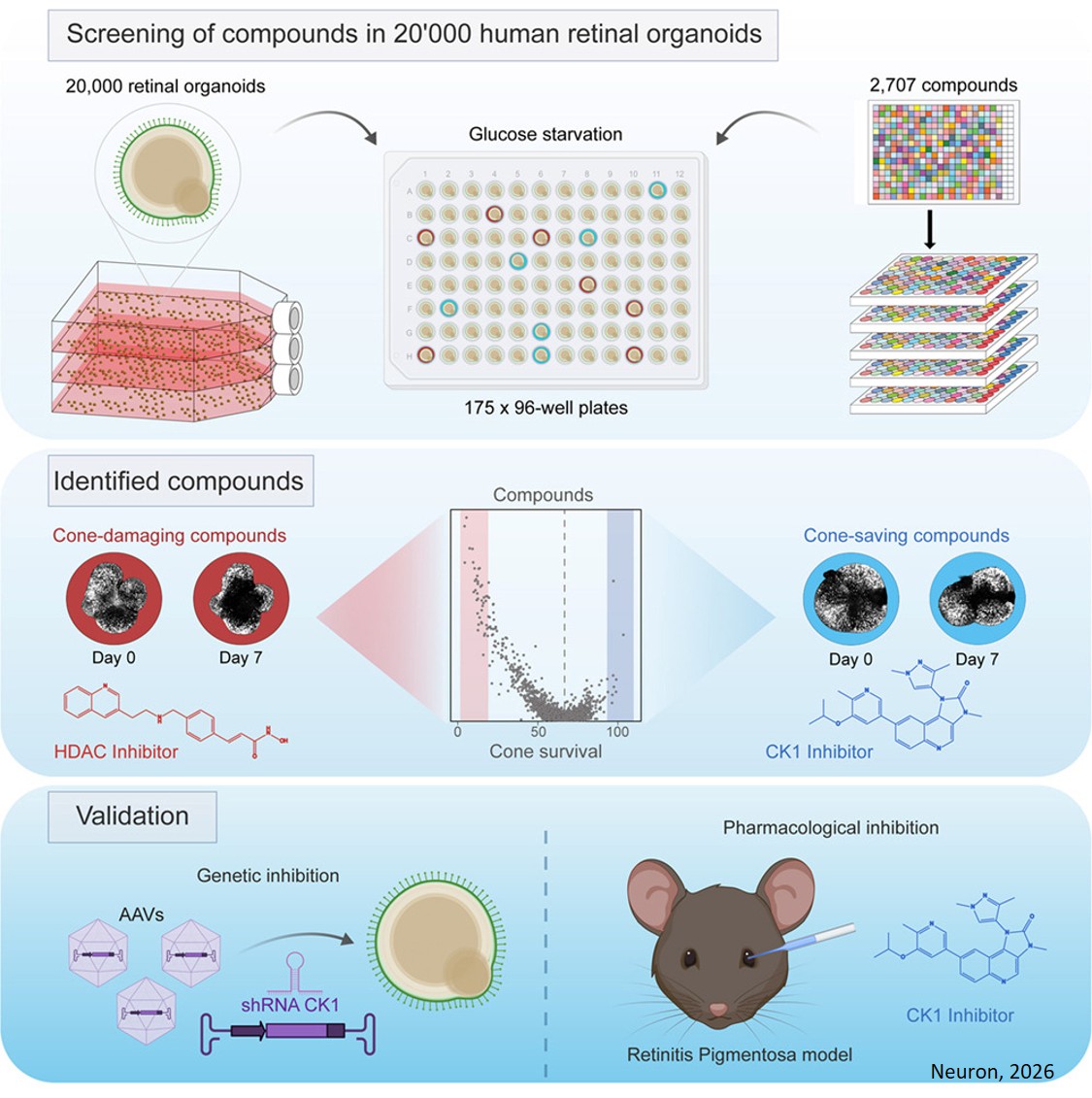
The researchers generated 20,000 human retinal organoids with green fluorescent protein (GFP)-labeled cone photoreceptors. Cone photoreceptors were selectively labelled, allowing their fate to be followed over time under controlled stress conditions that mimic disease. This approach enabled a systematic screen of compounds with known molecular targets. The authors screened 2,707 compounds with known targets for those that saved cones or those that further damaged cones.
Clear patterns emerged: two kinase inhibitors consistently protected cones over extended periods.
The researchers identified inhibitors of casein kinase 1 (CK1) that protected cones, heat shock protein 90 (HSP90) inhibitors that saved cones in the short term but damaged them in the longer term, and broad histone deacetylase (HDAC) inhibition by many compounds that significantly damaged cones.
The protective effects held across different stress conditions and were further confirmed in a mouse model of retinal degeneration, supporting their broader relevance.
Beyond identifying protective pathways, the study makes a comprehensive dataset publicly available, covering the compounds tested, their molecular targets, and their effects on human cone survival. This resource will guide the development of therapies aimed at preserving central vision and enable a systematic assessment of potential retinal toxicity.
By combining retinal biology, organoid technology, and large-scale compound screening, the work gives researchers a head start in developing new treatments and sharpens focus on a long-standing goal in ophthalmology: protecting the very cells that make sight possible.
https://www.cell.com/neuron/fulltext/S0896-6273(26)00129-7
https://sciencemission.com/CK1-inhibition-protects-cone-photoreceptors