

AI tool improves DNA-DNA predictions
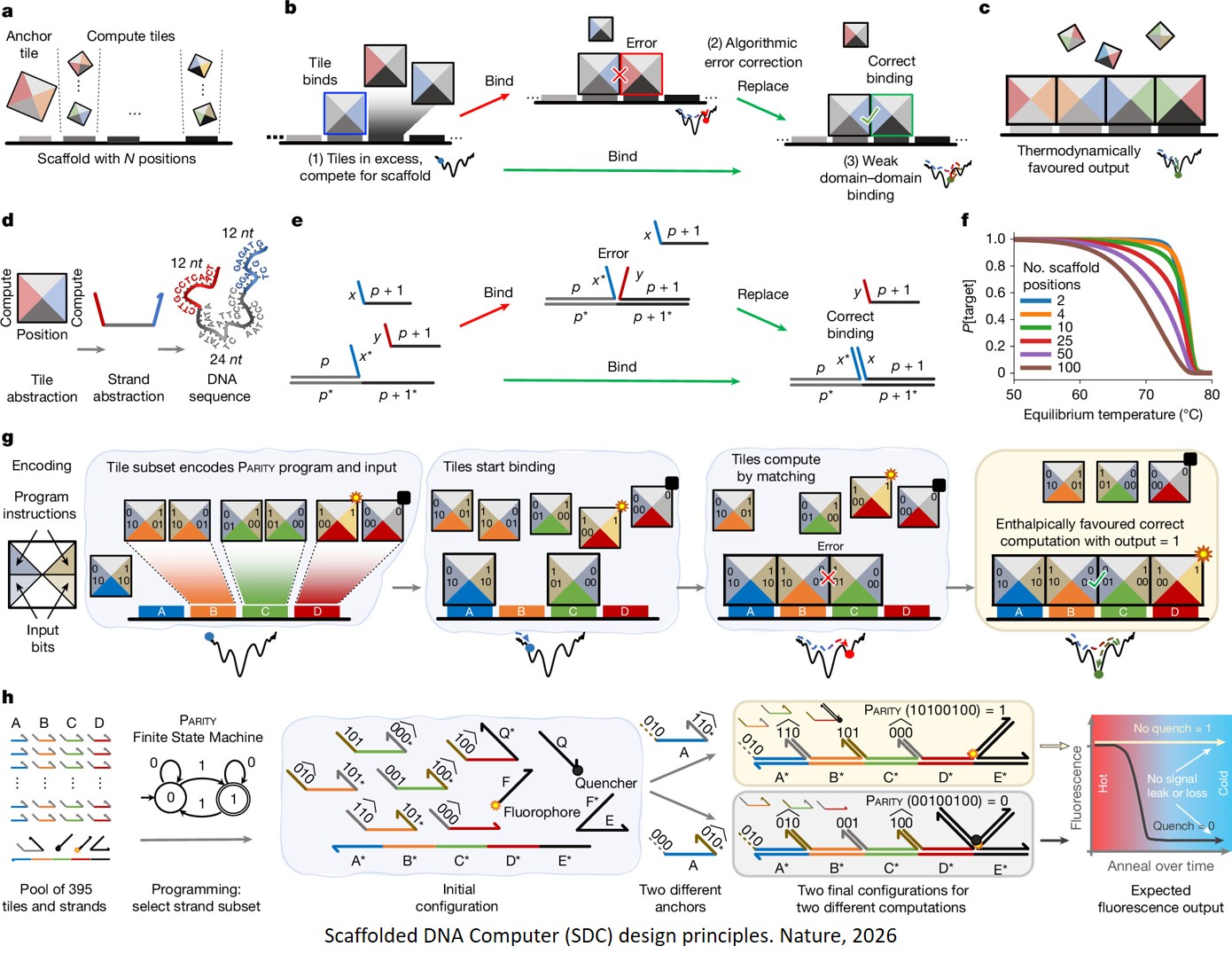
Researchers have demonstrated a novel AI model that can predict which DNA molecules bind with which other DNA molecules. Providing a more thorough understanding of these hypercomplex binding relationships has utility in applications ranging from biomedical diagnostic tools to DNA computing.
“We often think about binding as a very simple relationship – Molecule A binds to Molecule B,” says the co-corresponding author of the study. “But in biological systems, it’s far from simple. Molecule A may bind to dozens of other molecules, to varying degrees.
“Capturing that hypercomplexity is a significant challenge, but it is critical if we want to better understand natural genetic systems,” says the author. “And capturing that hypercomplexity is also critical if we want to develop tools that make full use of biomolecules, such as diagnostic tools that are sensitive to genetic differences or DNA computing systems that rely on DNA to store and retrieve data.”
“We knew that deep learning models – artificial intelligence models capable of capturing complex patterns – had the potential to help us explore this type of hypercomplex system,” says a co-lead author of the paper. “However, we also knew that we would need a robust dataset in order to train the model. A model is only as good as the data you train it on.”
Previous attempts to develop tools to predict DNA-DNA binding behaviors relied on relatively small datasets of DNA-DNA data, and then used biophysical modeling tools to predict which DNA sequences would bind to which other DNA sequences. The resulting predictive tools struggle to capture the complexity of binding relationships.
“We took a different experimental approach that allowed us to generate substantially more data on which DNA sequences bind to each other,” says another co-lead author of the paper. “Altogether, our database consists of 144 million sequence pairs. This broader dataset allowed us to make use of AI models rather than extrapolating based on biophysical or biochemical principles.”
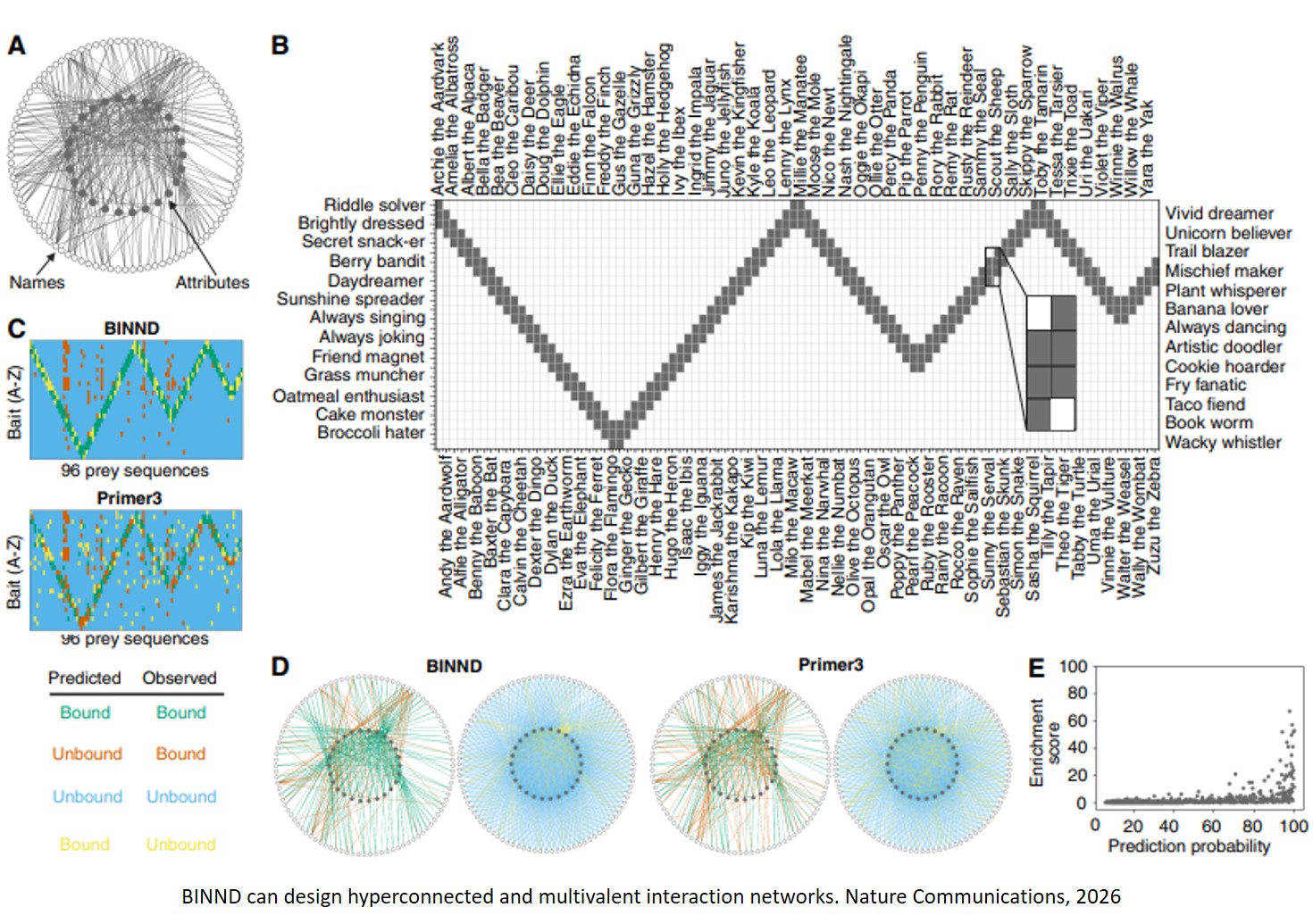
Specifically, the researchers used their larger dataset to train a deep learning model to predict which DNA sequences would bind to which other DNA sequences. They named the model BINND: Binding and Interaction Neural Network for DNA.
In proof-of-concept testing, the researchers found the BINND model predicted which DNA pairs would bind with 83.5% accuracy. And when it did err, it tended to predict that two DNA sequences would not bind – when in fact the sequences would bind.
“BINND is at least 10% more accurate than the state-of-the-art model,” says the author.
To demonstrate the utility of BINND, the researchers used the model to produce a database that captures the hyperconnected nature of DNA-DNA binding behaviors. The database is essentially a matrix, showing how 96 20-character DNA sequences bind – or not – with 26 other 20-character DNA sequences.
“This particular demonstration has real utility from a DNA computing standpoint, as it provides us with key information about the characteristics of these sequences – which is critical for efforts to capture and retrieve information using DNA,” says the other co-corresponding author of the paper. “We’re hoping that others in the research community will make use of BINND, which is why we’re making it publicly available on GitHub.” The BINND repository can be found at https://github.com/dna-storage/BINND.
“One of the challenges for DNA data storage and computing has been whether it can be scaled up for practical use,” says the author. “We’re optimistic that BINND will be a valuable tool for facilitating efforts to scale up those technologies, among other potential applications.”
The paper is published open access in the journal Nature Communications. https://www.nature.com/articles/s41467-026-75395-w
https://sciencemission.com/Deep-Learning-Predicts-Dissimilar-DNA-DNA-Binding