





Daily multivitamin use may slow biological aging
An analysis found slower aging in older adults after two years of a daily multivitamin, with greater benefits for those who began the trial with accelerated biological age
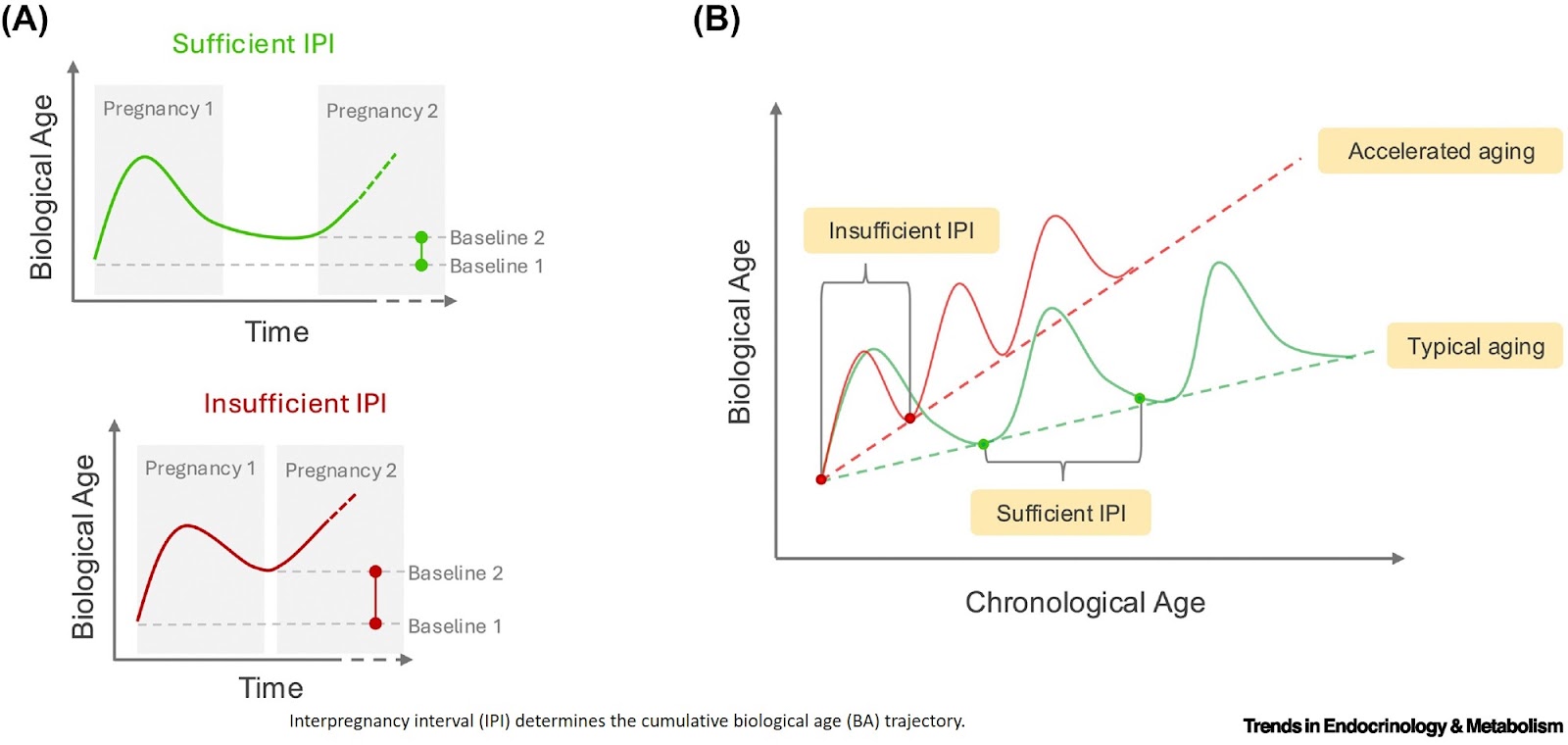
How quickly our bodies age on a cellular level, our “biological age,” can differ from how old we actually are in years. Using data from a large randomized clinical trial of older adults, researchers evaluated the effects of taking a daily multivitamin over the course of two years on five measures of biological aging and found a slowing equivalent to about four months of aging. The benefits were increased in those who were biologically older than their actual age at the start of the trial. Their results are published in Nature Medicine.
“There is a lot of interest today in identifying ways to not just live longer, but to live better,” said the senior author. “It was exciting to see benefits of a multivitamin linked with markers of biological aging. This study opens the door to learning more about accessible, safe interventions that contribute to healthier, higher-quality aging.”
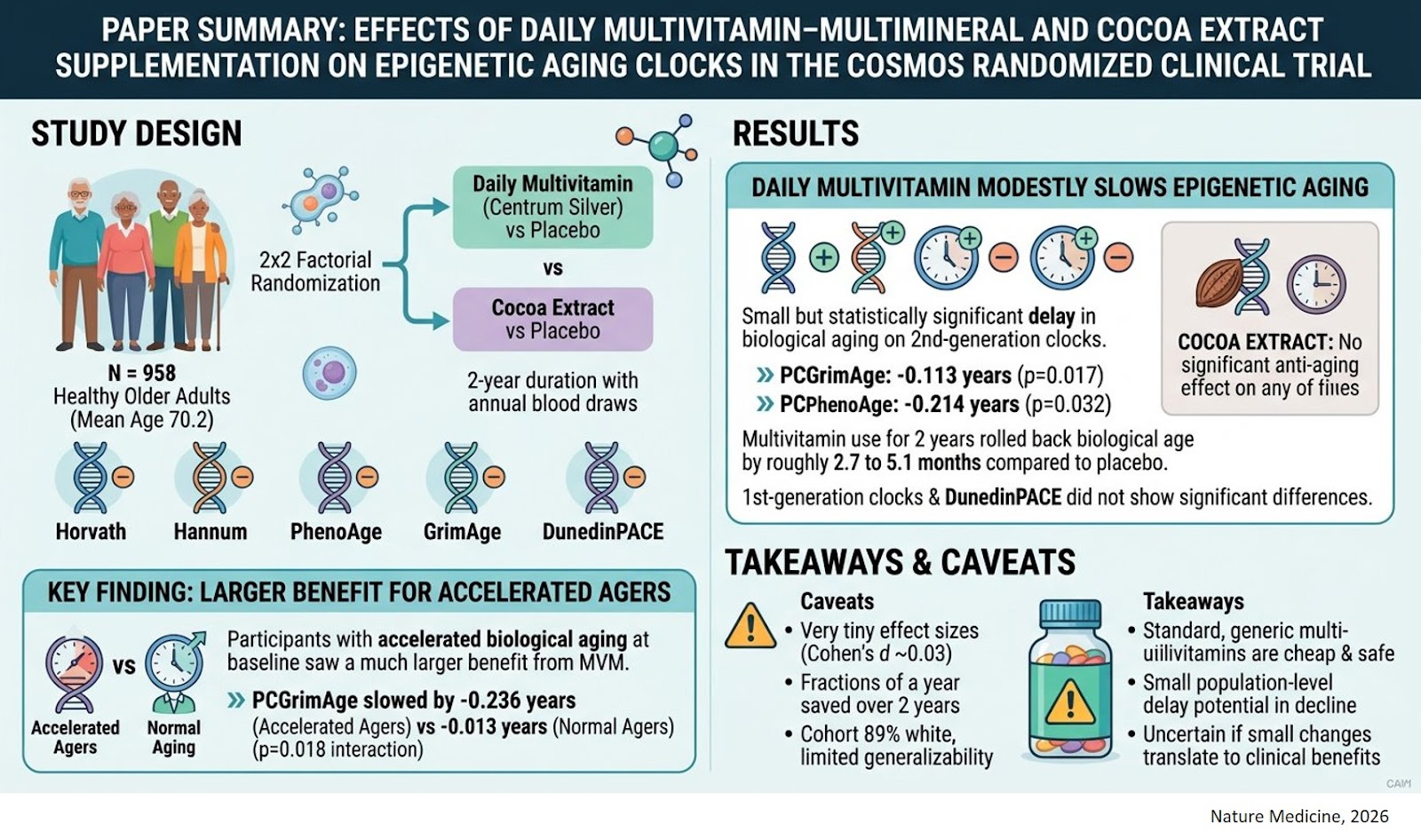
Epigenetic clocks estimate biological aging based on tiny changes in our DNA. These clocks look at specific sites in our DNA that regulate gene expression (known as DNA methylation) and change naturally as we get older, helping track with mortality and the pace of aging. This study, which uses data from the well-established COcoa Supplement Multivitamins Outcomes Study (COSMOS), analyzed DNA methylation data from blood samples of 958 randomly selected healthy participants with an average chronological age of 70.
The study participants were randomized to take a daily cocoa extract and multivitamin; daily cocoa extract and placebo; placebo and multivitamin; or placebos only. Samples were analyzed for changes in five epigenetic clocks from the start of the trial and at the end of the first and second years. Compared to the placebo only group, people in the multivitamin group had slowing in all five epigenetic clocks, including statistically significant slowing seen in the two clocks that are predictive of mortality. The changes equated to about four months less biological aging over the course of two years. Additionally, people who were biologically older than their actual age at the start of the trial benefitted the most.
“We plan to do follow-up research to determine if the slowing of biological aging—observed through these five epigenetic clocks, and additional or new ones—persists after the trial ends,” said a co-author.
Further studies are also needed to determine how improvements in biological aging may explain reductions in clinical outcomes. The COSMOS team plans to investigate how the effects of a daily multivitamin on biological aging may extend to different outcomes they have seen evidence of benefits for, such as improvements in cognition and reductions in cancer and cataracts.
“A lot of people take a multivitamin without necessarily knowing any benefits from taking it, so the more we can learn about its potential health benefits, the better,” said the author. “Within COSMOS, we are fortunate and excited to build upon a rich resource of biomarker data to test how two interventions may improve biological aging and reduce age-related clinical outcomes.”