

Depression dampens anticipation, not enjoyment
The loss of interest or pleasure in normally enjoyable activities, which is experienced in everyday life and can be very distressing, is a core symptom of major depression. However, it has remained unclear exactly how anhedonia, also known as a pleasure deficit, manifests itself.
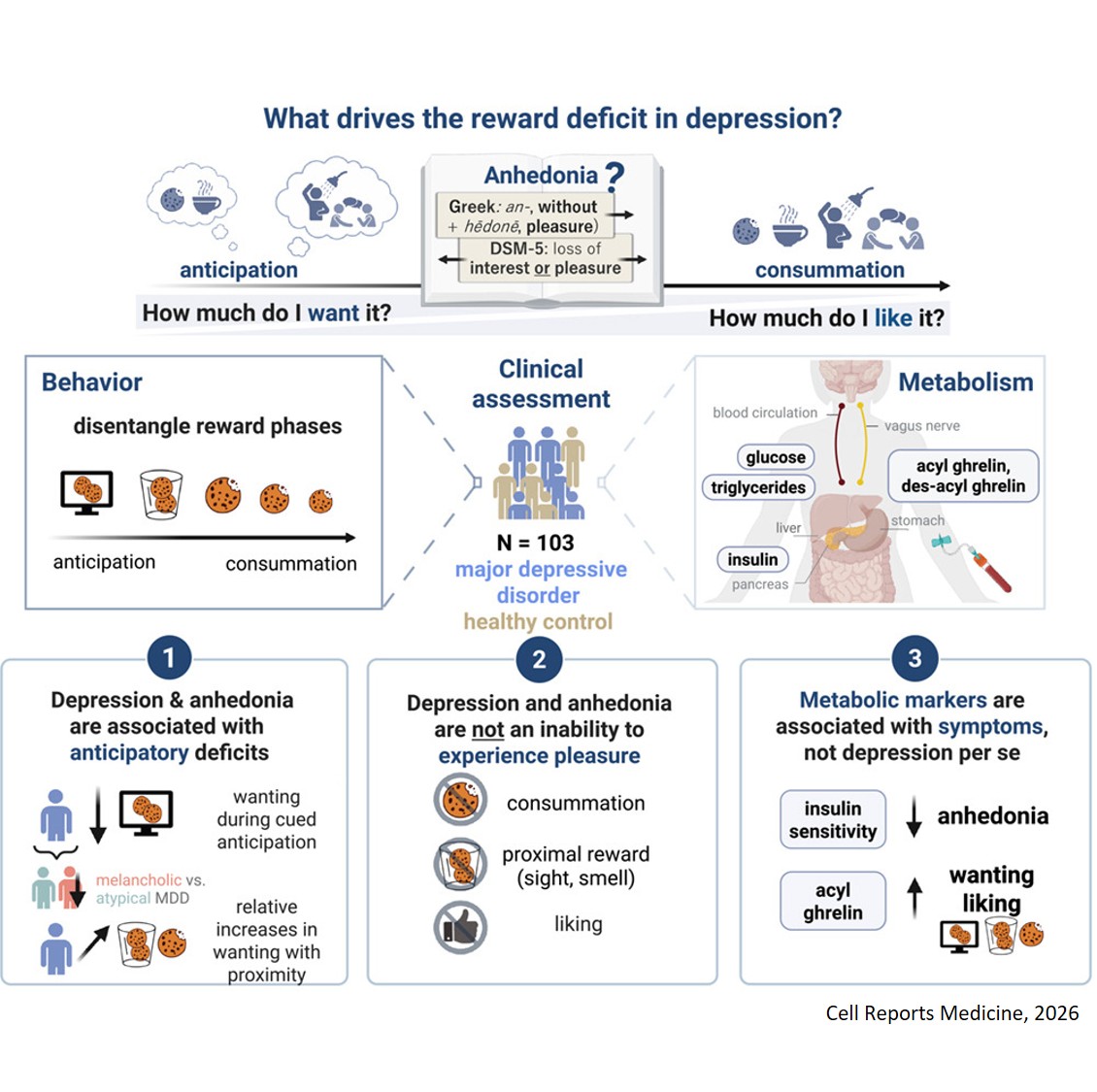
Researchers have found that people with depression do not perceive food as less rewarding when they actually consume it. The differences compared to people without depression emerge during anticipation: how much they want something before they receive it. This reduced desire is also linked to the clinical severity of anhedonia. The study’s findings have now been published in the journal Cell Reports Medicine.
Anhedonia has traditionally been understood as a deficit in the enjoyment of typically rewarding activities. Recent definitions now also incorporate aspects of expectation and motivation in the brain’s reward processing. However, these facets have not yet been systematically researched. Therefore, the research team examined 103 participants with and without depression to determine whether, in people with depression, anticipation and expectation of food rewards or the actual enjoyment during consumption are reduced.
“We were able to show that people with depression report less desire for food rewards during the anticipation phase, but do not perceive the actual consumption as less rewarding. The immediate taste experience as well as the desire while eating were comparable between the groups,” says the first author.
Additionally, the researchers found that the initially lower expectations are also linked to the clinical severity of anhedonia. “Interestingly, the desire increased again as soon as the rewards were available—that is, even before they were actually consumed,” says the author. This suggests that expectations are not fundamentally diminished, but rather depend more strongly on the immediate availability and situational presence of rewards.
The research team also investigated the relationship between anhedonia and metabolic parameters. Notably, lower insulin sensitivity—that is, a reduced ability of the body to effectively process blood sugar—was associated with more pronounced anhedonia.
“Our findings suggest that anhedonia in depression is characterized less by a diminished capacity for enjoyment itself and more by altered expectation and motivational processes,” says the senior author. The author concludes: “This opens up new perspectives for therapeutic approaches, such as through the targeted promotion of positive expectations or through a structured increase in the availability of rewarding activities in everyday life. Further research on the body-brain axis is also important in order to better understand metabolic and hormonal influences on reward processes and to be able to utilize them in a targeted manner in the long term.”
https://www.cell.com/cell-reports-medicine/fulltext/S2666-3791(26)00213-2
https://sciencemission.com/Blunt-anticipation