





Exercise hormone irisin is neuroprotective in multiple sclerosis
A new study offers clues as to why exercise can improve neurological symptoms in people with multiple sclerosis (MS). The study, the investigators examined levels of the exercise hormone irisin in a mouse model of multiple sclerosis (EAE). Researchers found that irisin reduced both clinical symptoms and the loss of neurons in the experimental model. Additionally, when irisin was removed, the protective effects of exercise disappeared. Taken together, the researchers’ findings suggest that irisin can protect neurons from inflammation-driven neurodegeneration, offering a potential target for future MS therapies. Results are published in Nature Metabolism.
“We are optimistic that our study will open up further developments of irisin as a therapeutic for, in particular, progressive MS,” said the senior and corresponding author. “Our findings strengthen the argument that irisin can help protect neurons in the context of multiple types of neurodegenerative diseases.”
MS is a chronic, autoimmune-mediated neurodegenerative disease in which the immune system attacks the myelin sheaths that swath neurons in the brain and spinal cord. Current therapies for MS reduce inflammation but do not adequately prevent neurodegeneration. Research from other groups has shown that aerobic exercise can improve MS symptoms, but the exact mechanisms have been unknown.
The researchers have previously shown that the hormone irisin, produced by muscles during exercise, can improve cognitive function and neuroinflammation in mouse models of Alzheimer’s disease. In their new federally funded study of MS, researchers also found evidence of neuroprotective effects. In the MS model, deleting irisin canceled out the protective effects of exercise while adding irisin back rescued neurons and improved disease outcomes. Irisin reduced neuronal loss in three central nervous system compartments: spinal cord, hippocampus, and retina, reduced loss of synapses and restored a neuroprotective gene program.
Also, peripheral delivery of irisin increases irisin plasma levels and reduces both clinical symptoms and neuronal loss in EAE. Although peripheral irisin does not alter peripheral and central immune responses in EAE, it induces a direct neuroprotective gene programme in spinal cord neurons and preserves synapses and mitochondrial activity, probably through direct binding to motor neurons.
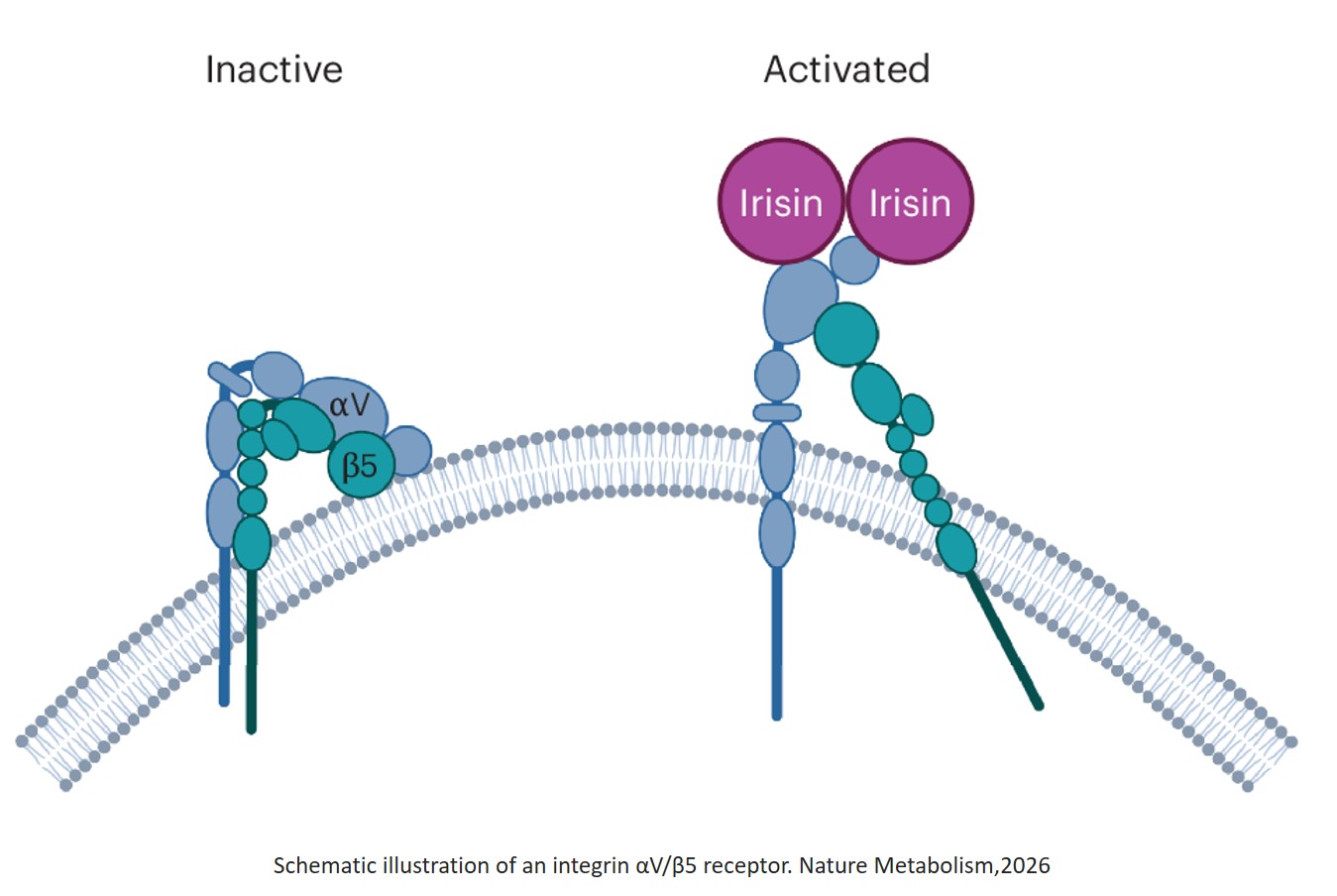
Previous work has proposed that irisin binds to the αVβ5 integrin receptor. The authors confirmed upregulation of the αVβ5 integrin receptors on the neuronal surface of ventral horn neurons in acute EAE by immunofluorescence, which could explain the increased recombinant irisin levels in neurons in EAE.
"What we find particularly exciting is that an exercise-induced molecule can directly protect neurons in a mouse model of multiple sclerosis, revealing a fundamentally new mechanism by which exercise can influence neurodegeneration in MS,” said the first author.
“Interestingly, in the current study we did not find a direct suppressive effect of irisin on peripheral immunity, but rather direct neuroprotective effects,” said a co-senior author on the study.
The authors note that more research is needed to understand how irisin’s protective mechanism works. They also note that it’s important to remember that the benefits of exercise in multiple sclerosis are complex and likely involve multiple factors, not just irisin alone. The team plans to continue investigating the hormone’s effects and mechanisms in future studies.
https://www.nature.com/articles/s42255-026-01527-7
https://sciencemission.com/exercise-hormone-irisin-has-neuroprotective-effects