

Hippo signalling controlling metabolism!
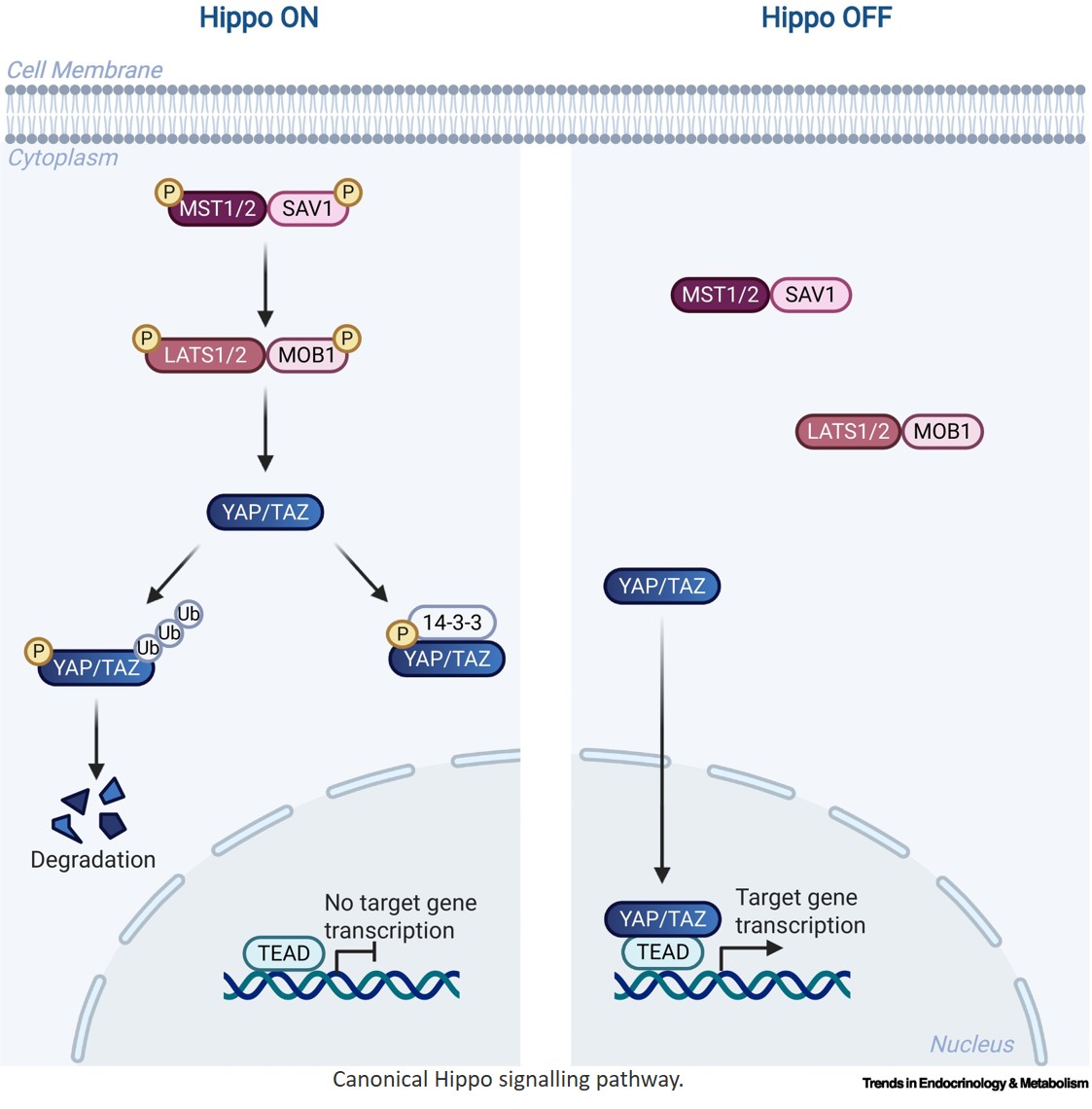
Hippo signalling is now recognised as a bidirectional metabolic pathway: metabolic cues regulate YAP/TAZ, while Hippo output rewires cellular metabolism.
The field has identified metabolitespecific checkpoints, including hexosamine biosynthetic pathway-, mevalonate-, glutamine-, and pentose phosphate pathway-derived signals, which connect metabolic flux directly to Hippo activity.
Across the liver, adipose tissue, pancreas, cardiovascular tissues, and immune cells, Hippo signalling coordinates tissue plasticity, homeostasis, and systemic metabolic adaptation.
Dysregulated Hippo signalling contributes to obesity, type 2 diabetes, metabolic dysfunction-associated steatotic liver disease/steatohepatitis, cardiometabolic disease, and cancer by coupling metabolic stress to fibrosis, dysfunction, and maladaptive remodelling.
Therapeutic progress now supports context-specific Hippo targeting, including Yes-associated protein (YAP)/TEA domain family transcription factor (TEAD) inhibition, Mammalian sterile 20- like kinase 1 (MST1)-directed β-cell protection, and hepatocyte-targeted TAZ silencing.
https://www.cell.com/trends/endocrinology-metabolism/fulltext/S1043-2760(26)00121-9