

Human heart valve-like tissues from pluripotent stem cells
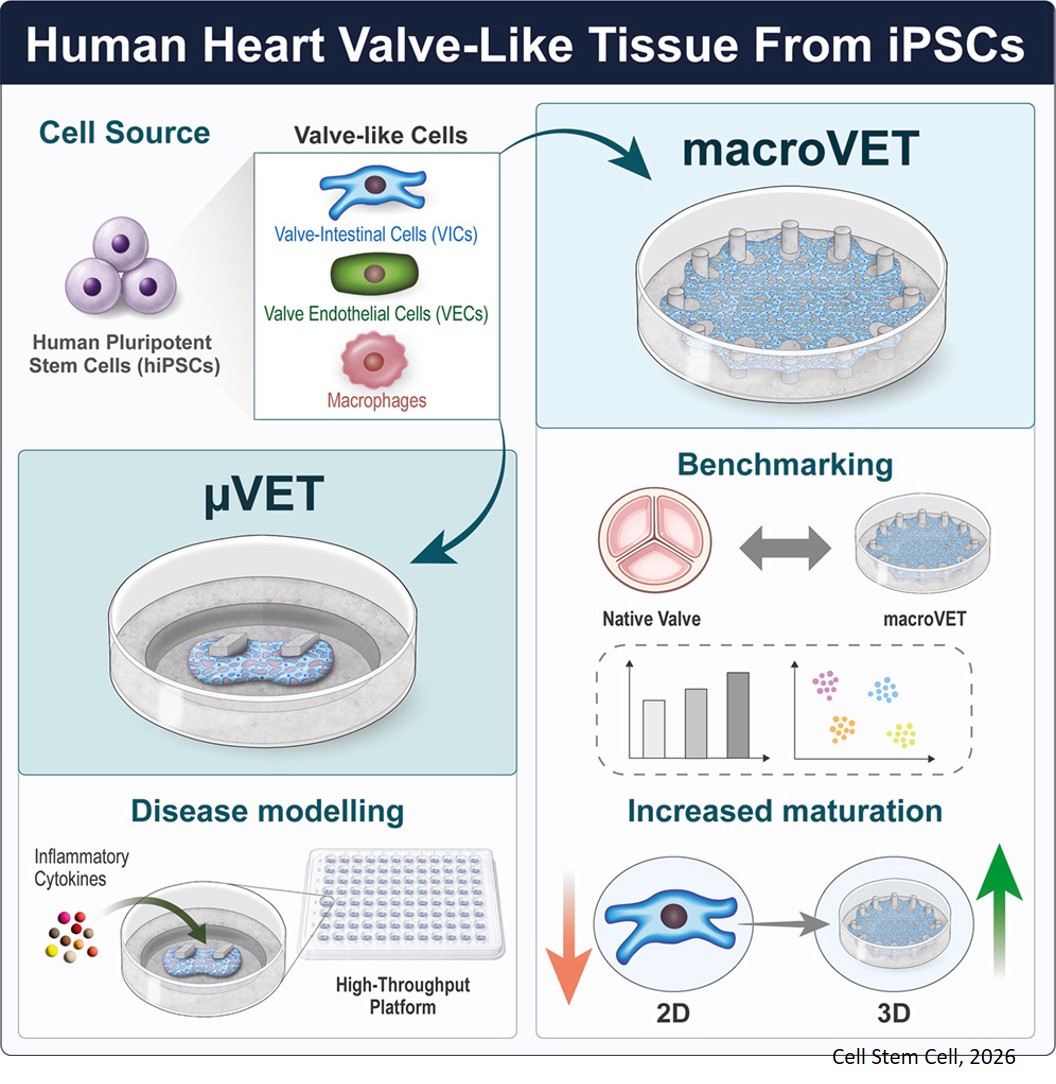
The researchers have created human heart valve tissues from stem cells, providing a powerful new platform to advance treatments for childhood heart diseases.
The world-first discovery has produced lab grown heart valve tissues that closely resemble those in the human body. Published in Cell Stem Cell, the findings advance our understanding into how human heart valves develop, mature and become damaged.
The first author said the breakthrough would help accelerate regenerative approaches for repairing damaged valves in children and adults.
Heart valve disease is a major global health issue, affecting about 28 million people. Heart valve disease occurs when one or more of the heart's four valves don’t open or close properly, disrupting blood flow. Left untreated, it may cause the heart to work harder and ultimately become life-threatening.
“Heart valve disease can be caused by developmental abnormalities, infection or age-related degeneration,” the author said. “Currently there are no treatments that can reverse the damage. Most patients depend on valve replacement surgery, which has significant limitations, including a high risk of blood clots and, for children, the likelihood of needing multiple procedures over their lifetime.
“To overcome this, our team has addressed a major challenge in heart valve biology. By creating heart valve tissues that mimic the molecular features of a human version we can now test and advance new treatments at scale in the lab.”
The valve showed an abundance of valve interstitial cells, resident macrophage cells, and the transcriptional profile of native heart valves. Importantly, the authors demonstrated a heart valve maturation signature from proteomic analysis and showed that maturation of stem cell-derived valve cells is enhanced under 3D culture.
The researchers also showed that the platform could model inflammatory valve disease, an underlying precursor to rheumatic heart disease (RHD).
“When exposed to inflammatory proteins linked to rheumatic heart disease discovered in previous studies, we found the engineered stem cell tissues became stiffer and showed biomarkers consistent with diseased human valves,” the author said.
The corresponding author said, “Engineered stem cells have enabled us to closely recreate the complex structure of human valve tissue. In the future, this technology could be used to more accurately model valve disease and support the development of stem cell-derived replacement valves that grow and adapt with a patient.”
https://www.cell.com/cell-stem-cell/fulltext/S1934-5909(26)00270-5
https://sciencemission.com/Human-heart-valve-like-tissues-from-iPSCs