



IgA Nephropathy in Adults
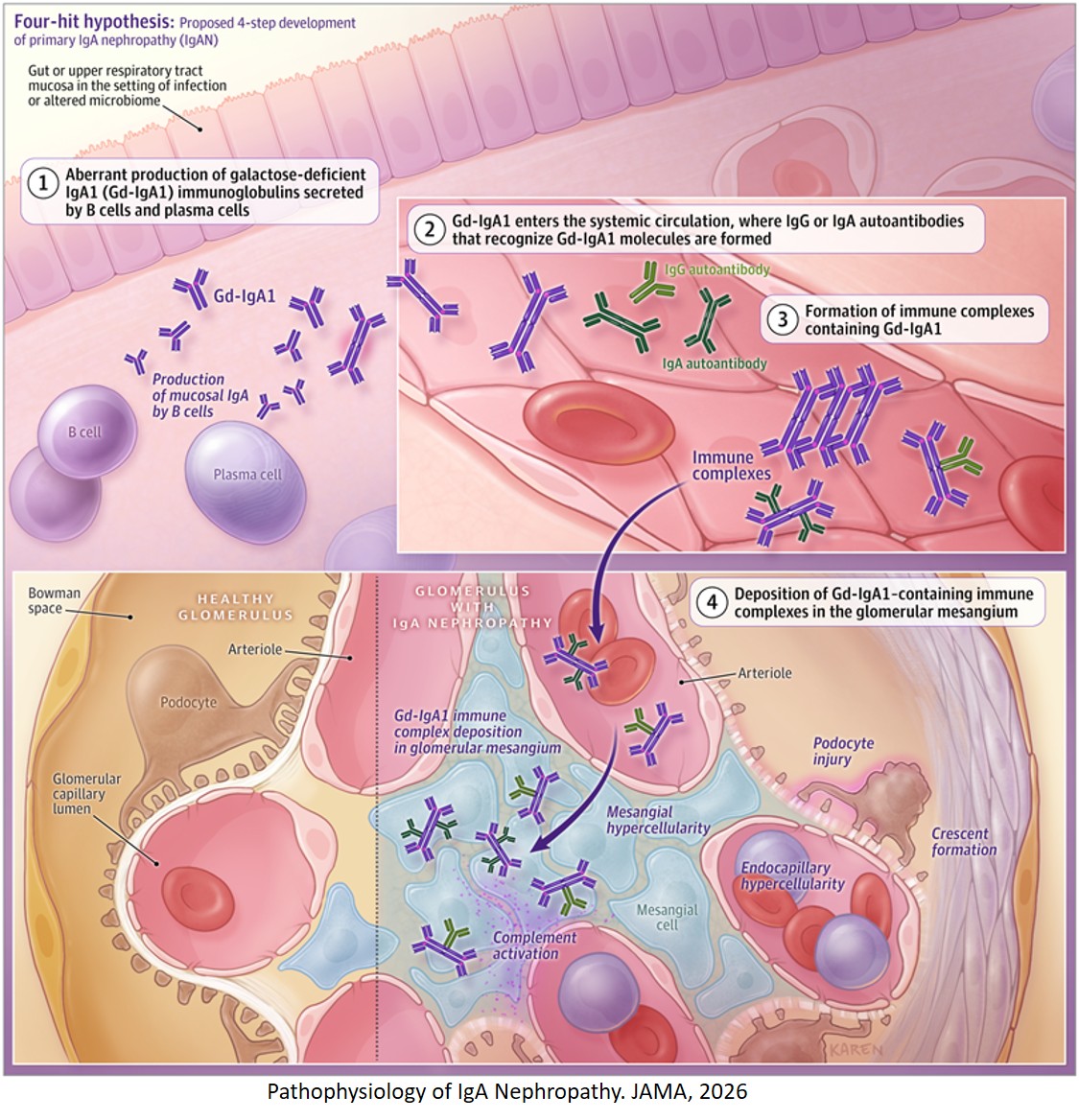
IgA nephropathy is the most common cause of immune-mediated glomerular disease worldwide with the deposition of IgA-containing immune complexes in the glomerulus, causing glomerular inflammation and scarring.
Patients with IgAN and proteinuria greater than or equal to 0.5 g per day should undergo kidney biopsy to confirm the diagnosis.
Blood pressure management, and decreasing of IgA-containing immune complexes formation (eg, targeted-release budesonide), reduce immune complex–mediated glomerular injury (eg, systemic glucocorticoids, iptacopan), and manage IgAN-induced nephron loss (eg, renin-angiotensin system inhibitor, dual endothelin angiotensin receptor antagonist, and sodium-glucose cotransporter 2 inhibitor are used for the treatment.
This Review summarizes the pathophysiology, epidemiology, clinical presentation, diagnosis, treatment, and prognosis of primary IgA nephropathy in adults.