









Immune cells regulate eye pressure linked to glaucoma
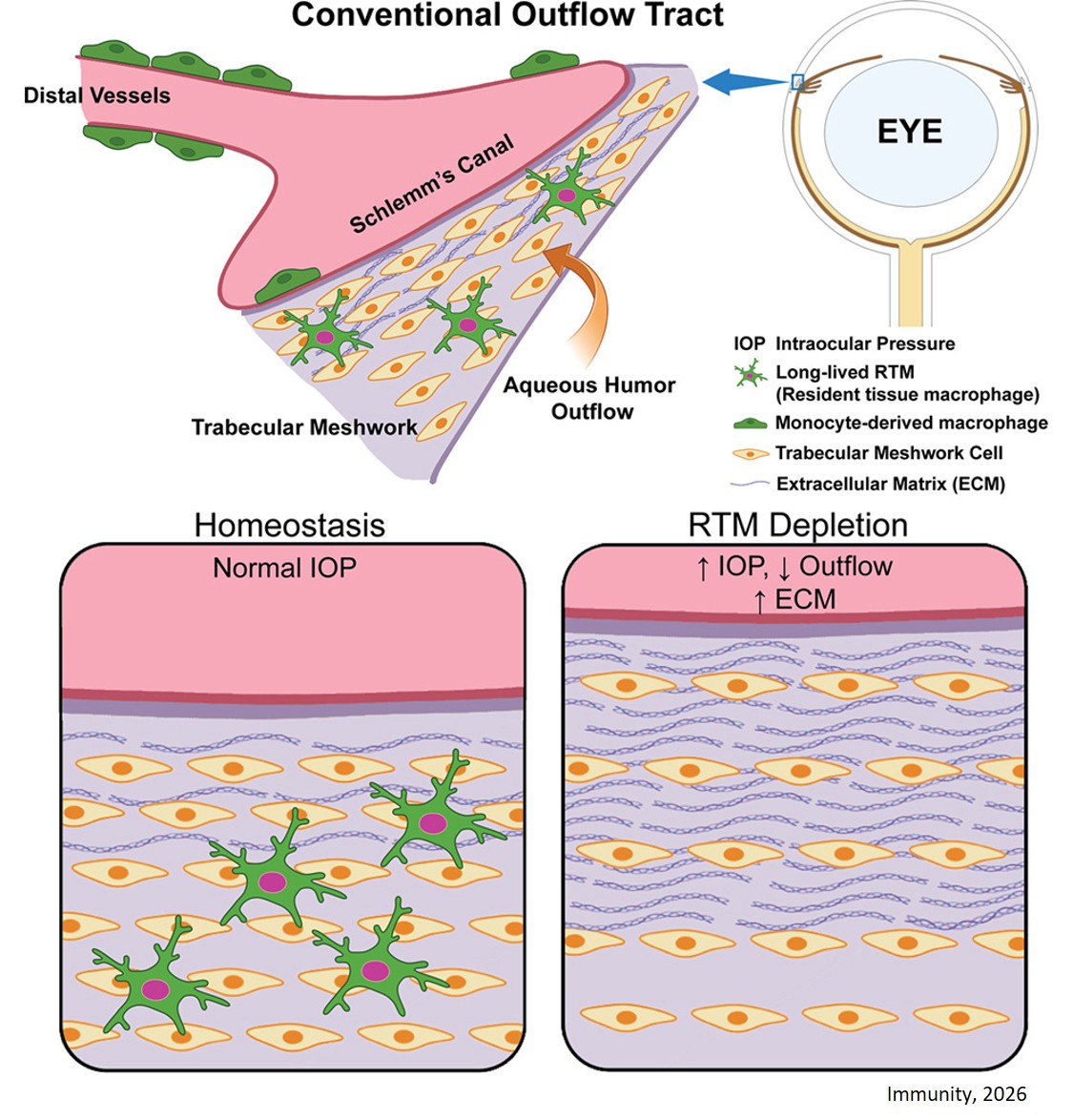
When the eye’s drainage system clogs, pressure builds up and causes damage. The pressure can lead to glaucoma and vision loss.
New research published in the journal Immunity, reveals that a specialized set of immune cells act as the cleanup crew, pointing to a promising new target for therapies to prevent a major cause of blindness.
These immune cells - known as resident macrophages - live in the eye’s drainage tissues. Until now, the role of resident macrophages in controlling eye pressure was unknown.
“The only way we can treat glaucoma is by lowering the eye pressure, yet we still have patients who go blind despite current treatments,” said the lead author of the study.
“This research helps us understand the role of the immune system in regulating eye pressure,” the author said.
In the study, researchers tracked fluorescently tagged resident macrophages in mouse eyes. Long-lived resident tissue macrophages were concentrated in the trabecular meshwork and Schlemm’s canal, whereas steady-state monocyte-derived macrophages were abundant around distal vessels.
When they selectively removed these cells, the eye’s drain became clogged, fluid built up, and eye pressure increased and was linked to aberrant extracellular matrix turnover in the resistance-generating tissues of the trabecular meshwork
“Our findings show that resident macrophages are essential for maintaining healthy eye pressure,” said the author. “Disruption of this system may contribute directly to the development of glaucoma.”
This discovery could lead to the development of future glaucoma treatments. The next step is to do research that identifies these resident macrophages in human eye tissue.
“Now we have a specific target for developing new therapies that can normalize the eye pressure and stop vision loss, in contrast to current medications that do not target the source of disease,” said a corresponding author.
“This discovery is a major step forward in understanding how the immune system contributes to the regulation of eye pressure,” said a co-corresponding author.”
https://www.cell.com/immunity/abstract/S1074-7613(26)00046-4