

Role of mobile DNA elements in lung cancer progression
Using lung cancer biospecimens, an international team of researchers identified key factors that drive tumor evolution and influence outcomes. Overall, the findings, published in Nature, describe a previously unknown origin of some aggressive lung cancers.
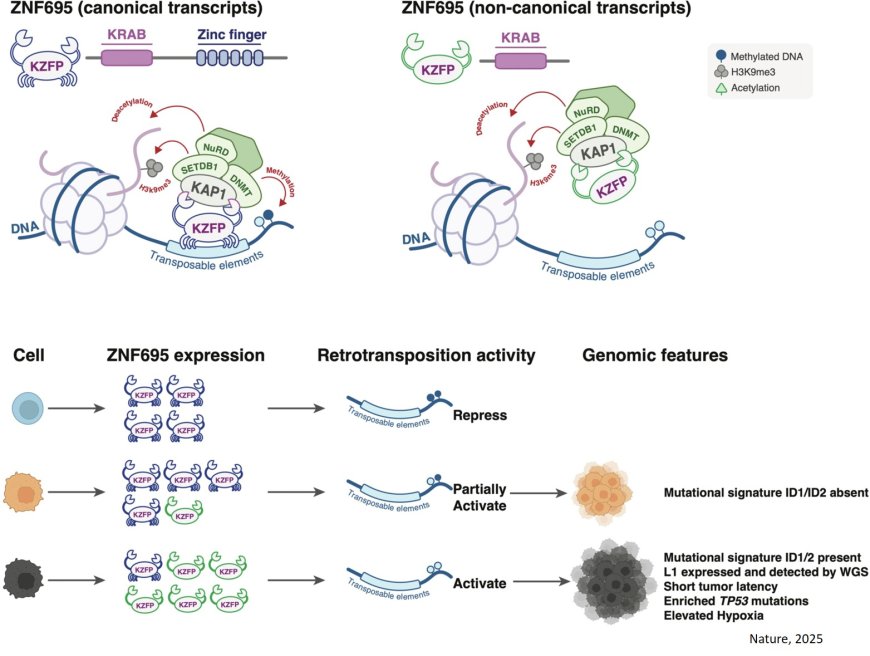
From whole-genome sequencing of more than 1,000 lung cancer cases, the team focused on 542 lung adenocarcinomas with diverse clonal architectures. Among them were a collection of aggressive tumors enriched with the ID2 mutational signature, characterized by a single base pair deletion. Surprisingly, this signature was associated with a type of mobile DNA known as LINE-1 (L1), an ancient part of the human genome that has the potential to wreak havoc by inserting many copies of itself in different places across the genome. L1 is typically silenced within a normal cell but in these tumors was reactivated. L1 reactivation linked to L1 promoter demethylation could explain the rapid evolution and aggressiveness of this subgroup.
“It’s not every day that you discover a new mechanism for aggressive lung tumors,” said the lead author. “The finding underscores the power of whole-genome sequencing data to reveal genomic structural variants with significance for tumorigenesis.”
In addition, the investigators discovered that major driver gene mutations are responsible for varying tumor evolutionary trajectories. Tumors harboring KRAS mutations, which are more frequent in smokers, showed signs of rapid clonal evolution, which helps to explain the aggressive nature of these malignancies. In contrast, tumors enriched with EGFR mutations—more common in people who never smoked—had more sub-clonal architecture, which explains a more prolonged evolutionary course.
“The slow progression of EGFR-mutant tumors may allow for early detection and benefit from combination treatments to delay or prevent resistance,” said the senior investigator, and manuscript’s senior author. “KRAS-mutant tumors and tumors enriched with the ID2 signature, which evolve quickly, may require more targeted approaches.”