


Microglia expressing lymphoid genes are neuroprotective
In Alzheimer’s disease, the leading cause of dementia, microglia—the brain’s immune defenders—can act as both protectors and aggressors, shaping how the disease progresses.
Researchers have identified a distinct population of neuroprotective microglia that may point to a new therapeutic approach for Alzheimer’s disease.
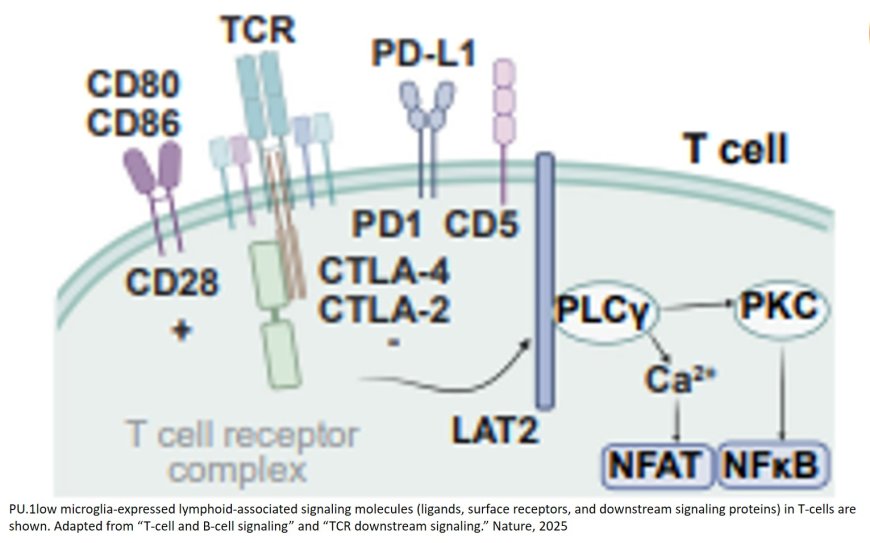
In a study published in Nature, the team reports that microglia that have reduced expression of the transcription factor called PU.1, and that also have co-expression of the lymphoid-like receptor CD28, act to limit neuroinflammation and to slow amyloid plaque build-up and neurotoxic tau protein spreading in the brain, the major hallmarks of Alzheimer’s pathology.
PU.1 is a protein that binds to specific DNA sequences to control the translation of genetic information, determining when and how genes are turned on or off. CD28 is a co-stimulatory receptor found on the surface of T cells that helps initiate and sustain an effective adaptive immune response.
Using Alzheimer’s mouse models, human cells, and human brain tissue, the researchers demonstrated that lowering PU.1 promotes the expression of lymphoid immunoregulatory receptor proteins on microglia. Despite being present in small numbers, these neuroprotective microglia exert a brain-wide suppressive impact on inflammation and protect cognitive function and survival in mice. The researchers found that deleting CD28 from this small subset of microglia amplified inflammation and accelerated plaque growth, highlighting CD28’s key role in protective microglial activity.
“Microglia are not simply destructive responders in Alzheimer’s disease—they can become the brain’s protectors,” said the senior author of the paper. “This finding extends our earlier observations on the remarkable plasticity of microglia states and their important roles in diverse brain functions. It also underscores the vital importance of international collaboration in advancing scientific progress.”
“It is remarkable to see that molecules long known to immunologists for their roles in B and T lymphocytes also regulate microglial activity,” added a co-author of the paper. “This discovery comes at a time when regulatory T cells have achieved major recognition as master regulators of immunity, highlighting a shared logic of immune regulation across cell types. It also paves the way for immunotherapeutic strategies for Alzheimer’s disease.”
The discovery of the PU.1-CD28 axis establishes a molecular framework for understanding protective microglial states and highlights the potential of microglia-targeted immunotherapies to modify the course of Alzheimer’s disease.