



Nicotine exposure during pregnancy increases flu severity later in life
Exposure to nicotine during pregnancy and shortly after birth can have a lasting impact on a child’s immune system and cause more severe respiratory infections later in life, shows a new study.
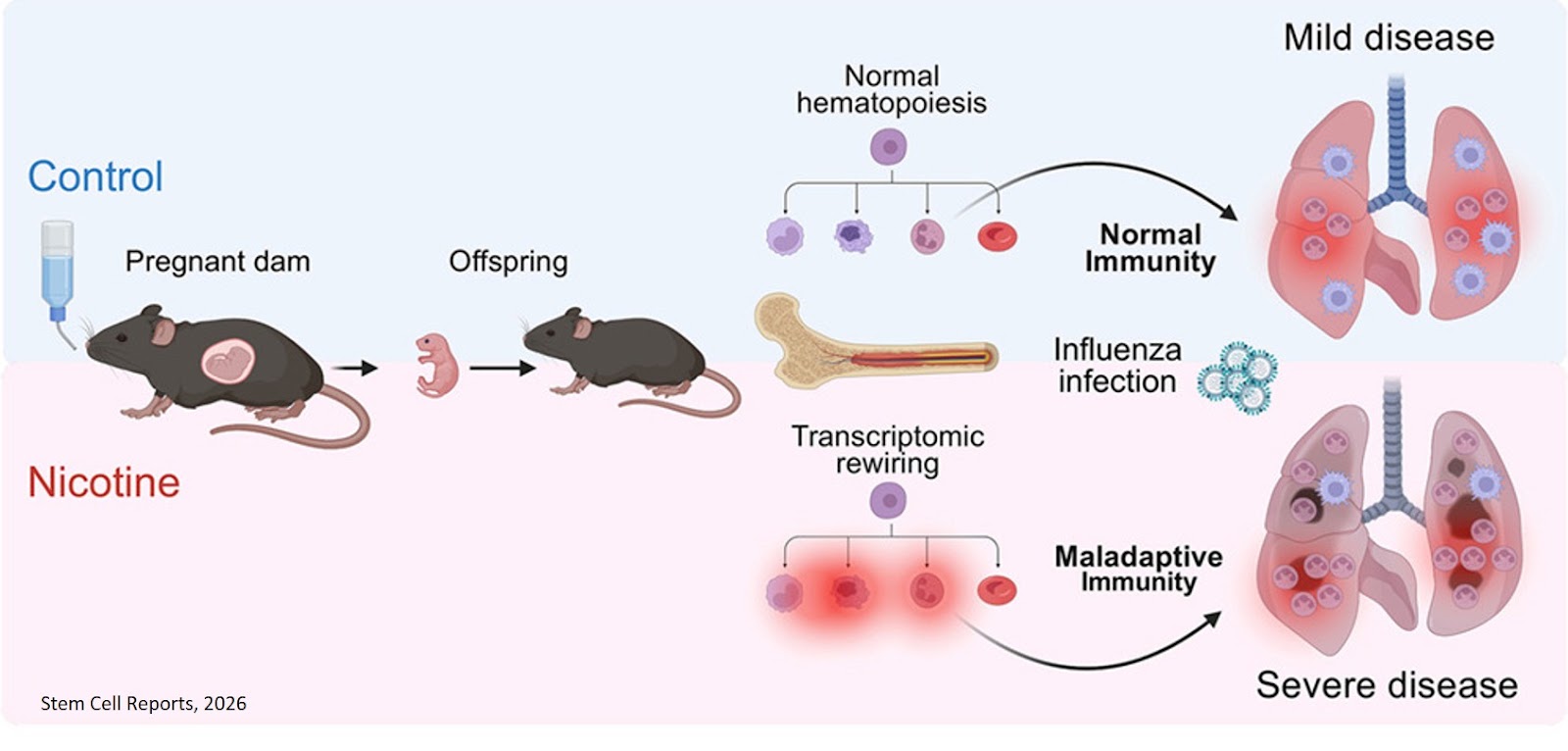
Prenatal nicotine exposure has long been known to cause a range of health issues, from premature birth to increased respiratory illnesses, but scientists have not clearly understood the processes that cause these vulnerabilities. Now, research published in Stem Cell Reports shows that in mice models, nicotine exposure during pregnancy and just after birth alters the stem cells that create the body’s blood cells and other crucial lung immune cells. This leads to increased susceptibility and severity to influenza, and likely other respiratory diseases, later in life.
"This study is not on all the compounds you inhale while smoking a cigarette, it is really on the addictive compound nicotine,” said a study author. “During pregnancy, clinicians sometimes recommend nicotine replacement therapy, such as patches or gum, to help patients quit smoking. These products still contain nicotine, and our study suggests that nicotine itself negatively affects the development of the immune system.”
Cigarettes, other tobacco products, and newer alternatives such as vapes and nicotine pouches, contain nicotine alongside other potentially harmful substances, making it difficult to separate nicotine’s effects from those of other ingredients. The researchers decided to look at the impact of nicotine on its own, particularly as nicotine is consistently the addictive compound found in more modern tobacco products as cigarette use declines.
“We want to translate the research that we do in the lab to people's well-being,” said another study author. “In the U.S., almost 4% of mothers smoke during pregnancy, and in other countries there are still a lot more than that. Most people know that smoking during pregnancy is harmful, but we still have much to learn about how nicotine affects a developing baby and whether those effects can last into adulthood.”
The researchers used mouse models and cell lineage-tracing tools to understand the effects of perinatal nicotine exposure to blood-forming stem cells, which are crucial to the immune system.
They found that offspring exposed to nicotine were born with fewer blood-forming stem cells, called hematopoietic stem cells (HSCs). These cells showed altered patterns of immune regulator genes, which persisted into adulthood, even though nicotine exposure ended shortly after birth.
“These cells are reduced after exposing these mice to nicotine, which could be a reason why epidemiological studies have shown that children are more susceptible to respiratory tract infections,” the author said. “This could tell us why—it’s really an impact in the cellular space. Even more than just being exposed to smoke, it might be the nicotine received during pregnancy.”
Into adulthood, the changes in blood cells appeared to be reduced. However, their lungs had fewer resident macrophages, the key immune cells that essentially clean up the lungs and act as a first line of defense against pathogens.
“HSCs exposed to nicotine during embryonic development end up being diminished, and we're not specifically sure why, but there's a change in a different direction than if you expose the mice to nicotine during adulthood,” said another author. “Adult HSCs respond differently than fetal HSCs, which is really interesting.”
Although adult HSC seemed to rebound into adulthood, further testing showed that heightened disease severity appears to be a lasting impact of nicotine exposure. The researchers tested the impact of an influenza infection on the nicotine-exposed mice.
During influenza infection, they found increased inflammation in the lungs and greater movement of immune cells to this area, which led to more severe lung damage and greater weight loss. This supports the idea of cellular memory—that a primary exposure to something trains the immune system positively or negatively, and impacts secondary exposures later in life.
“Cells can have this memory, but don’t show it, until the second hit,” the author said. “We want to follow up on this—what is this memory, and where is it in the cells?”
The researchers anticipate that a similar exaggerated response would be seen with other respiratory viruses or bacterial infections, like pneumonia or RSV. Taken together, the researchers hope that this study might offer support for protective public health measures.
“Our findings suggest that the environment we are exposed to early in life can have lasting effects on the immune system,” the author said. “We studied influenza, which we can get vaccinated against. So the next question is, ‘Can we reduce the harmful effects of these early exposures through public health measures?’ Understanding these early exposures can help us find ways to protect people later in life from the consequences of exposures they had no control over.”
https://www.cell.com/stem-cell-reports/fulltext/S2213-6711(26)00329-2