

Protein and amino acid restriction in aging and longevity
The review challenges the mainstream narrative pushing for high-protein diets by demonstrating that protein restriction (PR) and the targeted restriction of specific amino acids extend healthspan and lifespan across diverse species.
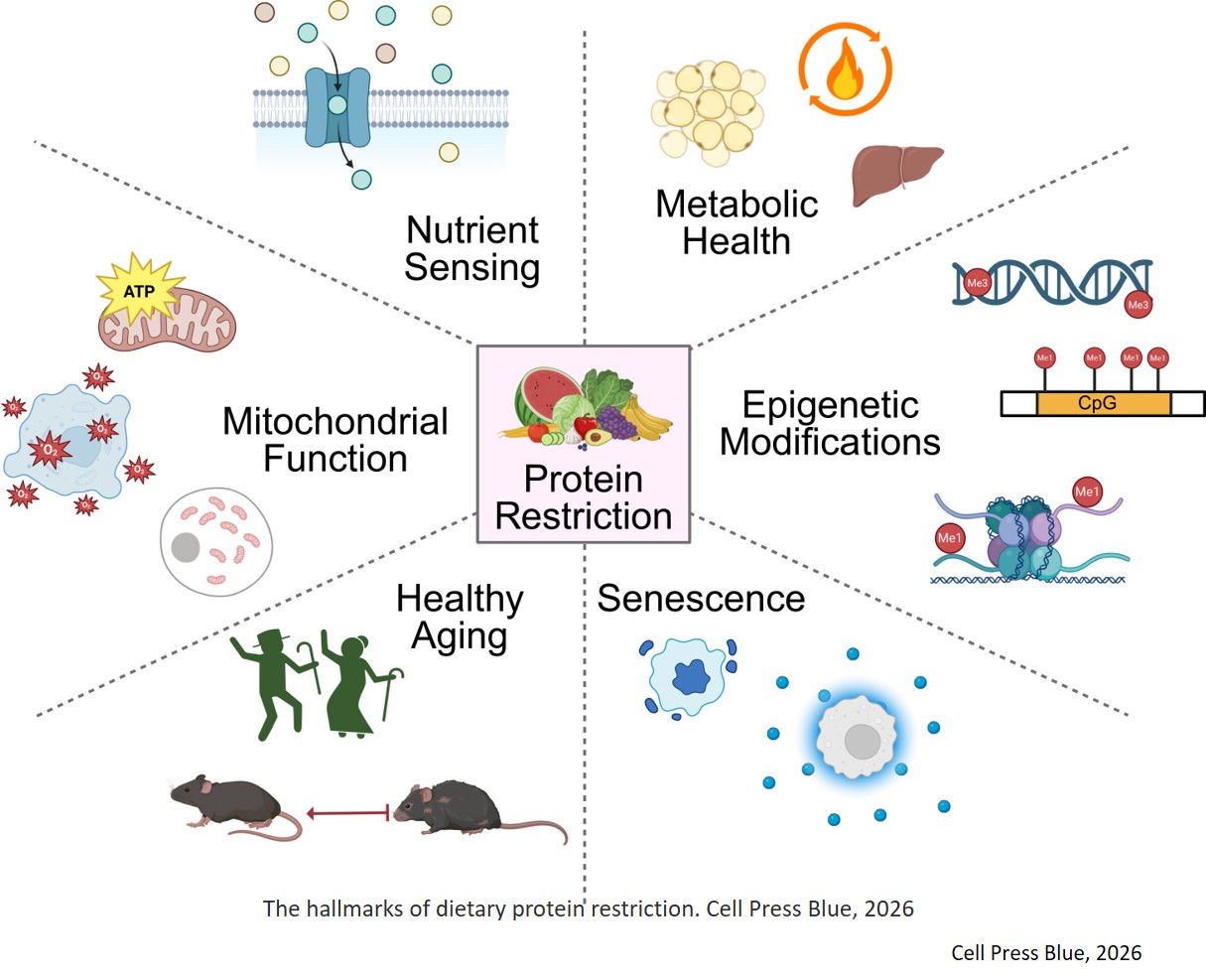
The authors analyze the data from over 350 studies to establish six distinct biological hallmarks altered by lowering protein intake.
Chronic overactivation of mTORC1 via excessive protein overstimulates cells, suppressing internal cleanup mechanisms (autophagy). High-protein diets accelerate the accumulation of damaged, "zombie" senescent cells in the liver, fat tissue, and kidneys. Protein restriction prevents this tissue damage.
PR optimizes cellular energy production, preventing the age-related mitochondrial breakdown that drives cellular stress and metabolic decline. PR reduces adiposity, increases energy expenditure, and improves blood glucose levels. Remarkably, this occurs independently of total calorie intake—animals eat more but lose fat mass. Reducing dietary protein reshapes chemical modifications on DNA, effectively preserving a more youthful genetic expression pattern.
Lower amino acid availability downregulates the growth-promoting mTORC1 pathway and activates GCN2. Isoleucine restriction Improves metabolic health and enhances metabolic rate, while methionine restriction mimics the lifespan-extension effects of complete calorie restriction. Valine restriction promotes glycemic control and lower fasting blood glucose.
When the body senses low protein intake, it triggers a surge in circulating FGF21 that boosts energy expenditure, regulates glucose, suppresses cellular senescence, and dials down systemic inflammation.
https://www.cell.com/cell-press-blue/fulltext/S3051-3839(26)00077-0
https://sciencemission.com/protein-and-amino-acid-restriction