
Regulation and activation of UvrD-family DNA helicases/translocases
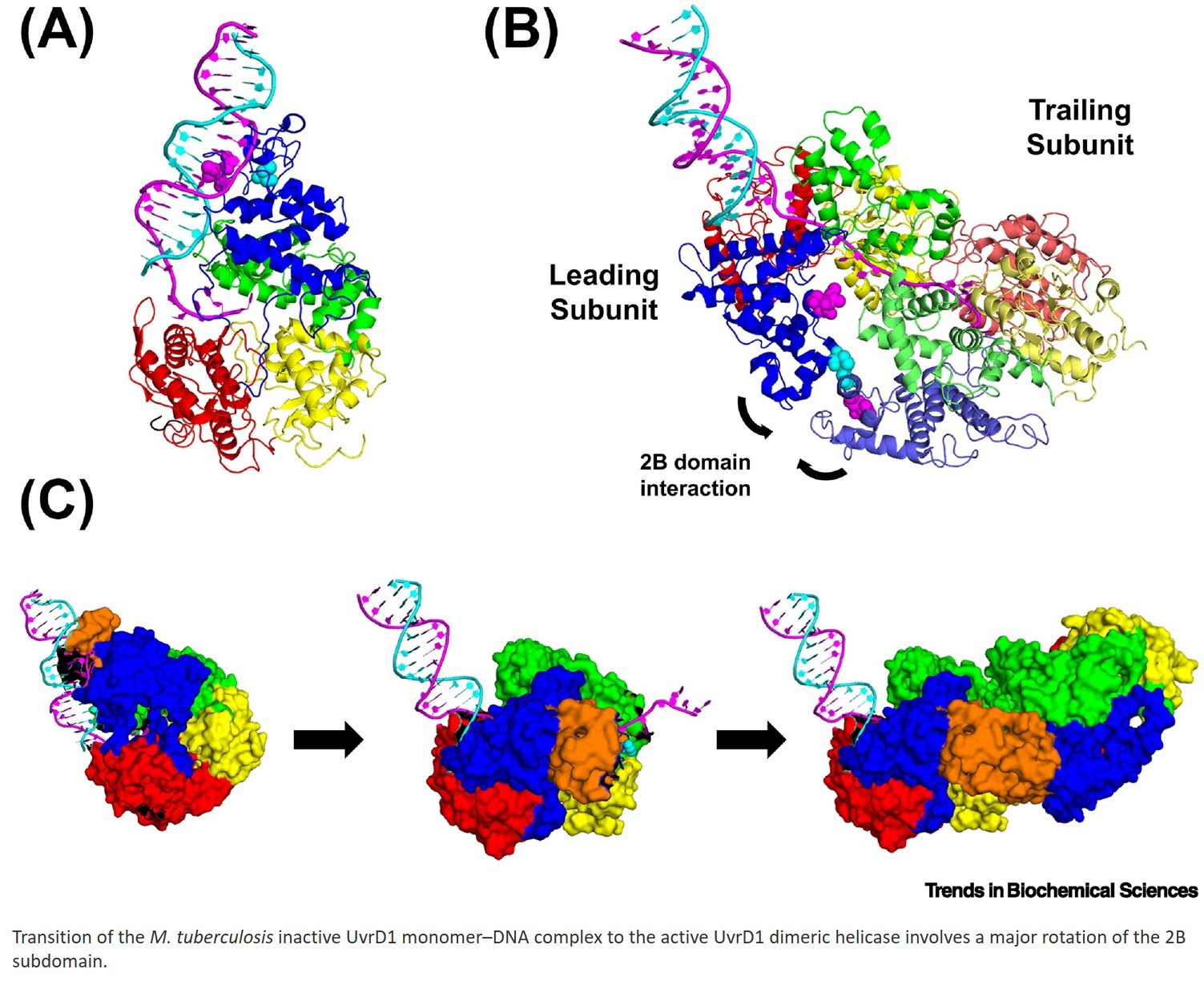
For the past few decades, the active form of superfamily 1A (SF1A) UvrDfamily helicases has been controversial due to the absence of structures of the active dimeric form of these enzymes.
A key interaction in the monomeric structures is between a regulatory domain (2B) and duplex DNA that was proposed to facilitate DNA unwinding but is likely inhibitory.
However, recent cryo-EM structures show that Mycobacterium tuberculosis UvrD1 forms a covalent dimer, with dimerization occurring between the 2B domains of each subunit, resulting in major reorientations of the 2B domains that prevent the 2B–DNA interaction, thus relieving its inhibitory effect.
The same dimerization interface is used in Escherichia coli UvrD dimers, suggesting that this is a general mechanism to activate most SF1A helicases.
Due to these insights, textbook descriptions of helicase mechanisms based on the monomeric structures require re-evaluation.
https://www.cell.com/trends/biochemical-sciences/fulltext/S0968-0004(26)00033-2