

Role of AMPK as a regulator of mitochondrial quality control
Eukaryotes appear to have arisen via endosymbiosis, when an archaeal host engulfed bacterial partner(s) that evolved into mitochondria and now provide the host with ATP.
Being activated by energy stress, AMP activated protein kinase is well placed to allow communication between the host and its former endosymbiont, and is known to regulate many aspects of mitochondrial function.
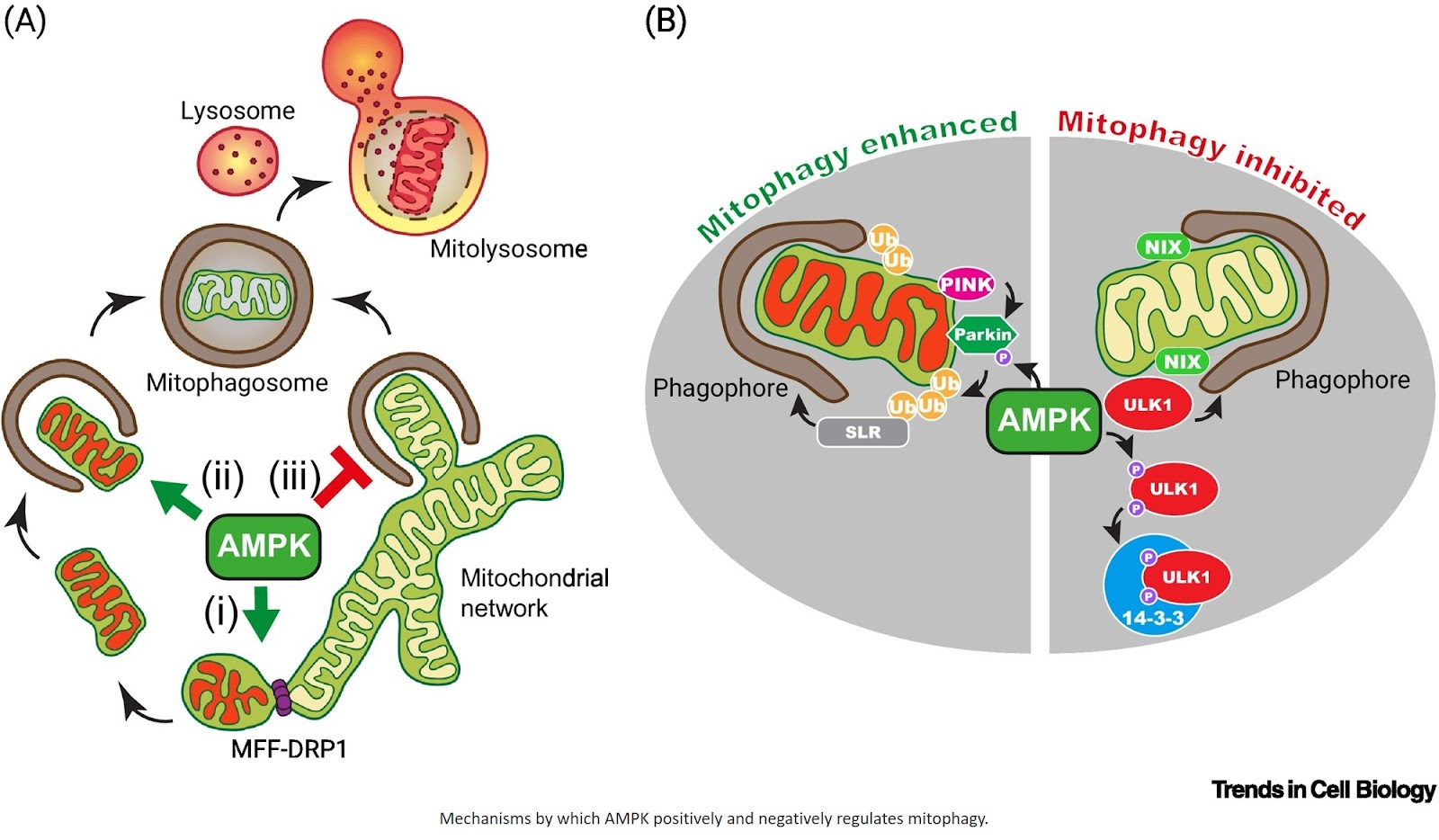
AMP-activated protein kinase promotes mitochondrial fission and inhibits fusion, allowing the isolation of damaged fragments of the mitochondrial network.
AMP-activated protein kinase promotes the synthesis of new mitochondrial components by triggering the nuclear translocation of the transcription factor EB, thereby promoting the transcription of genes involved in lysosomal and mitochondrial biogenesis.
AMP-activated protein kinase promotes mitophagy of damaged mitochondrial segments through the PINK1:Parkin and BCL2L13 pathways, while inhibiting mitophagy of functional mitochondrial segments via the NIX/BNIP3 pathways.
https://www.cell.com/trends/molecular-medicine/fulltext/S1471-4914(26)00087-0