

Targeting astrocytic metabolic pathway to prevent neuronal death in ischemic stroke
It is not clear how oxidative stress rewires astrocytic metabolism to drive neuronal damage.
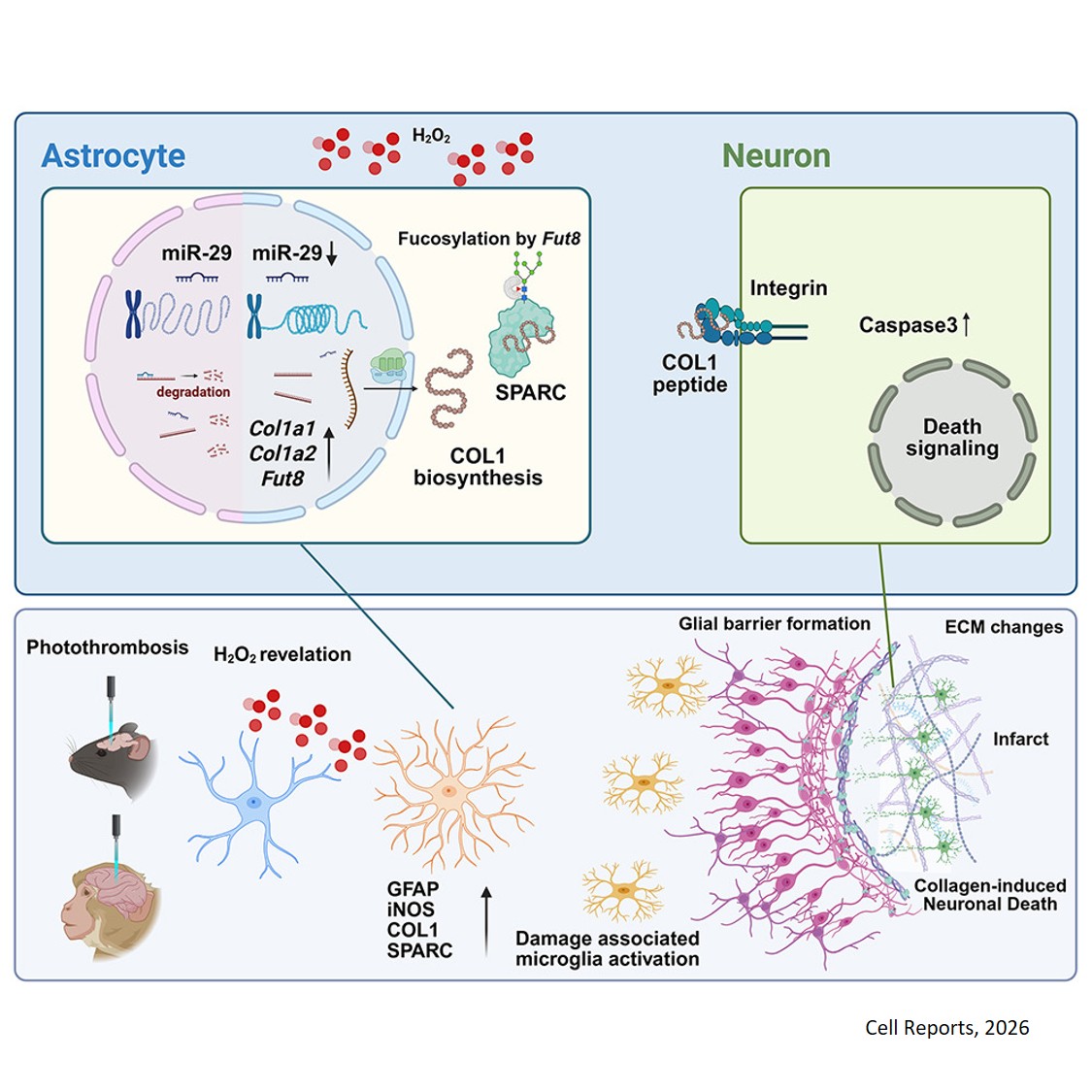
The researchers in this study demonstrate that oxidative stress reprograms astrocytes to produce type I collagen (COL1) through redox-glycosylation coupling mechanism.
Mechanistically, hydrogen peroxide (H2O2) suppresses miR-29 and enhances fucosyltransferase 8 (FUT8)-mediated core fucosylation, integrating post-transcriptional and glycosylation-dependent regulation of COL1.
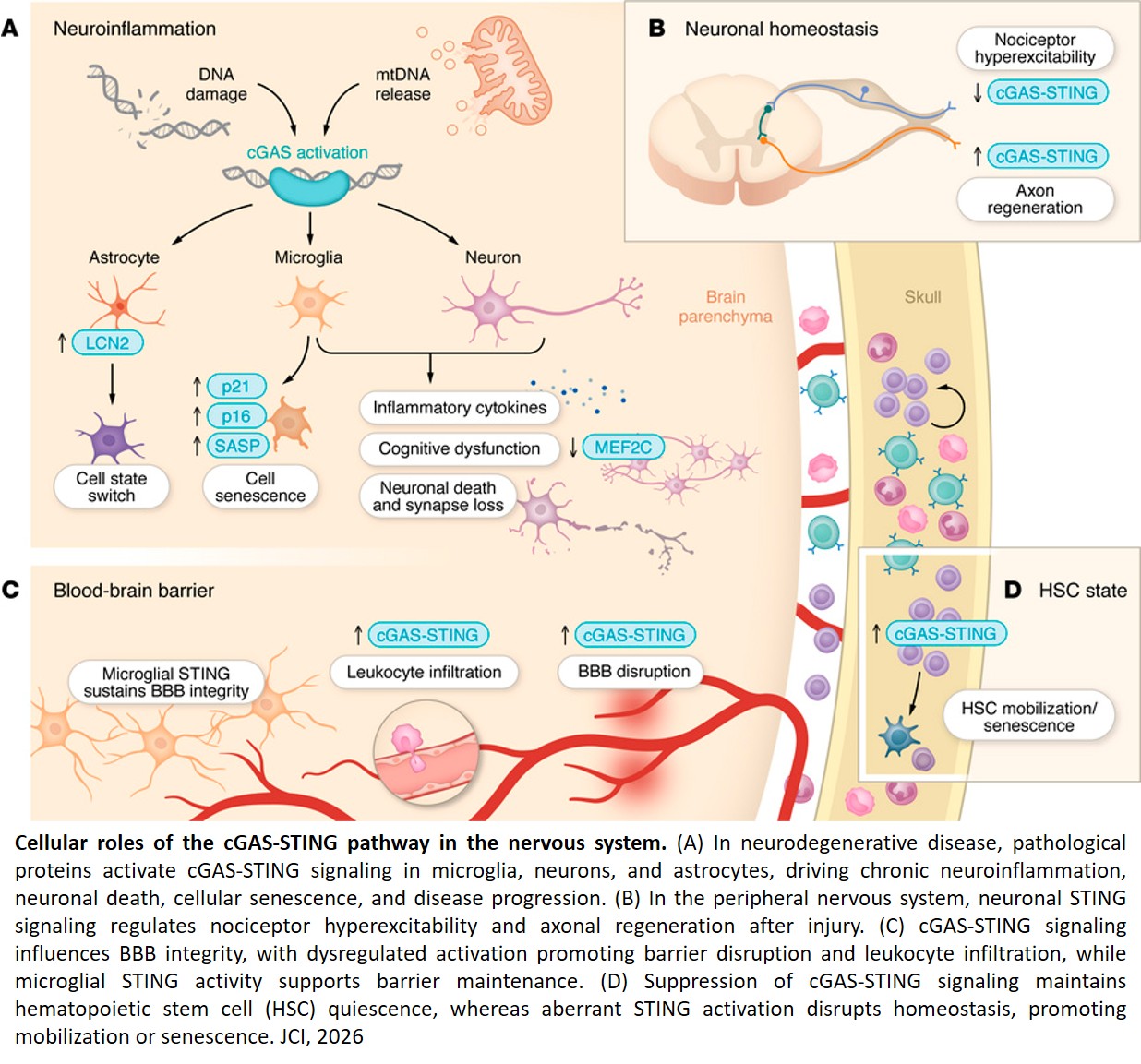
In a stroke model, an H2O2 surge induces astrogliosis, glycosylation remodeling, and COL1 expression, integrin signaling leading to glial barrier formation, neuronal loss, and neurological deficits.
Targeting this pathway disrupts the glial barrier, prevents neurodegeneration, and improves functional recovery.
A drug candidate, KDS12025, a peroxidase enhancer that reduces H2O2 burden shows a potent neuroprotection effect in a non-human primate stroke model.
https://www.cell.com/cell-metabolism/fulltext/S1550-4131(26)00139-7
https://sciencemission.com/neuronal-death-in-ischemic-stroke