



How a bacteria senses iron?
Pseudomonas aeruginosa is a common culprit in hospital-acquired bacterial infections and is growing more resistant to antibiotics. New findings show how a two-protein system inside the bacterium operates like a sensitive switch: the pair detects iron both outside and inside the cell and then rewrites large parts of the microbe’s metabolism in response. The results, published in Nature Communications, suggest this system could become a target for more effective treatments for stubborn infections.
Like most living things, Pseudomonas requires iron to survive. Bacteria prefer reduced, ferrous iron—a form with beneficial properties that is also sensitive to oxygen. That means ferrous iron is plentiful in low-oxygen microenvironments such as dental plaque, the lining of the gut, coatings on the lungs of people with cystic fibrosis, or the site of burn wounds. Bacteria can also generate these protective coatings, called biofilms, which help shield them from drugs and the immune system and contribute to antibiotic resistance.
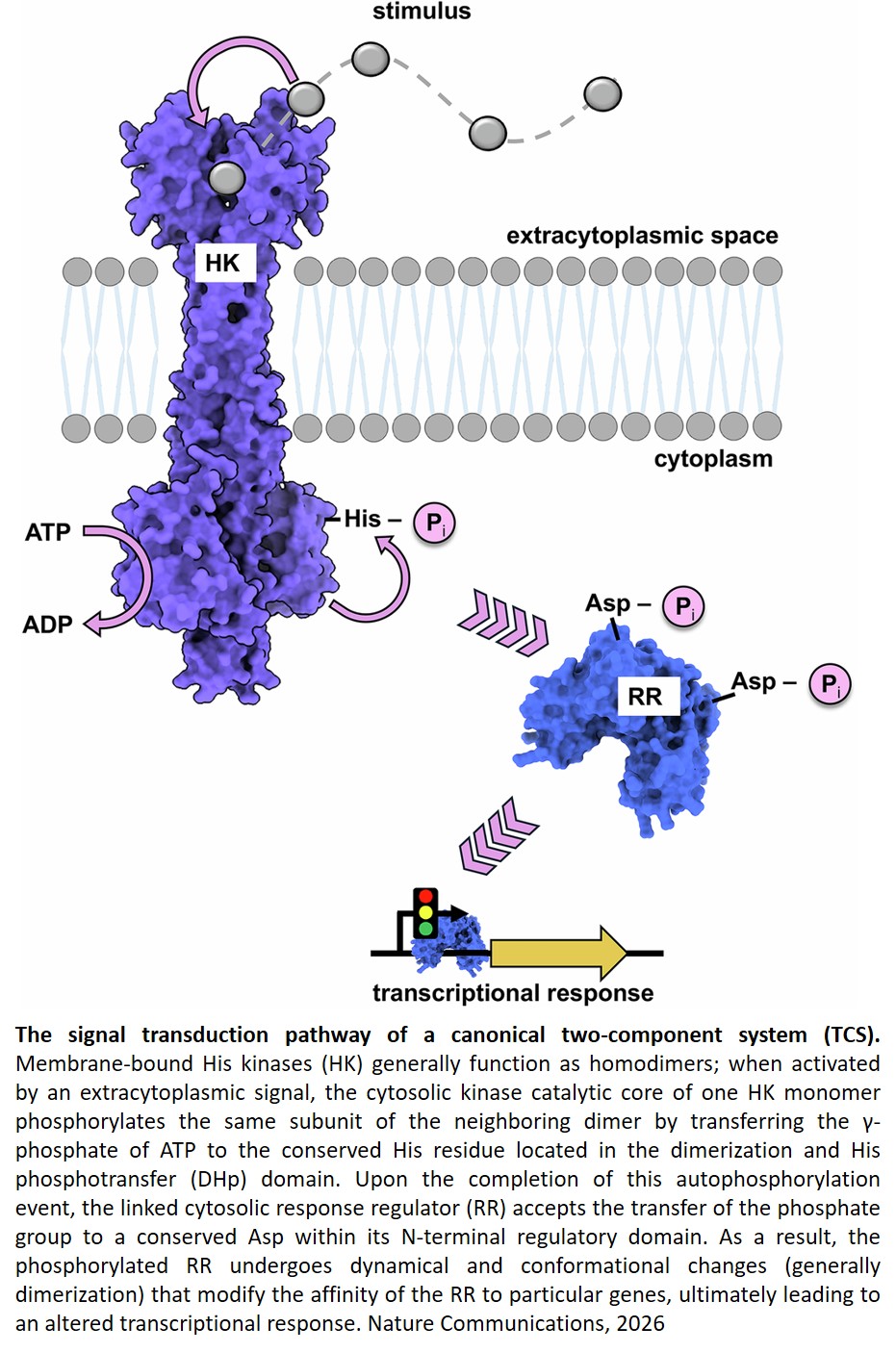
Given iron’s necessity, one way organisms fight invading microbes is by depriving them of it. As a result, bacteria have evolved complex mechanisms to monitor how much iron is available and in what form. The signaling system in the current study is one such mechanism. One protein, called BqsS, sits in the cell membrane and senses iron outside. It then passes a signal to a second protein, called BqsR, inside the cell. Based on that signal, BqsR binds to DNA and turns genes on or off, affecting a wide range of cellular functions.
The new paper shows that BqsR and its partner regulate iron uptake into the cell, but also that the system does far more. “What we didn’t expect to find was how much the presence of this one ion rewires the bacterium, completely changing all sorts of genes,” the author says. “It’s got hands in a lot of different pies.”
The researchers were also surprised to learn that BqsR itself can bind iron inside the cell. When iron levels rise too high, BqsR binds the iron and lets go of the DNA it had been attached to, turning off the corresponding genes. “It’s like a multi-layered cake where there are all these different layers of sensing that are happening in this system,” the author explains.
The discoveries point toward possible new ways to fight infection. Because the same system that manages iron also controls biofilm formation, disrupting it might force bacteria out of their protective coatings and make them more vulnerable to existing antibiotics. Related systems exist in other harmful bacteria, including the one that causes cholera, so this line of research could be broadly applicable.