


Mechanism behind dangerous blood-clotting disorder uncovered!
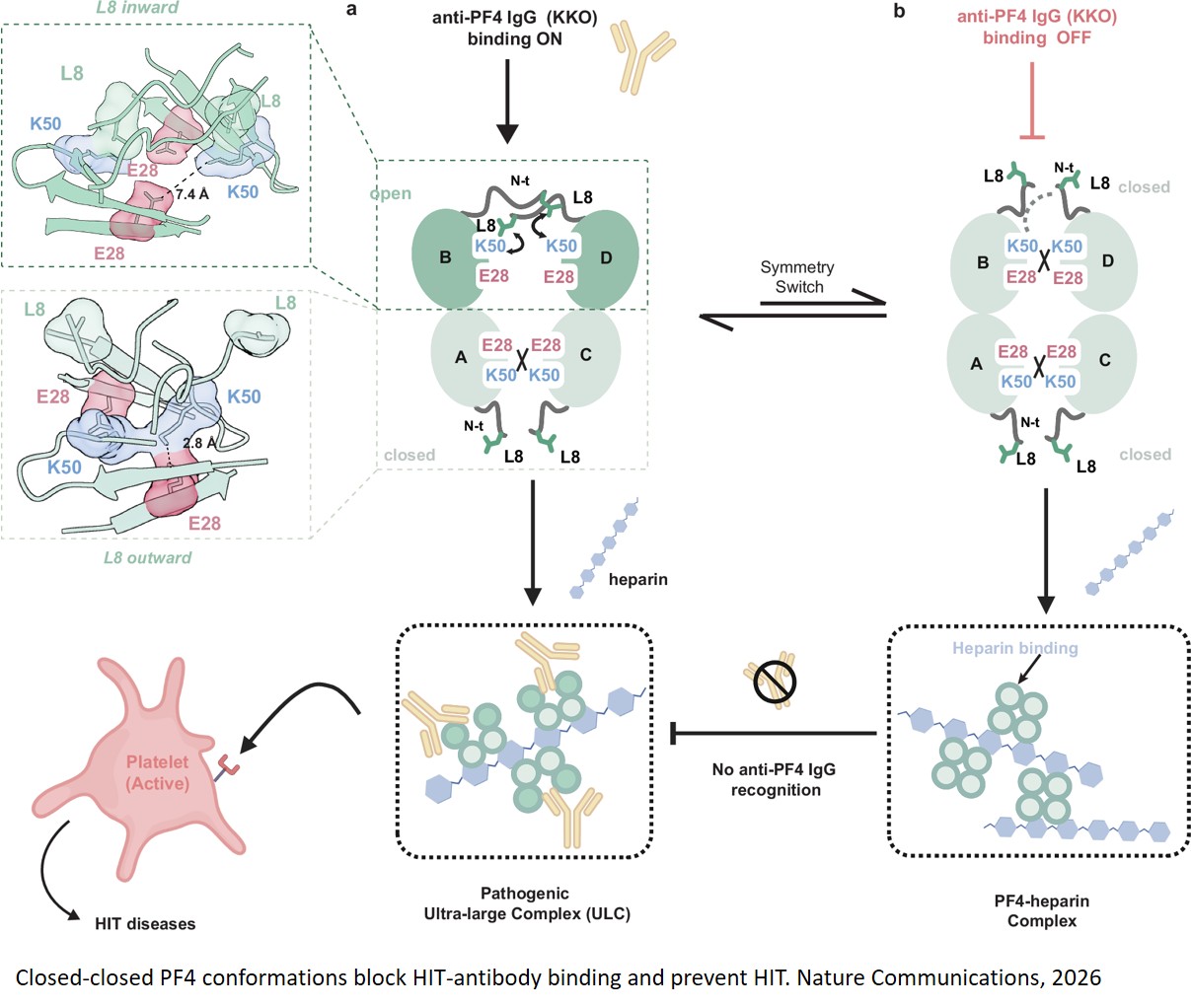
Researchers have identified why some patients develop dangerous blood clots after exposure to a common blood thinner – and a potential way to prevent it.
The study, published in Nature Communications reveal how a normally harmless protein in the blood can become the target of harmful antibodies, a discovery that could pave the way for improved diagnostic tests and future therapies.
The research focused on platelet factor 4 (PF4), a protein naturally produced by the body that plays a role in blood clotting. In some patients receiving the commonly used blood thinner heparin, PF4 can change shape and become the target of antibodies that trigger a rare but potentially life-threatening immune reaction called heparin-induced thrombocytopenia (HIT). Although uncommon, HIT can cause dangerous blood clots that may lead to stroke, heart attack, limb loss or even death if not identified and treated promptly.
"This study provides a molecular explanation for how PF4 becomes a pathogenic antigen," said the senior author. "By identifying the structural switch that controls this process, we've revealed a new way of thinking about how to detect or prevent these dangerous immune reactions."
Using advanced nuclear magnetic resonance (NMR) spectroscopy, the researchers identified a previously unknown "molecular switch" within PF4 that controls whether the protein stays in a closed, harmless shape or opens into a shape that can be recognized by harmful antibodies. When PF4 opens – particularly when it interacts with the blood thinner heparin – it can become a target for the immune system and trigger HIT, which can cause life-threatening blood clots. The team demonstrated that altering this switch can keep PF4 in its closed form, dramatically reducing its ability to provoke an immune response.
"This work shows the power of collaboration across disciplines," said a co-author. "By combining advanced molecular imaging approaches with clinical expertise, we were able to answer a longstanding question about what causes PF4 to become a target of harmful antibodies."
Beyond advancing the understanding of HIT, the discovery could have important practical implications. The senior author also added that the newly identified switch, together with access to state-of-the-art NMR facilities, may provide a foundation for developing more precise diagnostic tests that identify pathogenic antibodies earlier and more accurately. Earlier detection could help clinicians intervene sooner, improving patient outcomes while reducing complications and healthcare costs.
The researchers say the work also serves as a proof of concept for studying complex protein dynamics using NMR spectroscopy, offering a roadmap for investigating other diseases driven by subtle, yet functionally critical, structural changes in proteins.