


Linking brain injury to brain tumors
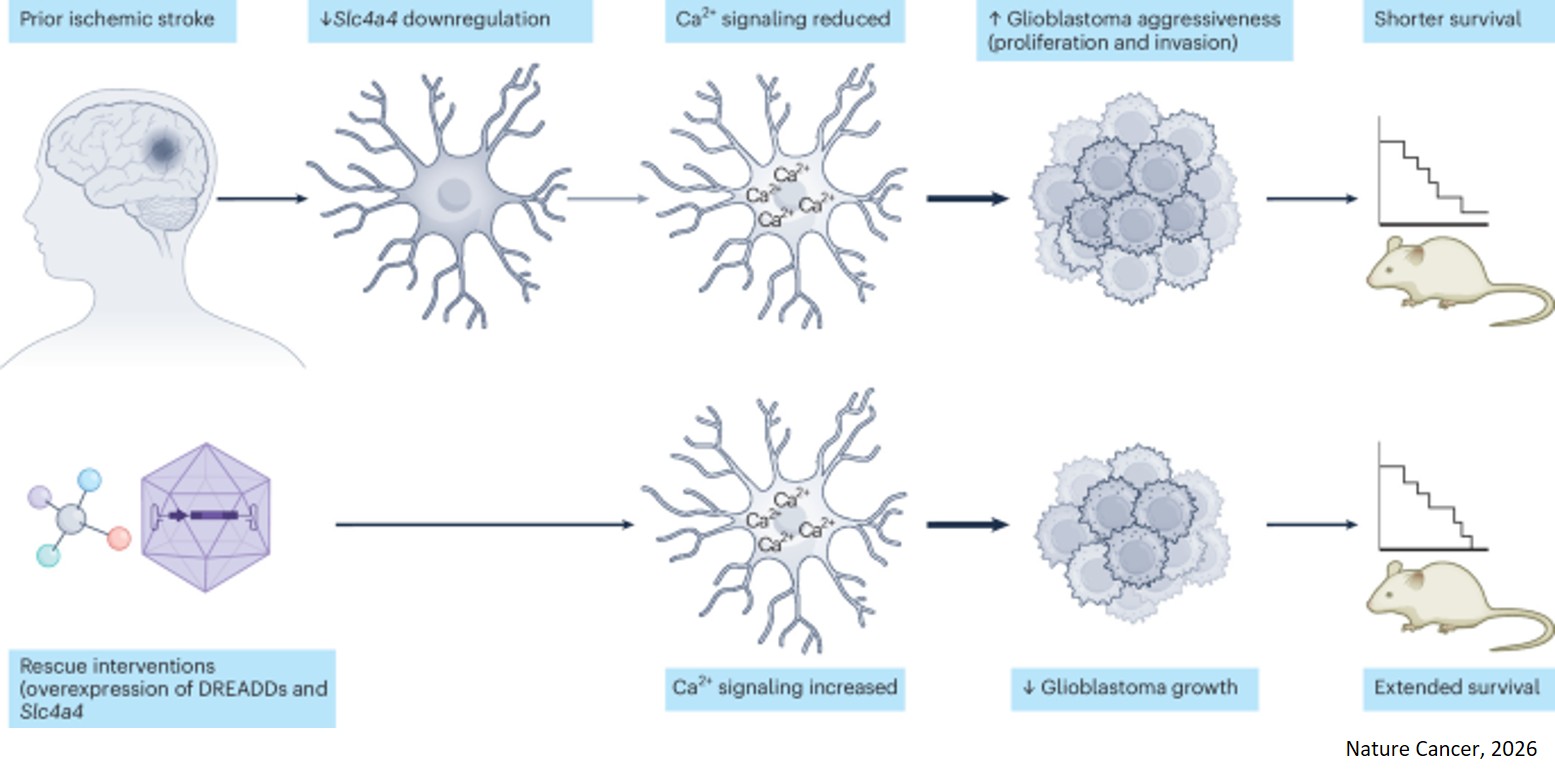
Researchers show in Nature Cancer that stroke promotes glioma growth and uncovered cellular and molecular mediators involved in the process, linking brain injury to malignant brain tumors.
“Epidemiological and clinical studies suggest that patients with a history of stroke or traumatic brain injury are at increased risk of developing brain tumors. The risk can be about three-fold to seven-fold, depending on the age and sex of the patient,” said the corresponding author.
“Despite these clinical observations, the mechanism that connects brain injury and cancer remains unclear. In the current study, we worked with human and mouse models to investigate whether stroke promotes glioma growth and the factors mediating the connection,” the author said.
The researchers focused on one type of brain injury, stroke, and on a specific type of brain tumor, glioma, the most prevalent and aggressive malignant brain tumor in adults with a 5-year survival rate.
“We show that stroke promoted tumor infiltration into injured brain regions in human and mouse glioma models, and reduced overall survival,” the author said. “Looking closer into the cellular and molecular makeup of the tumors, we found that stroke triggers remodeling of the tumor microenvironment.”
The team discovered the emergence of a distinct population of brain cells – tumor-associated astrocytes (TAAs) – with distinct physiological and molecular characteristics, including diminished calcium activity. TAAs were accompanied by the accumulation of two other cell types, remodeled tumor-associated microglia and immune cells called macrophages (TAMs).
Restoring TAA calcium signaling or removing TAMs suppressed stroke-induced glioma progression, identifying both populations as critical mediators of the stroke response. The findings suggest that these injury-induced, tumor-promoting pathways are potential therapeutic targets and support continuing research into strategies that could reduce the risk of glioma growth in patients with a history of brain injury.
“Our study supports that brain injury can be a risk factor for brain cancer. In addition, our findings contribute to growing evidence pointing at a role of astrocytes in brain tumor growth,” the author said. “Neuron-tumor interactions have been shown to contribute to cancer growth. We show that other brain cells, astrocytes, also seem to communicate with brain cancer cells and influence their behavior. They should be considered when studying cancer mechanisms and therapies.”