

Blocking key protein triggers cancer cell self-destruction
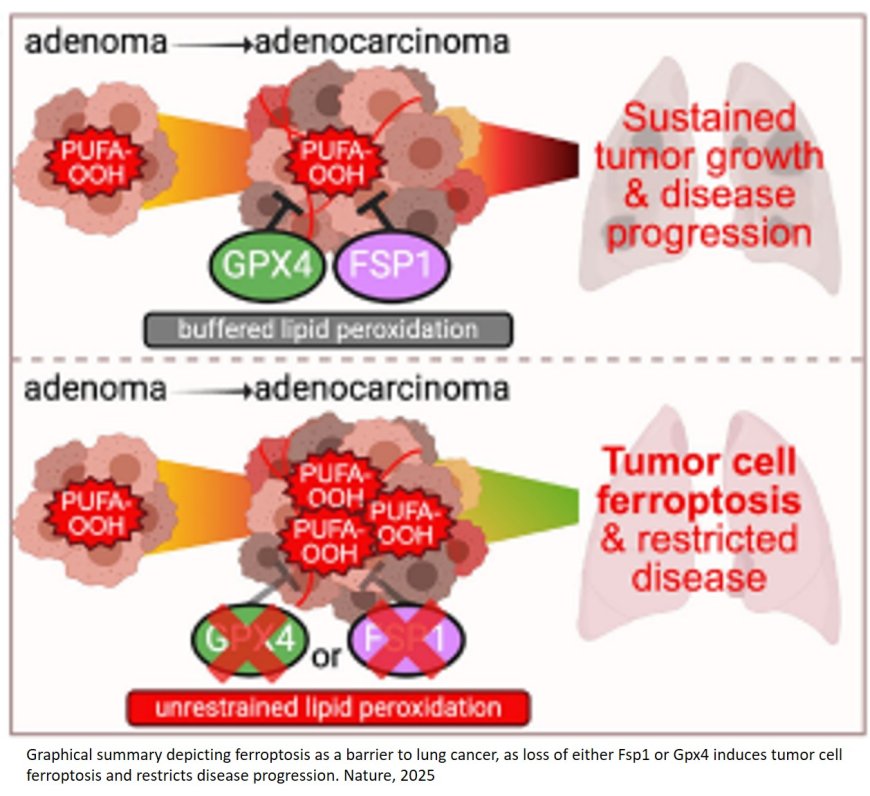
The researchers found that a type of cell death caused by a buildup of highly reactive molecules suppresses lung tumor growth.
The process, called ferroptosis, evolved to let the body signal for self-destruction of cells that are overly stressed for various reasons. This includes cancer cells, but they in turn evolved to have mechanisms that counter ferroptosis so they can continue their uncontrolled growth despite the stress it creates.
Published in Nature, the new study showed that an experimental treatment blocked the action in cancer cells of a protein called ferroptosis suppressor protein 1 (FSP1) to reduce by up to 80% tumor growth in mice with lung adenocarcinoma (LUAD). Lung cancer is the leading cause of cancer death worldwide, with LUAD the most common lung cancer among nonsmokers, making up about 40% of cases.
“This first test of a drug that blocks ferroptosis suppression highlights the importance of the process to cancer cell survival and paves the way for a new treatment strategy,” said the senior study author.
Ferroptosis kills cells by building up levels of iron, which generates highly reactive molecules formed from oxygen, water, and hydrogen peroxide called reactive oxygen species (ROS). Important for normal cell signaling, ROS also often cause oxidative stress, a disease mechanism in which ROS oxidize (add oxygen molecules to) delicate proteins and DNA to pull them apart. ROS damage fats making up the outer layers of cells to cause cell death and tissue damage.
For the new study, the research team genetically engineered mice to delete the FSP1 gene in lung cancer cells, which led to increased cancer cell death and significantly smaller tumors. The team also found that a potent, relatively new drug type, an FSP1 inhibitor called icFSP1, improved overall survival of lung tumor-bearing mice, nearly to the extent seen in mice with lung tumors genetically engineered to lack the FSP1 gene.
Their work also showed that Fsp1 is likely a better target for future drugs than another ferroptosis suppressor, glutathione peroxidase 4 (GPX4), which has been studied longer. FSP1 was shown in the new study to play a greater role in blocking ferroptosis in lung cancer cells specifically, and a smaller role than GPX4 in normal cell functions (likely fewer side effects). Unlike with GPX4, increased FSP1 levels were also found to track with poorer survival in human LUAD patients.
"Our future research will focus on optimizing FSP1 inhibitors and investigating the potential of harnessing ferroptosis as a treatment strategy for other solid tumors, such as pancreatic cancer," said the lead study author. "We aim to translate these findings from the lab into novel clinical therapies for cancer patients.”