

Inducing cell death in pancreatic cancer cells
Researchers have discovered a previously unknown mechanism that makes most pancreatic cancer cells susceptible to a form of programmed cell death. The team showed that cancer cells with mutations in the KRAS gene develop a vulnerability which can be used to eliminate tumor cells in preclinical models. The findings open up new perspectives for treating pancreatic cancer. The study was published in the journal Nature Communications.
Pancreatic cancer is one of the most aggressive forms of cancer and has so far shown only limited response to available treatments. In approximately 90 percent of cases, these tumors carry mutations in the KRAS gene that drive cancer growth. Due to the ageing population and the lack of effective therapies, physicians, clinicians, and researchers expect pancreatic carcinoma to become one of the leading causes of cancer-related deaths worldwide in the coming years. With the discovery of this newly identified vulnerability, a therapeutically promising approach has now been identified for treating this disease following future clinical trials.
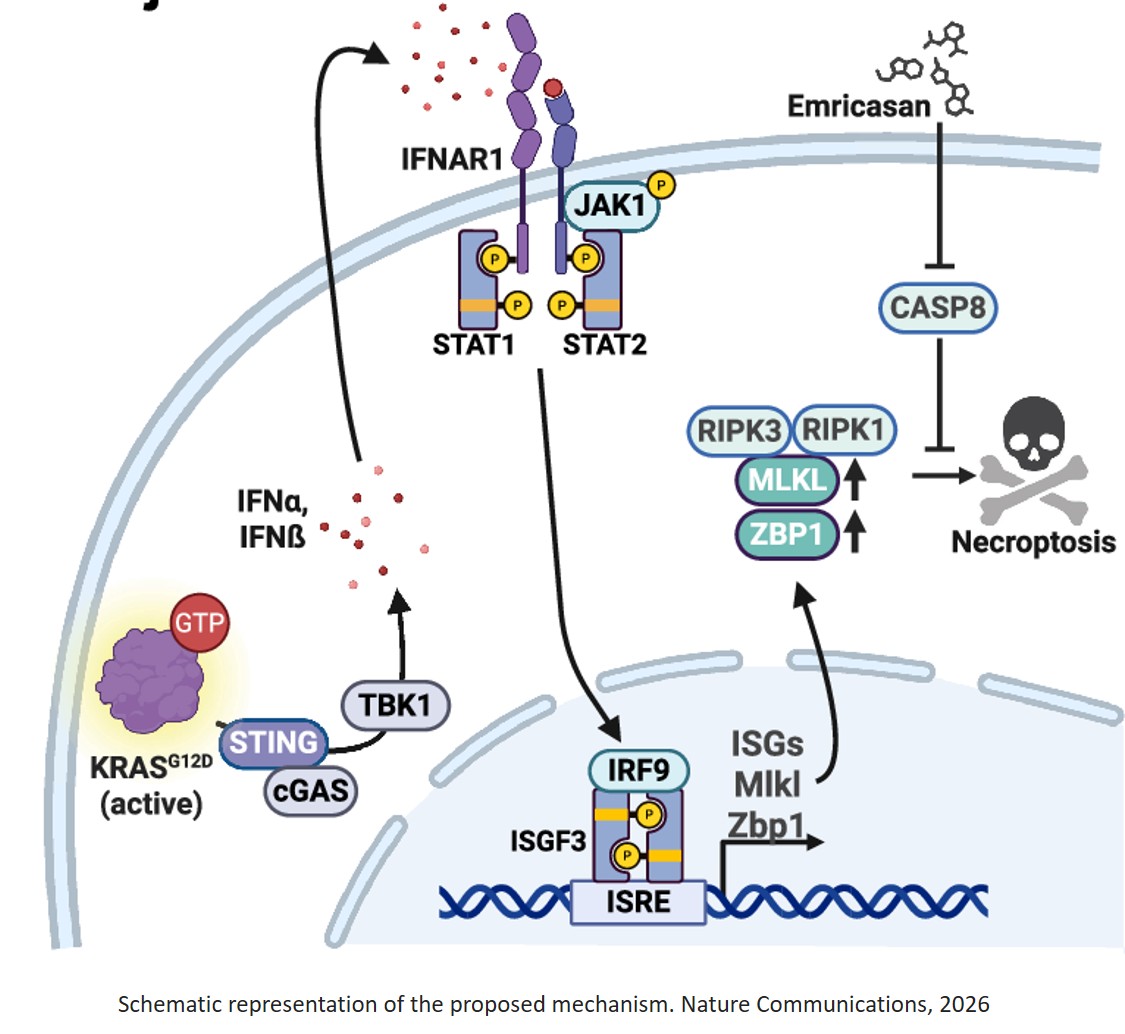
The researchers discovered that KRAS-mutated tumor cells continuously activate signals from the innate immune system. This primes the cancer cells for an inflammatory form of cell death known as necroptosis. In order to survive, tumor cells rely heavily on the protein caspase-8, which usually inhibits necroptosis. If caspase-8 is blocked, the tumor cells die. “KRAS-mutated tumors have a previously unknown Achilles heel,” says the senior author of the study. “By switching off the tumor cells’ defence mechanisms, we can significantly kill these tumors.”
In genetically modified mouse models, the induction of necroptosis through the depletion of caspase-8 led to a significant reduction in precursor lesions – abnormal tissue from which potentially malignant tumours can develop. In addition, the researchers demonstrated that a combination drug therapy using agents already in clinical use significantly reduced tumor growth and prolonged the animals’ survival.
The treatment has also shown significant efficacy in experiments using patient-derived tumor organoids – three-dimensional mini-tumors made from human pancreatic cancer tissue. This suggests that the approach could be promising for future clinical trials.
“The findings provide strong evidence that certain forms of pancreatic cancer could be specifically targeted for treatment based on their dependence on caspase-8,” says the first author. “In the long term, this could help develop new therapies for patients who currently have very limited treatment options.”